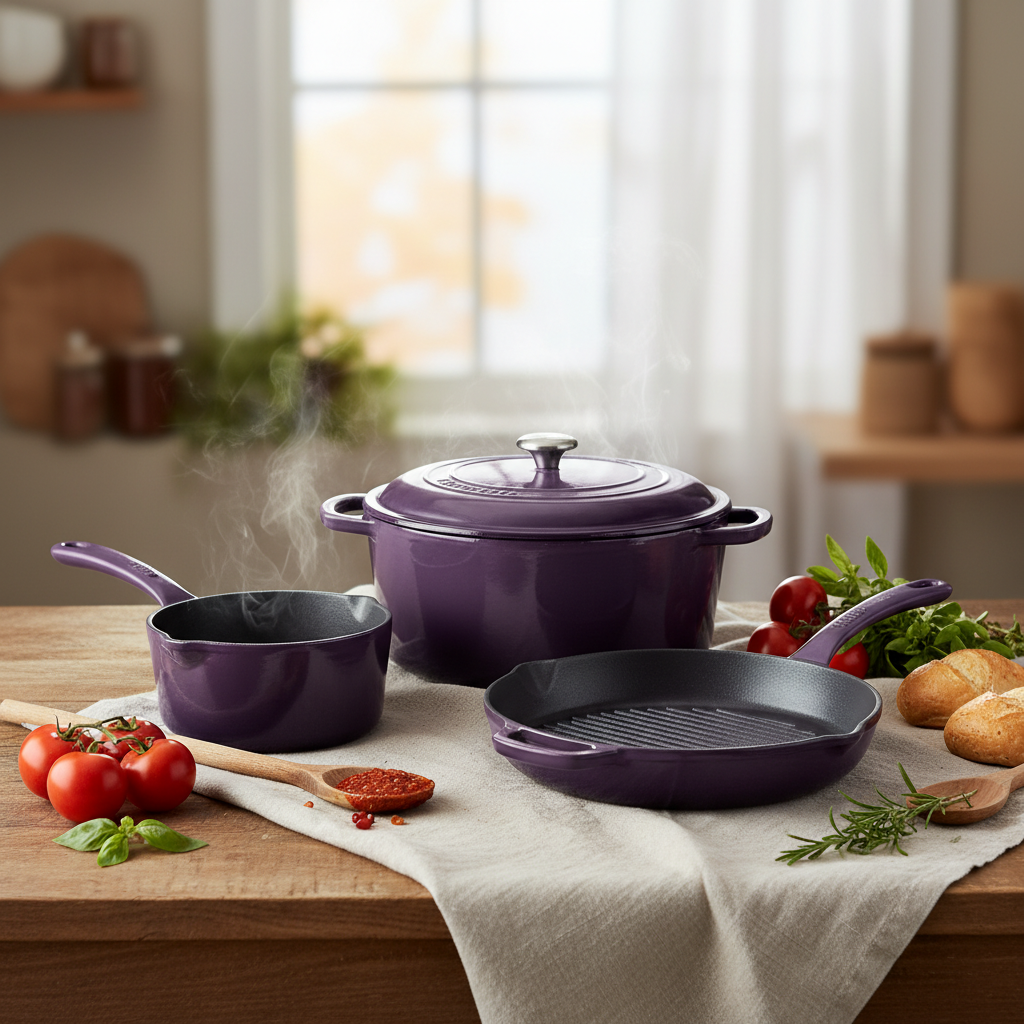
The allure of a perfectly cooked meal, enjoyed with family and friends, often begins with the right cookware. Among the myriad options available, an enameled cast iron cookware set stands out as a timeless investment, bridging tradition and modern culinary needs. These sets aren’t merely kitchen tools; they represent a commitment to quality, durability, and a more satisfying cooking experience. Understanding the nuances of enameled cast iron cookware sets is crucial for both novice cooks and seasoned chefs alike.
Globally, the demand for durable and versatile cookware is steadily increasing, driven by a growing interest in home cooking and a desire for kitchen tools that can withstand rigorous use. According to a recent report by the World Kitchen Ware Association, the enameled cast iron segment has witnessed a consistent 5-7% annual growth rate over the past five years. This surge in popularity is fueled by the cookware's ability to deliver exceptional heat retention and even cooking, features valued by cooks worldwide.
However, the market is also facing challenges related to production costs and sustainable sourcing of materials. Choosing a reliable and ethically produced enameled cast iron cookware set requires informed decision-making, considering factors beyond just price and aesthetics.
The Core Characteristics of enameled cast iron cookware set
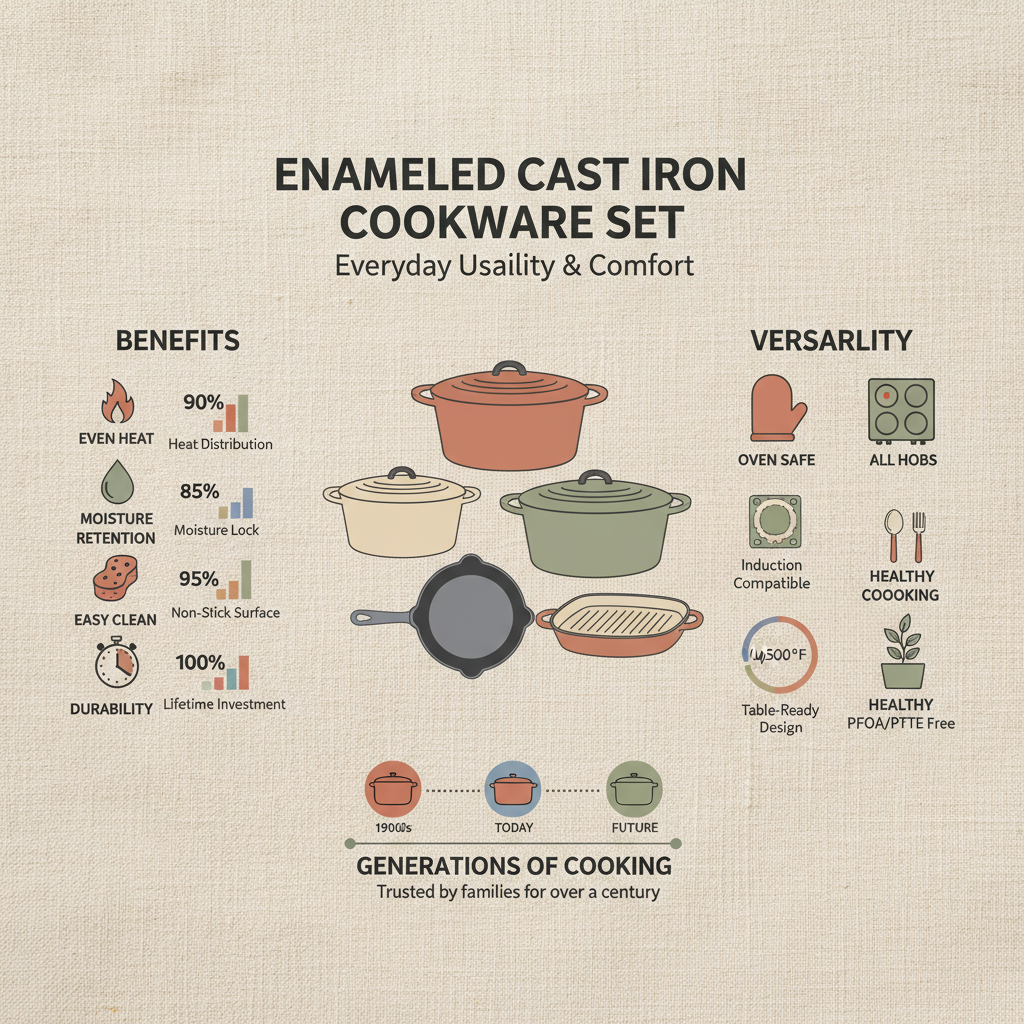
At its heart, an enameled cast iron cookware set is defined by its unique combination of materials. The base is cast iron, known for its exceptional heat retention and even distribution. This is then coated with porcelain enamel, a glass-like substance that adds color, prevents rusting, and makes the cookware non-reactive with acidic foods.
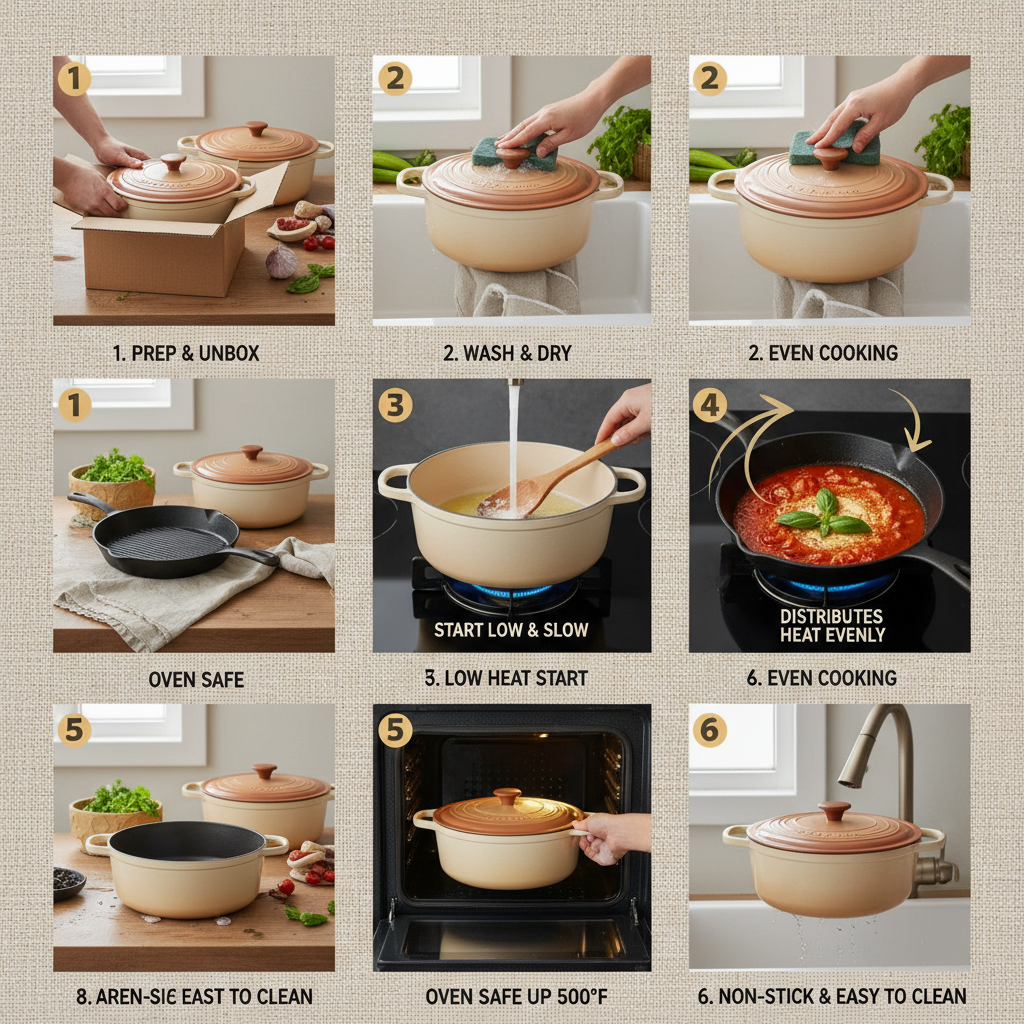
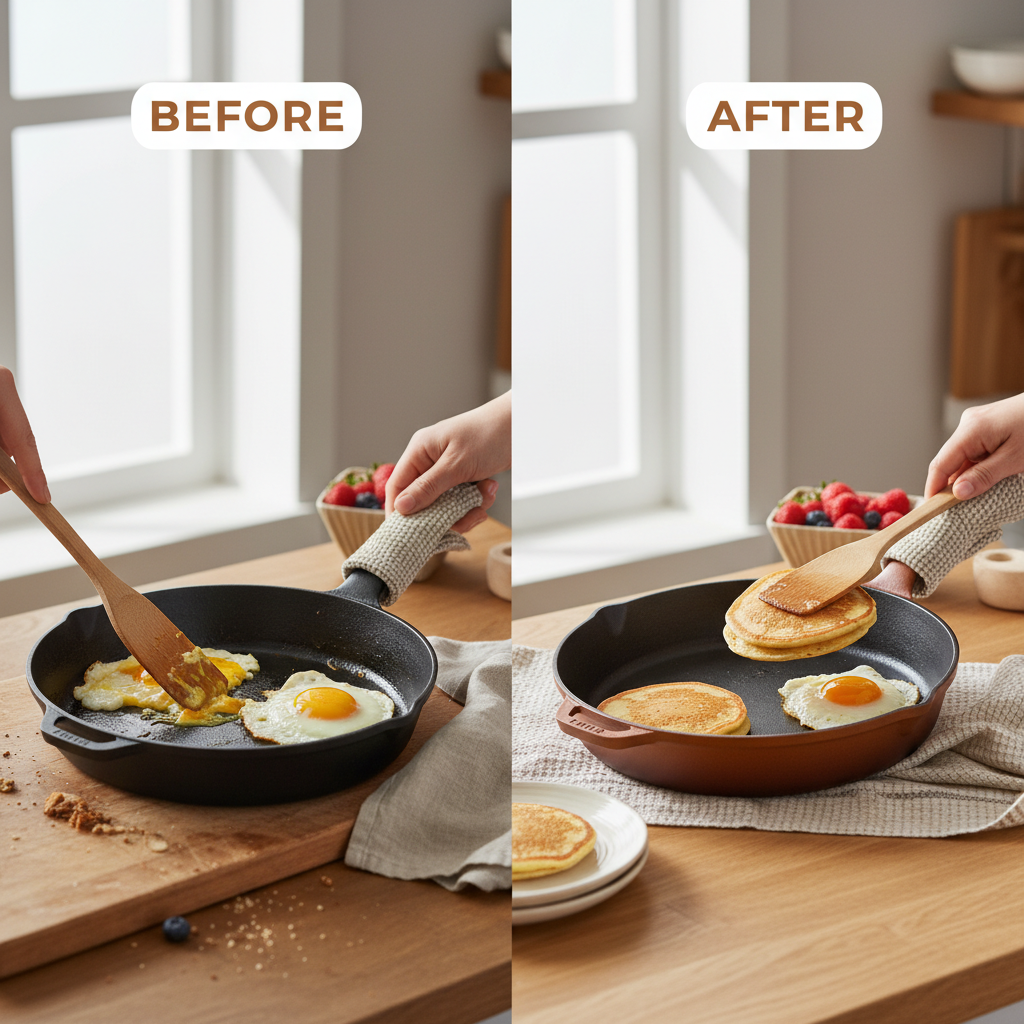
This fusion results in cookware that is incredibly versatile – suitable for stovetop, oven, and even direct heat sources like induction cooktops. The enamel coating also simplifies cleaning, as food doesn't easily stick, and the cookware is typically dishwasher safe.
The Historical Development of enameled cast iron cookware set
The story of enameled cast iron cookware is one of gradual innovation. While cast iron cooking dates back centuries, the addition of enamel is a relatively recent development, originating in Europe during the 19th century. Initially, enamel was used to coat iron bathtubs and other household items, offering a hygienic and aesthetically pleasing finish.
It wasn't long before manufacturers realized the potential for applying enamel to cookware. Early enameled cast iron pieces were often heavy and prone to chipping. However, advancements in enamel formulations and manufacturing techniques over the 20th century led to the production of more durable and refined enameled cast iron cookware sets.
Today’s sets represent the culmination of this evolution, offering a blend of traditional craftsmanship and modern materials science.
The Manufacturing Process of enameled cast iron cookware set
Creating an enameled cast iron cookware set is a multi-stage process. It begins with the creation of the cast iron base, typically using sand casting. Molten iron is poured into molds, allowed to cool, and then meticulously cleaned and smoothed.
Next comes the enameling process. The cast iron piece is first primed with a layer of enamel, then fired at high temperatures. This process is often repeated multiple times, with different layers of enamel applied to achieve the desired color and durability. Quality control is paramount throughout, as any imperfections in the enamel can compromise the cookware’s performance and longevity.
Finally, the cookware undergoes rigorous testing to ensure it meets industry standards for heat retention, chip resistance, and overall quality. This painstaking process is what ultimately delivers a premium enameled cast iron cookware set to the consumer.
Performance Metrics of enameled cast iron cookware set
Evaluating the performance of an enameled cast iron cookware set requires considering several key metrics. Heat retention is arguably the most important, with cast iron consistently outperforming other materials in this regard. This even heat distribution prevents hot spots and ensures consistent cooking results.
Another crucial factor is the enamel coating’s resistance to chipping and cracking. Higher-quality sets utilize multiple layers of enamel and undergo stringent testing to guarantee durability. The non-reactivity of the enamel is also important, ensuring that acidic foods like tomatoes won't impart metallic flavors to your dishes.
Comparative Performance of enameled cast iron cookware set Types
Global Applications and Market Trends of enameled cast iron cookware set
The demand for enameled cast iron cookware sets transcends geographical boundaries. In Europe, they are a staple in many kitchens, prized for their durability and versatility. North America has also seen a surge in popularity, driven by a growing interest in slow cooking and braising.
Emerging markets, such as Asia and South America, are also witnessing increasing demand as disposable incomes rise and culinary trends evolve. These sets are often seen as a symbol of quality and sophistication, making them a popular choice for both home cooks and professional chefs.
Long-Term Benefits and Sustainability of enameled cast iron cookware set
Investing in an enameled cast iron cookware set is not merely a purchase; it's an investment in long-term culinary satisfaction. With proper care, these sets can last for generations, becoming cherished family heirlooms. Their durability reduces the need for frequent replacements, contributing to a more sustainable lifestyle.
Furthermore, the materials used in cast iron are relatively abundant, and the manufacturing process, while energy-intensive, can be optimized to minimize environmental impact. Choosing sets from companies committed to responsible sourcing and production practices further enhances their sustainability.
The ability to cook efficiently, requiring less energy to maintain heat, also contributes to a smaller carbon footprint.
Future Innovations in enameled cast iron cookware set Technology
The future of enameled cast iron cookware set technology is focused on enhancing performance, sustainability, and user experience. Research is underway to develop even more durable enamel coatings that are resistant to chipping and staining.
Innovations in manufacturing processes are also aimed at reducing energy consumption and minimizing waste. We may also see the integration of smart technologies, such as sensors that monitor cooking temperatures and provide real-time feedback to the user.
Furthermore, advancements in material science could lead to the development of lighter-weight cast iron alloys that retain the benefits of heat retention and even cooking.
Summary of Key Features and Improvements in enameled cast iron cookware set
| Feature Category |
Current State |
Potential Improvement |
Impact on User Experience |
| Enamel Coating Durability |
Good, but prone to chipping with heavy use |
Develop a self-healing enamel formula |
Significantly extended cookware lifespan |
| Weight of Cookware |
Relatively heavy, can be difficult to maneuver |
Utilize lighter-weight cast iron alloys |
Improved ease of use, particularly for older users |
| Heat Distribution |
Excellent, but can still have minor hot spots |
Optimize casting design for even more uniform heating |
More consistent cooking results, reduced risk of burning |
| Cleaning & Maintenance |
Generally easy, but can require some scrubbing |
Develop a non-stick enamel coating |
Reduced cleaning time and effort |
| Smart Integration |
Currently limited to basic temperature sensors |
Integrate with recipe apps and provide cooking guidance |
Enhanced cooking precision and convenience |
| Sustainability |
Relatively durable, reducing replacement frequency |
Utilize recycled cast iron and eco-friendly enamel formulations |
Minimized environmental impact |
FAQS
Enameled cast iron features a porcelain enamel coating, making it non-reactive and eliminating the need for seasoning. Bare cast iron requires seasoning to prevent rust and food from sticking. Enameled cookware is generally easier to clean, while bare cast iron can handle higher temperatures and is often preferred for searing. Both offer excellent heat retention, but enameled is more versatile for acidic foods.
Avoid using abrasive cleaners or metal utensils, as they can damage the enamel coating. Hand washing is recommended, though many sets are dishwasher safe. Avoid thermal shock by letting the cookware cool down before washing. Store sets carefully, using pan protectors to prevent chipping. Properly cared for, a set can last a lifetime.
Generally, yes, but it's important to check the manufacturer's specifications. Most modern enameled cast iron cookware sets are designed to be compatible with induction cooktops. However, older or lower-quality sets may not be. Look for cookware that is clearly marked as induction-compatible.
While enameled cast iron is more durable than some other cookware, it's still susceptible to damage from metal utensils. Using silicone, wood, or nylon utensils is recommended to prevent scratching or chipping the enamel coating. Gentle use of metal utensils is possible, but it's best to avoid it to prolong the cookware’s life.
Soak the cookware in warm, soapy water for several hours, or overnight. Then, gently scrub with a non-abrasive sponge or nylon brush. For stubborn residue, create a paste of baking soda and water, apply it to the affected area, and let it sit before scrubbing. Avoid using steel wool or harsh abrasive cleaners.
Enameled cast iron is incredibly versatile, but avoid using extremely high heat for prolonged periods, as this can potentially damage the enamel. Also, avoid dropping heavy objects into the cookware, as this can cause chipping. Overall, it’s suitable for almost any type of cooking, from slow-simmered stews to delicate sauces.
Conclusion
From its humble beginnings as a practical kitchen tool to its current status as a symbol of culinary excellence, the enameled cast iron cookware set has proven its enduring value. Its superior heat retention, durability, and versatility make it an indispensable asset for both amateur and professional cooks alike. Investing in a quality set is not merely purchasing cookware, but acquiring a legacy of flavor and tradition.
Looking ahead, innovations in materials science and manufacturing will continue to refine and enhance the performance of these sets, making them even more sustainable and user-friendly. We encourage you to explore the world of enameled cast iron and discover the joy of cooking with this remarkable cookware. Visit our website today at www.hapichefcastiron.com.com to find the perfect enameled cast iron cookware set for your kitchen.