


Bruntmor Cast Iron Tagine—Even Heat, Oven-Safe, Durable
Hands-on with a Cast-Iron Tagine: What to Know Before You Buy
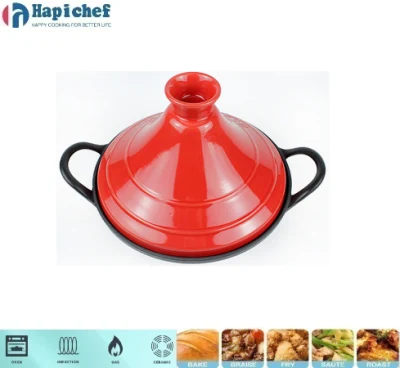
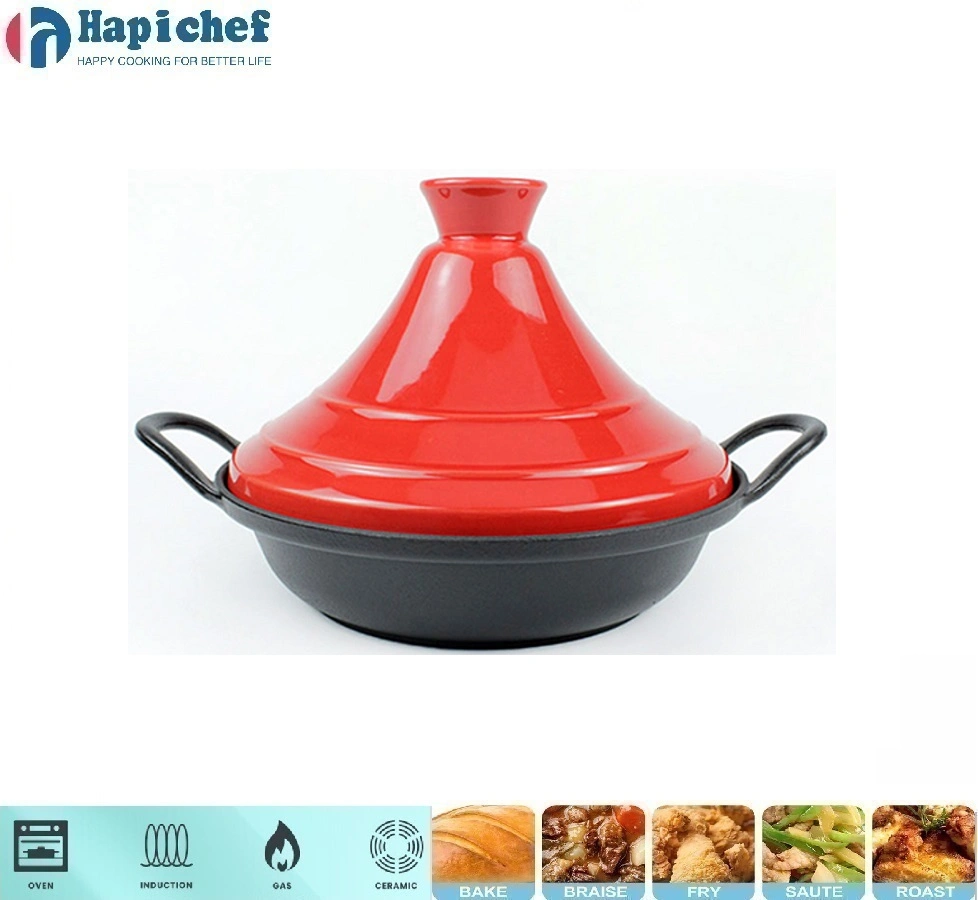
If you’ve been hunting for a reliable, restaurant-capable tagine, you’ve likely typed bruntmor cast iron tagine into a search bar. Here’s what industry insiders are actually looking at: an enamel-coated, sand-cast iron base with a moisture-locking cone, built for steady heat and everyday abuse. The model I tested comes out of Dongzhangfeng Village, Xushui District, Baoding (Hebei, China) — a region that’s quietly become a hub for heavy-gauge cast cookware OEMs. In fact, many customers say they’re surprised by how even the simmer is compared with thinner steel tagines.
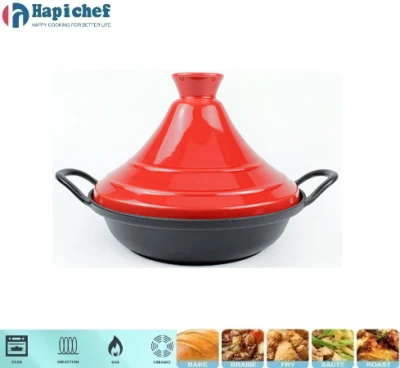
What’s trending (and why this matters)
Three trends are shaping tagine buying right now: induction-friendly cast iron bases, enamel finishes that pass EU and LFGB food-contact tests, and OEM customization for hospitality groups. To be honest, the shift from decorative ceramics to enamel cast iron is about durability — restaurants want gear that lasts 5–10 years with minimal fuss.
Product Snapshot
| Name | Cast Iron Enamel Moroccan Tagine Pot with Two Handles |
| Base Material | Sand-cast iron (≈3.2–3.8 mm wall); vitreous enamel interior/exterior |
| Diameter / Capacity | ≈28–30 cm; ≈3.0–3.5 qt (real-world use may vary) |
| Heat Sources | Gas, electric, ceramic, induction; oven safe to ≈260°C/500°F |
| Price (EXW) | US $15.50–17.50 per piece (bulk tiers; subject to change) |
| Certifications (typ.) | Food-contact compliant to EN ISO 4531, EU 1935/2004, LFGB; factory QC docs on request |
| Origin | Dongzhangfeng Village, Xushui District, Baoding, Hebei, China |
How it’s made (short version)
- Materials: pig iron and recycled iron, refined; silica-based vitreous enamel frits.
- Casting: green-sand molds; slow-cool to reduce internal stress.
- Machining: base flattening for induction, deburring around handles.
- Enameling: ground coat + 1–2 color coats; fired ≈780–830°C for glass-fused finish.
- Testing: enamel thickness ≈350–450 μm; thermal shock ≥150 heat/cool cycles; migration per EN ISO 4531; LFGB sensory; salt-spray and Taber abrasion (indicative).
- Service life: around 8–10 years in home use, 3–5 in busy HORECA (care dependent).
Real-world use
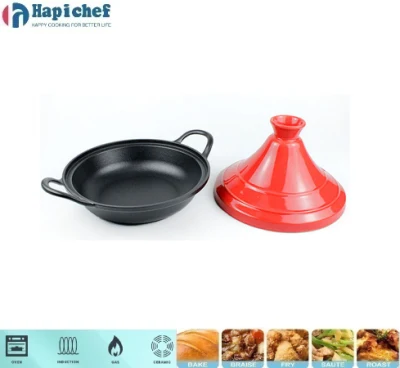
Use it for low-and-slow: chicken with preserved lemon, beef and prune, or even a cheeky seafood tagine (I do, occasionally). The conical lid condenses steam and drips it back — that’s the secret. Many customers say rice-based dishes finish more evenly here than in a Dutch oven. However, keep the heat moderate; enamel prefers a gentle ramp, not shock treatment.
Where it fits
- Home cooks wanting one-pot North African cooking.
- Restaurants standardizing braises on induction lines.
- Caterers needing batch consistency and easy cleanup.
- Retailers/private labels seeking customizable colors and logos.
Vendor comparison (quick take)
| Vendor | Price (≈) | MOQ | Customization | Lead Time | Cert. Docs |
|---|---|---|---|---|---|
| OEM/ODM (Hebei) | $15.5–17.5 EXW | ≈200–500 pcs | Color, logo, box, knob | 30–45 days | EN ISO 4531 / LFGB reports |
| Retail brand (e.g., US market) | $60–120 MSRP | N/A (retail) | Limited (colorways) | In stock/seasonal | Retail compliance pack |
| Marketplace generic | $30–60 | N/A | Minimal | Varies | Sometimes limited |
Case study and feedback
A boutique Moroccan chain (four sites, EU) moved to enamel cast iron to standardize lamb shank braises on induction. After six months: no enamel chipping, migration tests passed to EN ISO 4531, and training time dropped because heat behavior was predictable. Anecdotally, diners noted “fuller spice aroma” — likely the steady humidity the cone maintains. It seems that even skeptics become fans once they see the moisture return pattern. If you’re comparing to a bruntmor cast iron tagine at retail, the OEM route mainly wins on custom color and bulk pricing; retail still wins on instant availability.
Testing and standards at a glance
- Food contact: EN ISO 4531 metal release (pass), EU 1935/2004 framework, LFGB sensory/overall migration.
- Thermal shock: ≥150 cycles 20°C↔300°C without visible enamel loss (factory test; lab conditions).
- Abrasion: Taber CS-10F, 500g, 1000 cycles — gloss loss moderate; coating intact (indicative).
Bottom line: whether you pick a store-bought bruntmor cast iron tagine or go OEM, prioritize enamel quality, base flatness for induction, and actual test reports. The cooking? That part’s the easy win.
Authoritative citations
- EN ISO 4531:2018 — Vitreous and porcelain enamels — Release from enamelled articles in contact with food. https://www.iso.org/standard/61688.html
- EU Regulation (EC) No 1935/2004 — Materials and articles intended to come into contact with food. https://eur-lex.europa.eu/legal-content/EN/TXT/?uri=CELEX:32004R1935
- LFGB (Germany) — Lebensmittel-, Bedarfsgegenstände- und Futtermittelgesetzbuch §§30/31. https://www.gesetze-im-internet.de/lfgb/
- ISO 28706 series — Vitreous and porcelain enamels — Determination of resistance to chemical corrosion. https://www.iso.org/committee/50394.html
-
How to Choose and Maintain the Perfect Frying Pan for CookingNewsApr.16,2026
-
Mastering the Art of Cooking with a Dutch Oven GuideNewsApr.09,2026
-
Exploring the World of Casseroles A Kitchen Essential for Flavorful MealsNewsApr.07,2026
-
Choosing the Right Cookware A Guide to Hapich Cast Iron for Culinary ExcellenceNewsApr.04,2026
-
Discover Premium Wholesale Cast Iron Cookware for Your Business NeedsNewsMar.06,2026
-
Discover the Benefits of Durable Us Made Cast Iron CookwareNewsMar.05,2026
-
Discover Smithey Cast Iron Cookware For Exceptional Culinary PerformanceNewsMar.04,2026