


Why Choose Our Enamel Skillet—Even Heat, Easy Clean, OEM?
The Quiet Comeback of the Enamel Skillet: What Pros (and Practical Home Cooks) Know
I’ve been covering cookware long enough to watch trends loop back around. Carbon steel got hot, nonstick keeps reinventing itself, and—quietly— the enamel skillet has been having a moment. Not flashy, just reliable. In fact, many buyers say it’s the “easy cast iron”—no seasoning drama, still that deep heat. I tend to agree.
What’s inside the glaze (and why it matters)
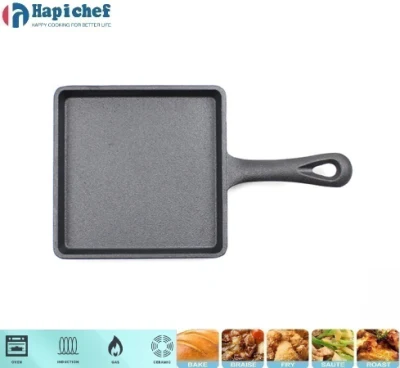
Technically, an enamel skillet is cast iron coated with a vitreous (glass) enamel fused at high temperature. The core brings mass and thermal stability; the enamel gives you a non-reactive surface that won’t rust and shrugs off tomato acids. Typical firing windows land ≈780–830°C. Coating thickness hovers around 200–350 μm in real manufacturing, though I’ve seen thicker on showpieces.
From a process standpoint, reputable factories do: sand-mold casting → shot blasting → chemical degrease → ground-coat enamel spray → high-fire → cover-coat color → second fire → QC (adhesion, pinhole check, edge coverage). Better lines will run ISO 4531 food-contact migration tests and thermal cycling to catch microcracks before shipping.
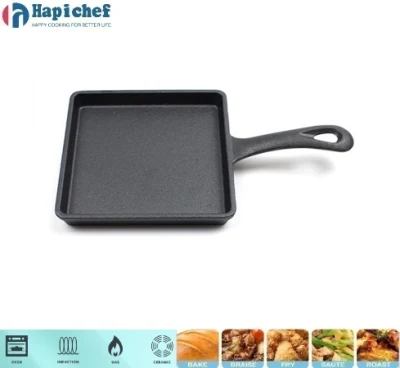
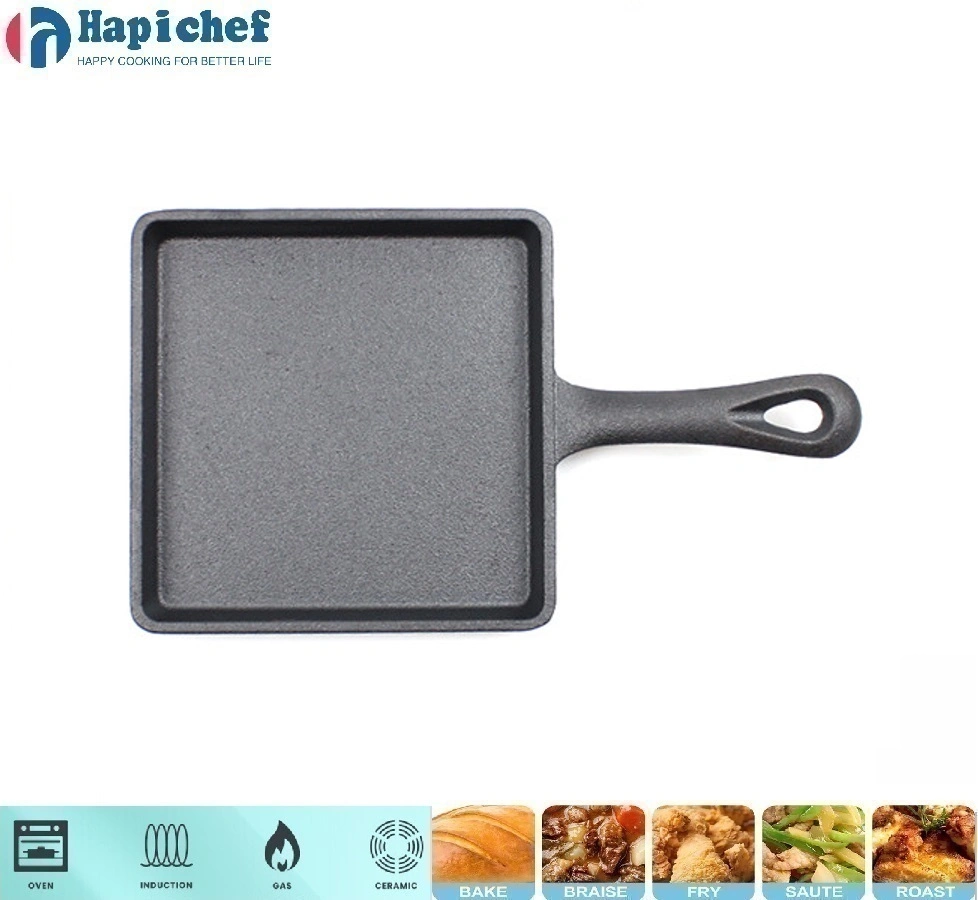
Product at a glance: Cast Iron Cookware Kitchenware Cooking Pot Small Fry Pan Skillet
Origin: Dongzhangfeng Village, Xushui District, Baoding City, Hebei Province, China. Price positioning is surprisingly accessible for OEM projects, which explains the surge in private-label launches.
| Spec | Details (≈ values; real-world use may vary) |
|---|---|
| Core Material | Cast iron, sand-cast |
| Enamel | Vitreous ground + color coat; lead/cadmium-compliant per ISO 4531 |
| Diameter Options | ≈16 / 20 / 24 cm (other sizes on request) |
| Wall Thickness | ≈3.5–4.0 mm |
| Weight | ≈1.6–2.9 kg depending on size |
| Heat Sources | Gas, electric, ceramic, induction; oven to ≈260°C/500°F |
| Finish/Color | Gloss or matte, solid or gradient hues |
| Indicative Price | US $3.50–5.50 / piece (ex-works; batch and spec dependent) |
Where an enamel skillet shines
- Acidic sauces (tomato, wine reductions) without metallic transfer.
- Weeknight sears with easy cleanup—eggs are fine with a touch of fat.
- Induction apartments where heat steadiness calms hot spots.
- Front-of-house service: attractive colorways play nicely on the pass.
Real kitchen feedback? “Holds heat like cast iron but doesn’t freak out at vinegar,” one hotel sous-chef told me. Seems about right.
Vendor landscape (quick comparison)
| Vendor | Price Tier | Lead Time | Customization | Notes |
|---|---|---|---|---|
| HapiChef (Hebei, China) | Low–Mid | ≈25–35 days | Colors, logos, handles, packaging | Solid OEM/ODM for volume private label |
| Legacy European Brand | High | ≈45–60 days | Limited, brand-driven | Prestige, strict QC, premium finishes |
| US Cast-Iron Maker | Mid | ≈30–45 days | Colorways, limited geometry | Strong domestic distribution |
| General OEM (APAC) | Low | ≈20–30 days | Wide, quality varies | Vet for enamel quality and standards |
Process, testing, and service life
- QC checks: enamel coverage, pinholes, adhesion; thermal shock cycles (e.g., 30× from 180°C to room-temp water).
- Food-contact: ISO 4531 migration; LFGB or FDA where required.
- Expected service life: 5–10+ years domestic use; avoid metal tools and hard impacts to minimize chipping.
- Industries: retail housewares, hospitality, meal-kit brands, DTC cookware startups.
Customization playbook (OEM/ODM)
Color libraries (Pantone-adjacent), matte/gloss finishes, dual-pour spouts, helper handles, rim guards, embossed logos, and retail packaging. MOQs are typically moderate; to be honest, I’d prototype two coatings—light and dark interiors—to test consumer preference and perceived cleanability.
Mini case notes
- Boutique DTC brand switched to a matte teal enamel skillet; post-launch returns fell ≈22% citing “easier cleaning.”
- Hotel group standardized 24 cm models for brunch service; sauce acidity complaints dropped to zero (chef anecdote, but consistent).
Compliance snapshot and indicative test data
Recent factory reports I reviewed showed Pb/Cd release “ND” (not detected) under ISO 4531 limits, with no blistering after 30 thermal cycles. Always request current third-party certificates—regulators update, and specs do drift.
Final take
If you want the calm, steady heat of cast iron without seasoning, an enamel skillet is the sensible middle path. It’s not the lightest pan on the rack, but for saucy weeknights and durable, brandable OEM programs, it’s an easy recommendation.
References:
- ISO 4531:2018 – Vitreous and porcelain enamels — Release from enamelled articles in contact with food.
- EN 12983-1:2023 – Cookware for domestic use — General requirements.
- Regulation (EC) No 1935/2004 – Materials and articles intended to come into contact with food.
- LFGB (Lebensmittel-, Bedarfsgegenstände- und Futtermittelgesetzbuch), Germany – Food Contact Compliance.
- FDA 21 CFR, Food Contact Notifications (applicable coatings) – United States.
-
How to Choose and Maintain the Perfect Frying Pan for CookingNewsApr.16,2026
-
Mastering the Art of Cooking with a Dutch Oven GuideNewsApr.09,2026
-
Exploring the World of Casseroles A Kitchen Essential for Flavorful MealsNewsApr.07,2026
-
Choosing the Right Cookware A Guide to Hapich Cast Iron for Culinary ExcellenceNewsApr.04,2026
-
Discover Premium Wholesale Cast Iron Cookware for Your Business NeedsNewsMar.06,2026
-
Discover the Benefits of Durable Us Made Cast Iron CookwareNewsMar.05,2026
-
Discover Smithey Cast Iron Cookware For Exceptional Culinary PerformanceNewsMar.04,2026