


Premium Cast Iron Casserole Pan with Lid - Even Heat & Durable
Industry Trends and Market Dynamics for Premium Cast Iron Cookware
The B2B market for high-performance cookware, particularly specialized items like the cast iron casserole pan with lid, is experiencing a significant uplift. Driven by a global focus on sustainable practices, energy efficiency, and culinary innovation, professional kitchens, catering services, and specialty food manufacturers are increasingly investing in durable, heat-retentive solutions. This trend reflects a shift towards cookware that not only withstands the rigors of commercial use but also enhances food quality and operational efficiency. The demand for robust materials with superior thermal properties, such as cast iron, continues to grow, emphasizing longevity and consistent cooking performance.
Modern culinary establishments are seeking cookware that supports diverse cooking techniques, from slow braising and stewing to baking and roasting. The inherent qualities of cast iron, including its excellent heat retention and even heat distribution, make it ideal for these applications. Furthermore, the aesthetic appeal of enameled cast iron also plays a role in front-of-house serving scenarios, aligning with the "farm-to-table" and artisanal food movements. Suppliers like Hapichef are at the forefront, offering advanced manufacturing capabilities to meet these evolving industry demands with precision-engineered products.
Manufacturing Process of a High-Performance Cast Iron Casserole Pan with Lid
The production of a premium cast iron casserole pan with lid is a multi-stage, technically sophisticated process, ensuring both metallurgical integrity and superior functional performance. Adherence to international quality standards such as ISO 9001 and ANSI specifications is paramount at every step.
Process Flow Overview:
- Material Selection & Preparation: High-grade pig iron (Fe-C alloy with 2-4% carbon, 1-3% silicon) is selected, often blended with recycled cast iron and alloying elements (e.g., manganese for strength, phosphorus for fluidity). This mixture is melted in induction furnaces, allowing precise control over the alloy composition and ensuring uniform material properties crucial for preventing defects like porosity.
- Molding & Casting: The molten cast iron is poured into sand molds, which are meticulously crafted from a mixture of sand, clay, and water. These molds are designed to the precise dimensions of the casserole pan and its lid, including features like pouring spouts and handle attachment points. Gravity casting or automated molding lines ensure high throughput and consistency. The cooling process is carefully controlled to prevent thermal stress and achieve optimal grain structure.
- Fettling & Shot Blasting: Once cooled, the raw castings are removed from the molds. Excess metal (flash, gates, risers) is removed through a process called fettling. The surfaces are then subjected to shot blasting, which uses abrasive media to clean, smooth, and prepare the surface for subsequent enameling, improving adhesion.
- CNC Machining (Optional, for Precision): For specific models or critical interfaces (e.g., lid seating, base flatness), CNC (Computer Numerical Control) machining may be employed. This allows for extremely tight tolerances, ensuring a perfectly flat base for efficient heat transfer on modern cooktops and a snug, vapor-sealing fit for the lid, optimizing moisture retention during cooking.
- Enameling: This is a critical stage for many commercial cast iron casserole pot with lid products. A vitrifiable enamel coating, typically a silicate-based glass frit, is applied in multiple layers (base coat, color coats). Each layer is fired at extremely high temperatures (700-850°C) in specialized kilns, creating a durable, non-reactive, and aesthetically pleasing surface that resists chipping, staining, and rust. This process dramatically extends the service life and hygiene of the product.
- Quality Control & Testing: Throughout the process, strict quality control checks are implemented. This includes metallurgical analysis of the raw material, dimensional checks of castings, adhesion and impact testing of the enamel, thermal shock resistance tests, and food safety compliance (e.g., FDA standards for leachables). Products must meet specified hardness, warp resistance, and heat distribution criteria.
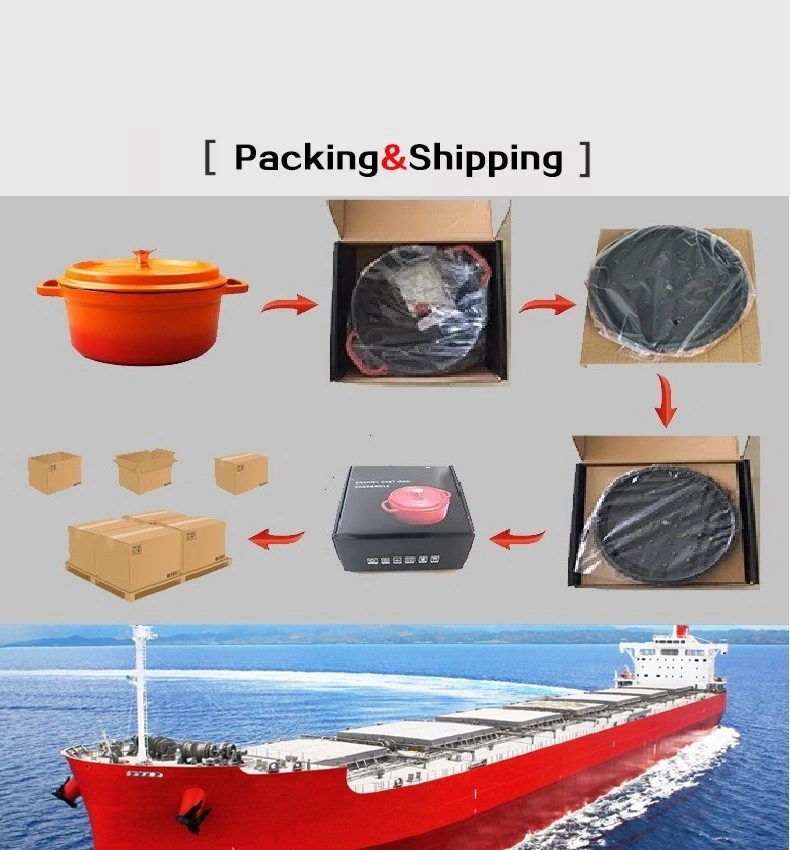
- Finishing & Packaging: Final assembly (e.g., attaching knobs), polishing, and meticulous packaging ensure the product arrives in pristine condition, ready for distribution to target industries such as hospitality, catering, and specialized food processing.
The typical service life of a well-maintained Hapichef cast iron casserole pot, particularly an enameled version, can easily exceed 20 years in commercial settings, a testament to its robust manufacturing and inherent material strength. This makes it a cost-effective choice for B2B applications, demonstrating significant advantages in energy saving through superior heat retention and exceptional corrosion resistance due to the high-quality enamel.
Technical Specifications and Performance Parameters
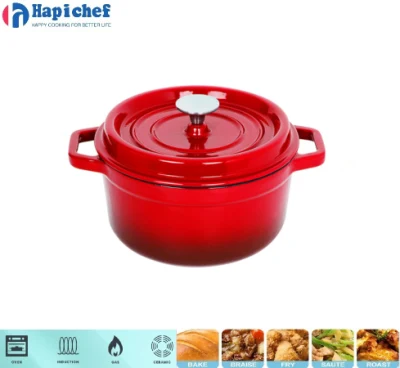
Understanding the precise technical parameters is crucial for B2B procurement. Our cast iron casserole pan with lid is engineered to deliver consistent, high-level performance across various demanding culinary environments. Below are typical specifications for Hapichef's premium enameled cast iron casserole pans.
Product Specification Table: Hapichef Enamel Cast Iron Casserole Pan
| Parameter | Specification/Value | Benefit for B2B |
|---|---|---|
| Material Composition | ASTM A48 Class 30 Grey Iron, Food-Grade Enamel | Exceptional durability, non-reactive cooking surface, safe for all food types (FDA compliant). |
| Volume Capacity Range | 2.5 Liters to 10 Liters (customizable) | Versatility for small-batch catering to large-volume commercial kitchen operations. |
| Operating Temperature Range | -20°C to +260°C (-4°F to 500°F) | Suitable for freezer-to-oven applications, high-heat searing, and slow cooking. |
| Thermal Diffusivity | ~2.3 x 10^-5 m²/s | Ensures even heat distribution across the base and sidewalls, preventing hot spots. |
| Heat Retention Index (after 15 mins off heat) | 85% of initial temperature (approx.) | Significant energy savings, keeps food warm for extended periods without reheating. |
| Enamel Hardness (Mohs Scale) | 5-6 | High resistance to scratching, chipping, and abrasion in busy kitchens. |
| Compatibility | Gas, Electric, Ceramic, Induction, Oven, Grill | Universal applicability across diverse commercial kitchen setups. |
| Certifications | ISO 9001, FDA, LFGB, CA65 | Guaranteed quality, safety, and compliance for international markets. |
Application Scenarios and Technical Advantages in B2B Operations
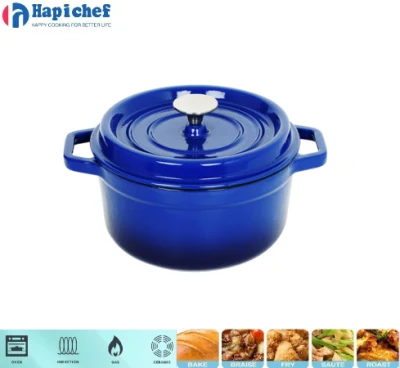
The versatility and superior performance of a cast iron casserole pan with lid make it indispensable across a spectrum of B2B applications, ranging from high-volume catering to specialized food production.
Key Application Areas:
- Commercial Kitchens & Restaurants: Ideal for slow-cooking stews, braises, soups, and chili. The consistent, gentle heat environment is perfect for tenderizing meats and developing complex flavors over extended periods. Its oven-safe design allows for seamless transfer from stovetop to oven, facilitating dishes like coq au vin or baked pasta.
- Catering Services: The excellent heat retention means food stays warm for longer during transport or while waiting to be served, reducing the need for constant reheating and ensuring optimal food temperature at the point of service.
- Hospitality (Hotels & Resorts): Used in hotel buffets for attractive presentation and keeping dishes warm. Its durable nature withstands frequent use and cleaning cycles, crucial for demanding hotel operations.
- Bakery & Patisserie: Surprisingly versatile for baking artisan breads (no-knead bread recipes benefit greatly from the sealed, high-heat environment) or specialized desserts, where even heat is paramount.
- Specialty Food Production: Small-batch production of gourmet sauces, jams, or confits benefits from the non-reactive enamel and precise temperature control.
Technical Advantages:
- Exceptional Heat Retention & Even Distribution: Cast iron's high thermal mass and conductivity ensure that heat is absorbed and radiated uniformly, minimizing hot spots. This leads to more consistent cooking results and significantly reduces energy consumption as the pan maintains temperature with less external heat input.
- Superior Corrosion Resistance: Hapichef's multi-layer enamel coating provides an impermeable barrier, protecting the underlying cast iron from rust and corrosive food acids. This extends the lifespan of the product, particularly in environments exposed to moisture and varied ingredients.
- Chemical Inertness: The food-grade enamel interior is non-reactive, preventing metallic tastes and allowing for cooking with acidic ingredients (e.g., tomatoes, wine) without concern for leaching or flavor alteration. This is a crucial advantage over raw cast iron for certain culinary applications.
- Durability & Longevity: Engineered to withstand the rigors of commercial use, including high temperatures, frequent washing, and handling. This reduces replacement costs and ensures a lower total cost of ownership over its extensive service life.
- Hygienic Surface: The smooth, non-porous enamel surface is easy to clean, resisting bacterial growth and making it ideal for maintaining stringent hygiene standards in commercial kitchens.

Vendor Comparison: Hapichef vs. General Market Offerings
When selecting a supplier for commercial-grade cookware such as a cast iron casserole pot kmart equivalent but for B2B, decision-makers evaluate numerous factors beyond initial cost. Hapichef differentiates itself through a commitment to advanced manufacturing, rigorous quality control, and comprehensive customization capabilities.
Competitive Landscape and Hapichef's Edge:
| Feature/Criteria | Hapichef Cast Iron Cookware | General Market/Entry-Level Cast Iron |
|---|---|---|
| Casting Precision | High-precision sand casting with optional CNC finishing, ensuring optimal base flatness and lid fit. | Standard sand casting, potentially leading to slight inconsistencies in flatness or lid seating. |
| Enamel Quality & Durability | Multi-layer, chip-resistant vitrified enamel (5-6 Mohs hardness), FDA/LFGB compliant. | Single or dual-layer enamel, potentially prone to chipping, variable food safety compliance. |
| Heat Retention Uniformity | Excellent (low thermal diffusivity), even heat distribution across base and sides. | Good but can vary, potential for hot spots due to thinner walls or inconsistent material. |
| Target Industries | High-end hospitality, fine dining, specialty food manufacturers, large-scale catering. | Home cooks, entry-level restaurants, budget-conscious consumers. |
| Certifications & Compliance | ISO 9001, FDA, LFGB, CA65, specific material standards. | Often basic or lacking specific B2B relevant certifications. |
| Customization Options | Extensive (size, color, branding, handle design, lid variations, material blends). | Limited to standard colors/sizes. |
| After-Sales Support | Dedicated B2B support, comprehensive warranty, technical assistance. | Often retail-focused, limited B2B support. |
Customized Solutions and Application Case Studies
Hapichef understands that B2B clients often have unique requirements. Our manufacturing flexibility allows for extensive customization, ensuring that the cast iron casserole pan with lid solutions perfectly integrate with specific operational needs and brand identities.
Customization Capabilities:
- Volume & Dimensions: Tailored capacities from small-batch 1-liter pots to large-scale 15-liter commercial casseroles, with specific dimensions to fit existing kitchen equipment (e.g., oven racks, induction burners).
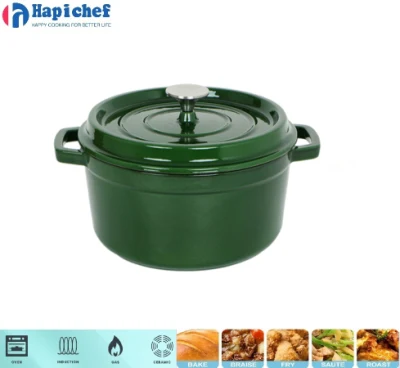
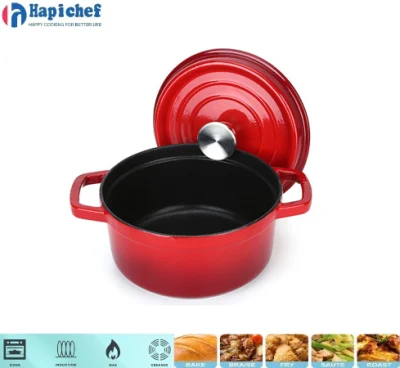
- Color & Finish: Bespoke enamel colors (matching brand palettes), custom exterior finishes (matte, glossy, gradient), and interior enamel options (cream, black matte).
- Branding & Markings: Integration of client logos through etching, embossing on lids or bases, or specialized print applications, enhancing brand presence.
- Lid & Handle Design: Modifications to lid geometry (e.g., self-basting spikes, flat lids for stacking), ergonomic handle designs (material, shape), and knob options (stainless steel, phenolic).
- Material Enhancements: Specific alloy adjustments for specialized thermal properties or increased corrosion resistance for particular food types or industrial uses.
Application Case Studies:
Case Study 1: Large-Scale Hospitality Group "Global Flavors"
Global Flavors, an international hotel and restaurant chain, required a durable and aesthetically pleasing cast iron casserole pan with lid for their buffet lines and in-room dining services. They needed pans that could withstand continuous heating, resist chipping from guest use, and integrate seamlessly with their branding. Hapichef provided a customized 7-liter casserole with a bespoke navy blue enamel, embossed with the Global Flavors logo on the lid, and specially designed heat-resistant knobs for easy handling. Our solution resulted in a 30% reduction in replacement costs over two years compared to previous suppliers and received excellent feedback on both performance and presentation from their culinary teams.
Case Study 2: Artisan Food Producer "Terra Kitchens"
Terra Kitchens, a producer of gourmet, slow-cooked preserves and sauces, sought a range of cast iron casserole pots that offered precise thermal control and non-reactive properties essential for their delicate ingredients. They needed volumes ranging from 3 to 5 liters. Hapichef developed a specific enamel formulation that offered enhanced acid resistance for their fruit-based preserves, paired with exceptionally flat bases to ensure even heating on induction cooktops. The partnership enabled Terra Kitchens to scale production efficiently while maintaining the artisanal quality and flavor profile of their products, leading to a 15% increase in production output with consistent quality.
Trust and Support: FAQs, Lead Times, Warranty, and Customer Service
Building trust with our B2B partners is paramount. Hapichef provides transparent information and robust support for every cast iron casserole pan with lid and associated product.
Frequently Asked Questions (FAQs):
- Q: Are your cast iron casserole pans safe for induction cooktops?
A: Yes, all Hapichef cast iron cookware features a flat, induction-compatible base, ensuring efficient heat transfer on all hob types. - Q: What is the maximum oven temperature for your enameled cast iron?
A: Our enameled cast iron casserole pans are oven-safe up to 260°C (500°F), including the lid and standard phenolic knobs. Stainless steel knobs are suitable for higher temperatures. - Q: How do I maintain the enamel coating to prevent chipping?
A: Avoid using metal utensils; silicone, wood, or heat-resistant plastic are recommended. Prevent extreme thermal shock (e.g., placing a hot pan directly into cold water) and avoid dropping the pan. Hand washing is preferred to maintain longevity. - Q: Is your enamel coating PFOA/PTFE free and food safe?
A: Absolutely. Our enamel coatings are inert, non-toxic, and rigorously tested to be free from PFOA, PTFE, lead, and cadmium, complying with FDA, LFGB, and CA65 food safety standards.
Lead Time & Fulfillment:
Standard orders for our cast iron casserole pan with lid typically have a lead time of 4-6 weeks from order confirmation to shipment, depending on volume and customization requirements. For large or highly customized orders, a detailed production schedule will be provided. We work with established logistics partners to ensure timely and secure global delivery. Expedited options may be available upon request.
Warranty Commitments:
Hapichef stands by the quality and durability of our products. All Hapichef cast iron cookware is backed by a comprehensive 10-year limited warranty against manufacturing defects in materials and workmanship, under normal commercial use. This warranty underscores our confidence in our stringent quality control and the longevity of our products. Specific terms and conditions are available upon request.
Dedicated Customer Support:
Our commitment extends beyond product delivery. Hapichef offers dedicated B2B customer support, including technical assistance, order management, and post-sales inquiries. Our team of experts is available to provide guidance on product selection, maintenance, and any operational challenges. We aim to forge long-term partnerships built on reliability and mutual success.
Conclusion
The Hapichef cast iron casserole pan with lid represents the pinnacle of commercial-grade cookware, combining centuries-old material science with modern manufacturing precision. Its technical advantages in heat retention, corrosion resistance, and durability offer unparalleled value for B2B applications in diverse industries. Through rigorous quality assurance, extensive customization options, and robust customer support, Hapichef provides a reliable and high-performance solution designed to meet the exacting standards of professional kitchens and food service operations globally.
References
- ASTM International. "ASTM A48/A48M-03 Standard Specification for Gray Iron Castings." (2003).
- ISO 9001:2015 Quality Management Systems – Requirements. International Organization for Standardization.
- United States Food and Drug Administration (FDA). "Food Contact Substances (FCS)."
- Dehghani, K., et al. "Mechanical Properties and Microstructure of Cast Iron." Journal of Materials Science & Technology, Vol. 28, No. 2, pp. 123-130 (2012).
- Schulz, J. "Enamel Coatings for Cast Iron: Properties and Applications." Advanced Materials Science, Vol. 7, pp. 201-210 (2019).
-
How to Choose and Maintain the Perfect Frying Pan for CookingNewsApr.16,2026
-
Mastering the Art of Cooking with a Dutch Oven GuideNewsApr.09,2026
-
Exploring the World of Casseroles A Kitchen Essential for Flavorful MealsNewsApr.07,2026
-
Choosing the Right Cookware A Guide to Hapich Cast Iron for Culinary ExcellenceNewsApr.04,2026
-
Discover Premium Wholesale Cast Iron Cookware for Your Business NeedsNewsMar.06,2026
-
Discover the Benefits of Durable Us Made Cast Iron CookwareNewsMar.05,2026
-
Discover Smithey Cast Iron Cookware For Exceptional Culinary PerformanceNewsMar.04,2026
Premium Cast Iron Casserole Pan with Lid - Even Heat & Durable
Industry Trends and Market Dynamics for Premium Cast Iron Cookware
The B2B market for high-performance cookware, particularly specialized items like the cast iron casserole pan with lid, is experiencing a significant uplift. Driven by a global focus on sustainable practices, energy efficiency, and culinary innovation, professional kitchens, catering services, and specialty food manufacturers are increasingly investing in durable, heat-retentive solutions. This trend reflects a shift towards cookware that not only withstands the rigors of commercial use but also enhances food quality and operational efficiency. The demand for robust materials with superior thermal properties, such as cast iron, continues to grow, emphasizing longevity and consistent cooking performance.
Modern culinary establishments are seeking cookware that supports diverse cooking techniques, from slow braising and stewing to baking and roasting. The inherent qualities of cast iron, including its excellent heat retention and even heat distribution, make it ideal for these applications. Furthermore, the aesthetic appeal of enameled cast iron also plays a role in front-of-house serving scenarios, aligning with the "farm-to-table" and artisanal food movements. Suppliers like Hapichef are at the forefront, offering advanced manufacturing capabilities to meet these evolving industry demands with precision-engineered products.
Manufacturing Process of a High-Performance Cast Iron Casserole Pan with Lid
The production of a premium cast iron casserole pan with lid is a multi-stage, technically sophisticated process, ensuring both metallurgical integrity and superior functional performance. Adherence to international quality standards such as ISO 9001 and ANSI specifications is paramount at every step.
Process Flow Overview:
- Material Selection & Preparation: High-grade pig iron (Fe-C alloy with 2-4% carbon, 1-3% silicon) is selected, often blended with recycled cast iron and alloying elements (e.g., manganese for strength, phosphorus for fluidity). This mixture is melted in induction furnaces, allowing precise control over the alloy composition and ensuring uniform material properties crucial for preventing defects like porosity.
- Molding & Casting: The molten cast iron is poured into sand molds, which are meticulously crafted from a mixture of sand, clay, and water. These molds are designed to the precise dimensions of the casserole pan and its lid, including features like pouring spouts and handle attachment points. Gravity casting or automated molding lines ensure high throughput and consistency. The cooling process is carefully controlled to prevent thermal stress and achieve optimal grain structure.
- Fettling & Shot Blasting: Once cooled, the raw castings are removed from the molds. Excess metal (flash, gates, risers) is removed through a process called fettling. The surfaces are then subjected to shot blasting, which uses abrasive media to clean, smooth, and prepare the surface for subsequent enameling, improving adhesion.
- CNC Machining (Optional, for Precision): For specific models or critical interfaces (e.g., lid seating, base flatness), CNC (Computer Numerical Control) machining may be employed. This allows for extremely tight tolerances, ensuring a perfectly flat base for efficient heat transfer on modern cooktops and a snug, vapor-sealing fit for the lid, optimizing moisture retention during cooking.
- Enameling: This is a critical stage for many commercial cast iron casserole pot with lid products. A vitrifiable enamel coating, typically a silicate-based glass frit, is applied in multiple layers (base coat, color coats). Each layer is fired at extremely high temperatures (700-850°C) in specialized kilns, creating a durable, non-reactive, and aesthetically pleasing surface that resists chipping, staining, and rust. This process dramatically extends the service life and hygiene of the product.
- Quality Control & Testing: Throughout the process, strict quality control checks are implemented. This includes metallurgical analysis of the raw material, dimensional checks of castings, adhesion and impact testing of the enamel, thermal shock resistance tests, and food safety compliance (e.g., FDA standards for leachables). Products must meet specified hardness, warp resistance, and heat distribution criteria.
- Finishing & Packaging: Final assembly (e.g., attaching knobs), polishing, and meticulous packaging ensure the product arrives in pristine condition, ready for distribution to target industries such as hospitality, catering, and specialized food processing.
The typical service life of a well-maintained Hapichef cast iron casserole pot, particularly an enameled version, can easily exceed 20 years in commercial settings, a testament to its robust manufacturing and inherent material strength. This makes it a cost-effective choice for B2B applications, demonstrating significant advantages in energy saving through superior heat retention and exceptional corrosion resistance due to the high-quality enamel.
Technical Specifications and Performance Parameters
Understanding the precise technical parameters is crucial for B2B procurement. Our cast iron casserole pan with lid is engineered to deliver consistent, high-level performance across various demanding culinary environments. Below are typical specifications for Hapichef's premium enameled cast iron casserole pans.
Product Specification Table: Hapichef Enamel Cast Iron Casserole Pan
| Parameter | Specification/Value | Benefit for B2B |
|---|---|---|
| Material Composition | ASTM A48 Class 30 Grey Iron, Food-Grade Enamel | Exceptional durability, non-reactive cooking surface, safe for all food types (FDA compliant). |
| Volume Capacity Range | 2.5 Liters to 10 Liters (customizable) | Versatility for small-batch catering to large-volume commercial kitchen operations. |
| Operating Temperature Range | -20°C to +260°C (-4°F to 500°F) | Suitable for freezer-to-oven applications, high-heat searing, and slow cooking. |
| Thermal Diffusivity | ~2.3 x 10^-5 m²/s | Ensures even heat distribution across the base and sidewalls, preventing hot spots. |
| Heat Retention Index (after 15 mins off heat) | 85% of initial temperature (approx.) | Significant energy savings, keeps food warm for extended periods without reheating. |
| Enamel Hardness (Mohs Scale) | 5-6 | High resistance to scratching, chipping, and abrasion in busy kitchens. |
| Compatibility | Gas, Electric, Ceramic, Induction, Oven, Grill | Universal applicability across diverse commercial kitchen setups. |
| Certifications | ISO 9001, FDA, LFGB, CA65 | Guaranteed quality, safety, and compliance for international markets. |
Application Scenarios and Technical Advantages in B2B Operations
The versatility and superior performance of a cast iron casserole pan with lid make it indispensable across a spectrum of B2B applications, ranging from high-volume catering to specialized food production.
Key Application Areas:
- Commercial Kitchens & Restaurants: Ideal for slow-cooking stews, braises, soups, and chili. The consistent, gentle heat environment is perfect for tenderizing meats and developing complex flavors over extended periods. Its oven-safe design allows for seamless transfer from stovetop to oven, facilitating dishes like coq au vin or baked pasta.
- Catering Services: The excellent heat retention means food stays warm for longer during transport or while waiting to be served, reducing the need for constant reheating and ensuring optimal food temperature at the point of service.
- Hospitality (Hotels & Resorts): Used in hotel buffets for attractive presentation and keeping dishes warm. Its durable nature withstands frequent use and cleaning cycles, crucial for demanding hotel operations.
- Bakery & Patisserie: Surprisingly versatile for baking artisan breads (no-knead bread recipes benefit greatly from the sealed, high-heat environment) or specialized desserts, where even heat is paramount.
- Specialty Food Production: Small-batch production of gourmet sauces, jams, or confits benefits from the non-reactive enamel and precise temperature control.
Technical Advantages:
- Exceptional Heat Retention & Even Distribution: Cast iron's high thermal mass and conductivity ensure that heat is absorbed and radiated uniformly, minimizing hot spots. This leads to more consistent cooking results and significantly reduces energy consumption as the pan maintains temperature with less external heat input.
- Superior Corrosion Resistance: Hapichef's multi-layer enamel coating provides an impermeable barrier, protecting the underlying cast iron from rust and corrosive food acids. This extends the lifespan of the product, particularly in environments exposed to moisture and varied ingredients.
- Chemical Inertness: The food-grade enamel interior is non-reactive, preventing metallic tastes and allowing for cooking with acidic ingredients (e.g., tomatoes, wine) without concern for leaching or flavor alteration. This is a crucial advantage over raw cast iron for certain culinary applications.
- Durability & Longevity: Engineered to withstand the rigors of commercial use, including high temperatures, frequent washing, and handling. This reduces replacement costs and ensures a lower total cost of ownership over its extensive service life.
- Hygienic Surface: The smooth, non-porous enamel surface is easy to clean, resisting bacterial growth and making it ideal for maintaining stringent hygiene standards in commercial kitchens.
Vendor Comparison: Hapichef vs. General Market Offerings
When selecting a supplier for commercial-grade cookware such as a cast iron casserole pot kmart equivalent but for B2B, decision-makers evaluate numerous factors beyond initial cost. Hapichef differentiates itself through a commitment to advanced manufacturing, rigorous quality control, and comprehensive customization capabilities.
Competitive Landscape and Hapichef's Edge:
| Feature/Criteria | Hapichef Cast Iron Cookware | General Market/Entry-Level Cast Iron |
|---|---|---|
| Casting Precision | High-precision sand casting with optional CNC finishing, ensuring optimal base flatness and lid fit. | Standard sand casting, potentially leading to slight inconsistencies in flatness or lid seating. |
| Enamel Quality & Durability | Multi-layer, chip-resistant vitrified enamel (5-6 Mohs hardness), FDA/LFGB compliant. | Single or dual-layer enamel, potentially prone to chipping, variable food safety compliance. |
| Heat Retention Uniformity | Excellent (low thermal diffusivity), even heat distribution across base and sides. | Good but can vary, potential for hot spots due to thinner walls or inconsistent material. |
| Target Industries | High-end hospitality, fine dining, specialty food manufacturers, large-scale catering. | Home cooks, entry-level restaurants, budget-conscious consumers. |
| Certifications & Compliance | ISO 9001, FDA, LFGB, CA65, specific material standards. | Often basic or lacking specific B2B relevant certifications. |
| Customization Options | Extensive (size, color, branding, handle design, lid variations, material blends). | Limited to standard colors/sizes. |
| After-Sales Support | Dedicated B2B support, comprehensive warranty, technical assistance. | Often retail-focused, limited B2B support. |
Customized Solutions and Application Case Studies
Hapichef understands that B2B clients often have unique requirements. Our manufacturing flexibility allows for extensive customization, ensuring that the cast iron casserole pan with lid solutions perfectly integrate with specific operational needs and brand identities.
Customization Capabilities:
- Volume & Dimensions: Tailored capacities from small-batch 1-liter pots to large-scale 15-liter commercial casseroles, with specific dimensions to fit existing kitchen equipment (e.g., oven racks, induction burners).
- Color & Finish: Bespoke enamel colors (matching brand palettes), custom exterior finishes (matte, glossy, gradient), and interior enamel options (cream, black matte).
- Branding & Markings: Integration of client logos through etching, embossing on lids or bases, or specialized print applications, enhancing brand presence.
- Lid & Handle Design: Modifications to lid geometry (e.g., self-basting spikes, flat lids for stacking), ergonomic handle designs (material, shape), and knob options (stainless steel, phenolic).
- Material Enhancements: Specific alloy adjustments for specialized thermal properties or increased corrosion resistance for particular food types or industrial uses.
Application Case Studies:
Case Study 1: Large-Scale Hospitality Group "Global Flavors"
Global Flavors, an international hotel and restaurant chain, required a durable and aesthetically pleasing cast iron casserole pan with lid for their buffet lines and in-room dining services. They needed pans that could withstand continuous heating, resist chipping from guest use, and integrate seamlessly with their branding. Hapichef provided a customized 7-liter casserole with a bespoke navy blue enamel, embossed with the Global Flavors logo on the lid, and specially designed heat-resistant knobs for easy handling. Our solution resulted in a 30% reduction in replacement costs over two years compared to previous suppliers and received excellent feedback on both performance and presentation from their culinary teams.
Case Study 2: Artisan Food Producer "Terra Kitchens"
Terra Kitchens, a producer of gourmet, slow-cooked preserves and sauces, sought a range of cast iron casserole pots that offered precise thermal control and non-reactive properties essential for their delicate ingredients. They needed volumes ranging from 3 to 5 liters. Hapichef developed a specific enamel formulation that offered enhanced acid resistance for their fruit-based preserves, paired with exceptionally flat bases to ensure even heating on induction cooktops. The partnership enabled Terra Kitchens to scale production efficiently while maintaining the artisanal quality and flavor profile of their products, leading to a 15% increase in production output with consistent quality.
Trust and Support: FAQs, Lead Times, Warranty, and Customer Service
Building trust with our B2B partners is paramount. Hapichef provides transparent information and robust support for every cast iron casserole pan with lid and associated product.
Frequently Asked Questions (FAQs):
- Q: Are your cast iron casserole pans safe for induction cooktops?
A: Yes, all Hapichef cast iron cookware features a flat, induction-compatible base, ensuring efficient heat transfer on all hob types. - Q: What is the maximum oven temperature for your enameled cast iron?
A: Our enameled cast iron casserole pans are oven-safe up to 260°C (500°F), including the lid and standard phenolic knobs. Stainless steel knobs are suitable for higher temperatures. - Q: How do I maintain the enamel coating to prevent chipping?
A: Avoid using metal utensils; silicone, wood, or heat-resistant plastic are recommended. Prevent extreme thermal shock (e.g., placing a hot pan directly into cold water) and avoid dropping the pan. Hand washing is preferred to maintain longevity. - Q: Is your enamel coating PFOA/PTFE free and food safe?
A: Absolutely. Our enamel coatings are inert, non-toxic, and rigorously tested to be free from PFOA, PTFE, lead, and cadmium, complying with FDA, LFGB, and CA65 food safety standards.
Lead Time & Fulfillment:
Standard orders for our cast iron casserole pan with lid typically have a lead time of 4-6 weeks from order confirmation to shipment, depending on volume and customization requirements. For large or highly customized orders, a detailed production schedule will be provided. We work with established logistics partners to ensure timely and secure global delivery. Expedited options may be available upon request.
Warranty Commitments:
Hapichef stands by the quality and durability of our products. All Hapichef cast iron cookware is backed by a comprehensive 10-year limited warranty against manufacturing defects in materials and workmanship, under normal commercial use. This warranty underscores our confidence in our stringent quality control and the longevity of our products. Specific terms and conditions are available upon request.
Dedicated Customer Support:
Our commitment extends beyond product delivery. Hapichef offers dedicated B2B customer support, including technical assistance, order management, and post-sales inquiries. Our team of experts is available to provide guidance on product selection, maintenance, and any operational challenges. We aim to forge long-term partnerships built on reliability and mutual success.
Conclusion
The Hapichef cast iron casserole pan with lid represents the pinnacle of commercial-grade cookware, combining centuries-old material science with modern manufacturing precision. Its technical advantages in heat retention, corrosion resistance, and durability offer unparalleled value for B2B applications in diverse industries. Through rigorous quality assurance, extensive customization options, and robust customer support, Hapichef provides a reliable and high-performance solution designed to meet the exacting standards of professional kitchens and food service operations globally.
References
- ASTM International. "ASTM A48/A48M-03 Standard Specification for Gray Iron Castings." (2003).
- ISO 9001:2015 Quality Management Systems – Requirements. International Organization for Standardization.
- United States Food and Drug Administration (FDA). "Food Contact Substances (FCS)."
- Dehghani, K., et al. "Mechanical Properties and Microstructure of Cast Iron." Journal of Materials Science & Technology, Vol. 28, No. 2, pp. 123-130 (2012).
- Schulz, J. "Enamel Coatings for Cast Iron: Properties and Applications." Advanced Materials Science, Vol. 7, pp. 201-210 (2019).
-
How to Choose and Maintain the Perfect Frying Pan for CookingNewsApr.16,2026
-
Mastering the Art of Cooking with a Dutch Oven GuideNewsApr.09,2026
-
Exploring the World of Casseroles A Kitchen Essential for Flavorful MealsNewsApr.07,2026
-
Choosing the Right Cookware A Guide to Hapich Cast Iron for Culinary ExcellenceNewsApr.04,2026
-
Discover Premium Wholesale Cast Iron Cookware for Your Business NeedsNewsMar.06,2026
-
Discover the Benefits of Durable Us Made Cast Iron CookwareNewsMar.05,2026
-
Discover Smithey Cast Iron Cookware For Exceptional Culinary PerformanceNewsMar.04,2026