


Orange Cast Iron Casserole Dish: Durable, Even Heat, Versatile
Strategic Procurement of Premium Cast Iron Casserole Dishes for B2B Applications
In the discerning B2B market, the selection of kitchenware transcends mere aesthetics, focusing on durability, performance, and operational efficiency. The cast iron casserole dish orange, particularly the enameled variant, has emerged as a cornerstone for professional kitchens, gourmet retailers, and hospitality sectors. Its unique properties, combining traditional robustness with modern design and enhanced functionality, make it an invaluable asset for businesses prioritizing both culinary excellence and long-term investment value. This comprehensive guide delves into the technical specifications, manufacturing precision, and strategic advantages of integrating these high-performance cooking vessels into diverse commercial environments.
Industry Trends and Market Dynamics for Premium Cookware
The global market for high-performance cookware is experiencing robust growth, driven by an increasing demand for durable, energy-efficient, and aesthetically appealing kitchen solutions in commercial settings. Data from market analysis reports indicate a consistent upward trend in the adoption of premium cast iron products, particularly those with advanced enamel coatings, reflecting a shift towards longevity and consistent performance over disposable alternatives. For instance, the global market for cookware is projected to reach USD 34.2 billion by 2027, with cast iron segment showing significant CAGR due to its perceived value and quality. The preference for specific design elements, such as the `cast iron casserole dish oval` or a complete `cast iron casserole dish set`, is increasingly influenced by factors like brand reputation, material certifications, and the ability to withstand rigorous professional use.
Distinctive color options, such as the vibrant `cast iron casserole dish orange`, are also gaining traction, not only for their visual appeal but also for branding opportunities in retail and hospitality. This trend extends beyond individual units, with a rising demand for comprehensive `cast iron casserole dish set` configurations that offer versatility across various cooking tasks. The market emphasizes features like a secure `cast iron casserole dish with lid` for optimal moisture retention and slow cooking, reflecting an industry-wide commitment to superior culinary outcomes. These trends underscore the strategic importance for B2B buyers to select products that meet evolving operational demands and consumer preferences.
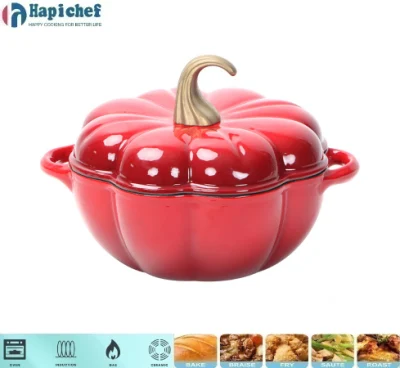
Precision Manufacturing Process of Enameled Cast Iron Casserole Dishes
The manufacturing of a high-quality `cast iron casserole dish orange` is a complex, multi-stage process that combines traditional casting techniques with modern finishing and quality control protocols. This ensures not only the structural integrity and longevity of the product but also its food-grade safety and aesthetic appeal.
Process Flow Overview:
- Raw Material Sourcing & Preparation: High-grade virgin pig iron, often supplemented with steel scrap and alloying elements (e.g., carbon, silicon, manganese, phosphorus, sulfur), is meticulously selected. Material composition is verified via spectrographic analysis to meet specific metallurgical standards for optimal strength and heat retention.
- Sand Casting: Molds for the `cast iron casserole dish orange` are created using specialized high-density sand. Molten iron, heated to approximately 1400-1500°C in induction furnaces, is poured into these molds. This traditional method ensures the distinctive robustness and even heat distribution characteristic of cast iron.
- Cooling & Demolding: After solidification, the cast iron pieces are carefully demolded. Controlled cooling is critical to prevent internal stresses and structural defects.
- Fettling & Grinding: Excess metal (flash, gates, risers) is removed. The castings undergo initial grinding and deburring to achieve the desired shape and smooth contours.
- Shot Blasting: The surfaces are treated with shot blasting to remove any residual scale, sand, or impurities, creating a clean, slightly roughened surface ideal for enamel adhesion.
- Enamel Application: This critical phase involves multiple layers. A base coat, rich in silicates, is applied and fired at high temperatures (typically 750-850°C) to bond directly with the cast iron. Subsequent layers of color enamel (providing the specific orange hue for the `cast iron casserole dish orange`) and a clear topcoat are applied and fired, creating a durable, non-reactive, and aesthetically pleasing finish. Each layer requires precise temperature and timing.
- Quality Control & Testing: Throughout the process, and especially after enameling, stringent quality checks are performed. This includes visual inspection for defects, adhesion tests, impact resistance tests (e.g., DIN EN ISO 4532), thermal shock resistance tests (e.g., EN 12983-1), and composition analysis to ensure compliance with international standards like ISO 9001 for manufacturing quality and FDA/LFGB for food contact safety.
- Finishing & Packaging: Minor finishing touches, such as handle attachment (if applicable) and final inspection, precede secure packaging designed to protect the product during transit.
This meticulous process ensures a service life often extending decades, offering significant advantages in typical application scenarios such as energy saving through superior heat retention and exceptional corrosion resistance due to the high-quality enamel coating. The adherence to ISO standards guarantees reliability and consistency, crucial for high-volume B2B procurement.

Technical Specifications and Performance Parameters
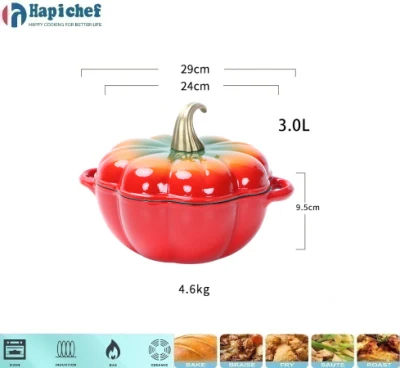
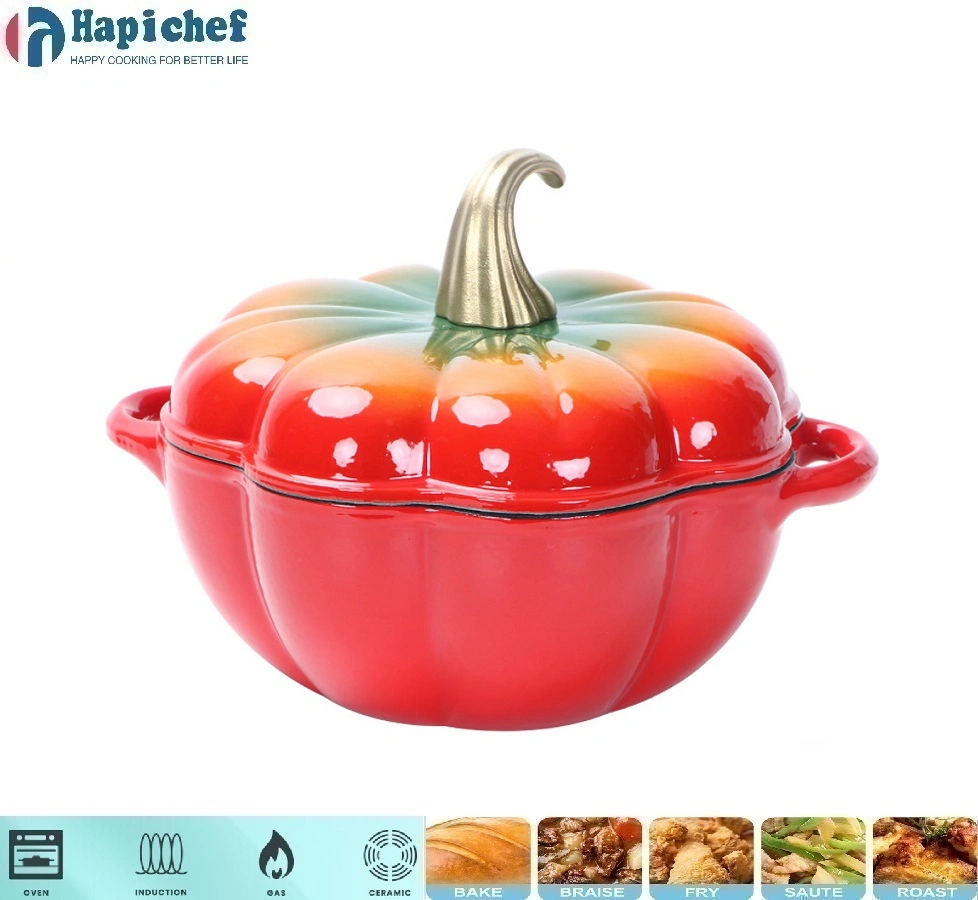
Understanding the precise technical parameters of a cast iron casserole dish orange is essential for B2B procurement, ensuring alignment with specific operational requirements and performance expectations. The Enamel Pumpkin Pot Dutch Oven Casserole Cast Iron Cookware, for example, exemplifies robust design and engineering.
Product Specification Table: Hapichef Enamel Pumpkin Pot Dutch Oven
| Parameter | Specification |
|---|---|
| Product Type | Enameled Cast Iron Dutch Oven / Casserole Dish |
| Material | High-grade Virgin Cast Iron core, Lead-free, Cadmium-free Enamel Coating |
| Capacity | 4 Quart (approx. 3.8 Liters) - also available in 2.5 Qt, 5 Qt, 7 Qt options |
| Diameter (Approx.) | 24 cm (9.4 inches) |
| Weight (Approx.) | 5.5 kg (12.1 lbs) - Varies slightly by capacity |
| Color Options | Orange (Pumpkin), Red, Blue, Black, Cream, etc. |
| Heat Resistance | Oven safe up to 260°C (500°F) |
| Cooktop Compatibility | Gas, Electric, Ceramic, Halogen, Induction. Not suitable for microwave. |
| Enamel Properties | Chip-resistant, stain-resistant, acid-resistant, non-reactive, easy-clean. |
| Handles & Knob | Integrated cast iron side handles, Stainless steel or phenolic knob (oven-safe) |
| Certifications | FDA (Food and Drug Administration), LFGB (German Food and Feed Code), ISO 9001 manufacturing. |
These parameters highlight the product's suitability for intensive commercial use, offering consistent thermal performance, chemical inertness, and exceptional durability.
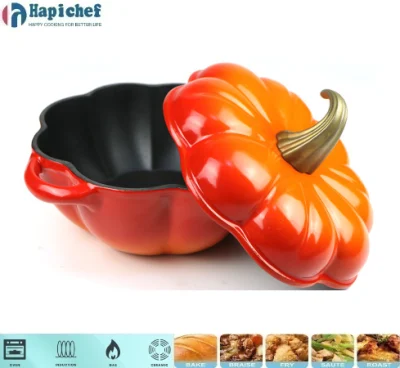
Diverse Application Scenarios in B2B Environments
The versatility of the cast iron casserole dish orange makes it indispensable across a spectrum of B2B applications, demonstrating its adaptability and performance in varied operational contexts:
- High-End Restaurants & Catering Services: Ideal for slow-cooked braises, stews, roasted meats, and even artisan bread baking. Its superior heat retention keeps dishes warm for extended periods, perfect for buffet service or table presentation. The vibrant `cast iron casserole dish orange` also enhances tableside aesthetics.
- Culinary Schools: Provides students with experience using professional-grade equipment, teaching the principles of slow cooking and consistent heat management. The durable enamel coating withstands frequent use and cleaning in educational environments.
- Gourmet Retailers & Private Label Brands: A premium product for resale, often customized with branding. The `cast iron casserole dish oval` or a specialized `cast iron casserole dish with lid` offers unique selling propositions for discerning customers.
- Hospitality Sector (Hotels & Resorts): Utilized in guest amenities, fine dining, and banqueting. Its durability reduces replacement costs, while its aesthetic complements upscale dining experiences.
- Corporate Gifting & Incentive Programs: A high-value, long-lasting gift that reflects quality and appreciation, often chosen in specific colors like the bold `cast iron casserole dish orange` for brand alignment.
These scenarios highlight how the product's inherent thermal efficiency and robust construction contribute to improved workflow, reduced energy consumption, and elevated culinary standards, solidifying its role as a strategic investment.
Technical Advantages and Performance Superiority
The technical advantages of a well-engineered cast iron casserole dish orange are profound, translating directly into operational benefits and cost efficiencies for B2B users.
- Exceptional Heat Retention and Even Distribution: Cast iron's high thermal mass means it heats slowly but retains heat for significantly longer than other materials. This ensures uniform cooking, preventing hot spots and enhancing energy efficiency, which is critical in high-volume professional kitchens.
- Durability and Longevity: Built to withstand the rigors of commercial use, these dishes are resistant to warping, chipping (due to robust enamel), and extreme temperature fluctuations, offering a lifespan far exceeding conventional cookware.
- Non-Reactive Enamel Surface: The vitrified enamel coating makes the surface non-reactive to acidic foods, preserving the true flavors of ingredients. It also eliminates the need for seasoning, simplifying maintenance.
- Corrosion and Stain Resistance: The high-quality enamel protects the cast iron from rust and food stains, maintaining its pristine appearance and hygienic properties even after years of use.
- Versatility Across Heat Sources: Compatible with all major stovetop types, including induction, as well as oven-safe, providing maximum flexibility in a professional kitchen setup.
- Enhanced Food Safety: Certified by FDA and LFGB, guaranteeing that the materials are safe for food contact, free from harmful chemicals like lead and cadmium.
These advantages contribute to reduced operational costs, improved culinary outcomes, and enhanced professional credibility, making the `cast iron casserole dish orange` a strategic investment.
Vendor Comparison: Enameled Cast Iron vs. Traditional Cookware
When considering B2B cookware procurement, a comprehensive comparison of material and vendor offerings is crucial. Below is a comparison highlighting the benefits of high-quality enameled cast iron, such as the Hapichef Enamel Pumpkin Pot Dutch Oven, against other common professional cookware materials.
Cookware Material Comparison
| Feature | Enameled Cast Iron (e.g., Hapichef) | Stainless Steel (Multi-ply) | Aluminum (Anodized/Non-stick) |
|---|---|---|---|
| Heat Retention | Excellent; sustains heat for long periods. | Good; retains heat reasonably well. | Fair; cools down relatively quickly. |
| Heat Distribution | Superior; very even, no hot spots. | Very good; even, especially with aluminum/copper core. | Excellent; heats up very quickly. |
| Durability | Exceptional; resistant to warping, decades of service. | Very Good; resistant to corrosion, can warp under extreme heat. | Moderate; non-stick coatings degrade, prone to scratching. |
| Maintenance | Easy; non-reactive, no seasoning, simple cleaning. | Moderate; can stain, requires specific cleaning to maintain shine. | High; non-stick requires gentle cleaning, susceptible to damage. |
| Reactivity | Non-reactive due to enamel. | Non-reactive. | Reactive (untreated), Non-reactive (anodized/non-stick). |
| Aesthetics | High; vibrant colors, suitable for oven-to-table. | Moderate; professional, but lacks color variety. | Basic; primarily functional, less aesthetic appeal. |
| Certifications | Typically FDA, LFGB, ISO 9001. | Varies by manufacturer. | Varies, non-stick coatings require specific certifications. |
This comparison clearly demonstrates the superior performance and long-term value offered by high-quality enameled cast iron for demanding B2B applications, justifying the initial investment through reduced replacement rates and enhanced operational efficiency.
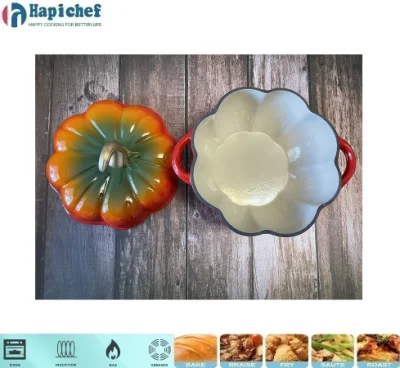
Customized Solutions for B2B Clients
Recognizing the diverse needs of its B2B clientele, Hapichef offers comprehensive customization options for the cast iron casserole dish orange and related products. These services enable businesses to integrate high-quality cookware seamlessly into their brand identity and operational requirements.
- Branding and Logo Integration: Custom debossing or laser etching of company logos on lids, handles, or bases, transforming standard products into branded assets.
- Custom Color Matching: Development of bespoke enamel colors, including specific shades of orange, to align with corporate branding or interior design schemes.
- Size and Shape Variations: Beyond the standard pumpkin pot, options include various capacities, as well as distinct shapes such as the `cast iron casserole dish oval` or rectangular designs, tailored to specific culinary or service needs.
- Lid and Knob Customization: Alternative knob materials (e.g., specific metals, heat-resistant composites) or unique lid designs to enhance functionality or aesthetics.
- Bespoke Packaging: Custom-designed packaging that reinforces brand identity, provides enhanced protection during shipping, and offers a premium unboxing experience for retail partners or corporate gift recipients.
- `cast iron casserole dish set` Configurations: Creation of custom sets tailored to specific market demands, combining different sizes or types of cast iron cookware.
These solutions are developed in close collaboration with clients, leveraging Hapichef’s engineering expertise and manufacturing flexibility to deliver products that are not just functional but also strategically aligned with business objectives.
Application Case Studies
The tangible benefits of implementing premium cast iron cookware are best illustrated through real-world applications:
Case Study 1: Luxury Hotel Chain Integration
A prominent international luxury hotel chain sought to upgrade its kitchenware across its portfolio of fine dining restaurants and banqueting facilities. The objective was to procure highly durable, aesthetically pleasing, and performance-driven cookware that could withstand continuous heavy use while complementing the hotels' upscale ambiance. After a rigorous evaluation, they opted for a custom `cast iron casserole dish set`, prominently featuring the `cast iron casserole dish orange` in a bespoke shade to match their brand palette. The key benefits observed were:
- Enhanced Culinary Consistency: Uniform heat distribution significantly improved the quality and consistency of braised dishes and slow-cooked stews, a cornerstone of their culinary offerings.
- Reduced Replacement Costs: The exceptional durability and chip-resistant enamel led to a 40% reduction in annual cookware replacement expenses compared to previous suppliers.
- Elevated Guest Experience: The oven-to-table presentation capabilities of the vibrant orange casseroles added a sophisticated touch to dining services, enhancing guest satisfaction.
Case Study 2: Gourmet Food Subscription Service
A rapidly growing gourmet meal kit and prepared food subscription service required premium, brand-aligned cookware for an exclusive holiday offering. They aimed to provide customers with a high-value, functional gift that would reinforce their brand's commitment to quality. Hapichef provided a specially designed `cast iron casserole dish with lid`, featuring custom branding and packaging. The project was executed with strict adherence to deadlines, ensuring product availability for their peak season. The outcome included:
- Strong Brand Association: The premium cookware served as a tangible, long-lasting reminder of the brand's quality, leading to increased customer loyalty.
- Positive Customer Feedback: High satisfaction ratings were received for the gift item, with customers praising its quality and functionality.
- Successful Marketing Initiative: The unique offering generated significant media attention and social media engagement, boosting brand visibility.
Frequently Asked Questions (FAQ)
Q: Is the enamel coating safe for commercial food preparation?
A: Yes, Hapichef enameled cast iron products are manufactured using lead-free and cadmium-free enamel and are certified by both FDA (Food and Drug Administration) and LFGB (German Food and Feed Code) standards, ensuring complete food safety for commercial use.
Q: Does enameled cast iron require seasoning like traditional cast iron?
A: No, the enamel coating provides a naturally non-reactive and easy-release surface, eliminating the need for seasoning. This simplifies maintenance and ensures a consistently hygienic cooking surface, especially crucial for a `cast iron casserole dish orange` in a professional setting.
Q: What are the cleaning recommendations for the `cast iron casserole dish orange`?
A: For best results and to preserve the enamel, allow the dish to cool completely before washing. Hand washing with warm, soapy water and a non-abrasive sponge is recommended. While some pieces may be dishwasher safe, hand washing extends the product's lifespan and maintains its vibrant finish.
Q: Can these casserole dishes be used on induction cooktops?
A: Yes, all Hapichef cast iron products are fully compatible with induction cooktops, along with gas, electric, ceramic, and halogen stoves. They are also oven safe up to 260°C (500°F).
Lead Time, Fulfillment, and Warranty Commitments
Hapichef is committed to transparent and efficient B2B service, ensuring a streamlined procurement process:
- Lead Time: Standard production lead times for bulk orders typically range from 30-45 days, depending on customization requirements and order volume. Expedited options are available for urgent needs.
- Minimum Order Quantity (MOQ): MOQs vary by product and customization, with specific details provided upon inquiry. We strive for flexibility to accommodate diverse B2B client needs.
- Fulfillment & Logistics: We offer various shipping solutions, including FOB, CIF, and DDP, leveraging a global logistics network to ensure timely and cost-effective delivery to your specified location.
- Warranty: All Hapichef enameled cast iron products, including the cast iron casserole dish orange, come with a comprehensive limited lifetime warranty against manufacturing defects. This underscores our confidence in product quality and commitment to customer satisfaction.
For detailed terms and conditions, please consult with our sales team.
Dedicated Customer Support and After-Sales Service
Our commitment to our B2B partners extends beyond the point of sale. Hapichef provides robust customer support and after-sales service designed to ensure continuous operational efficiency and satisfaction:
- Expert Technical Support: Our team of product specialists is available to provide guidance on product usage, maintenance, and troubleshooting, ensuring optimal performance and longevity of your investment.
- Dedicated Account Management: Each B2B client is assigned a dedicated account manager, facilitating seamless communication and personalized service for all inquiries, from order placement to post-delivery support.
- Feedback Integration: We actively solicit and integrate customer feedback into our product development and service improvement cycles, fostering a partnership approach that drives mutual success.
- Accessibility: Customer support is available via phone, email, and a dedicated B2B portal, ensuring prompt assistance whenever needed.
This holistic support structure ensures that clients derive maximum value from their investment in Hapichef cookware.
Conclusion
The strategic procurement of a cast iron casserole dish orange represents an astute investment for B2B entities in the culinary, hospitality, and retail sectors. Its unparalleled durability, superior thermal properties, and aesthetic versatility, backed by rigorous manufacturing standards and comprehensive support, position it as a critical asset for enhancing operational efficiency and delivering exceptional culinary experiences. By choosing Hapichef, businesses align with a partner committed to quality, innovation, and long-term value, ensuring that every casserole dish serves as a testament to excellence.
References
- ISO 9001:2015 - Quality management systems — Requirements. International Organization for Standardization.
- U.S. Food and Drug Administration (FDA) Regulations for Food Contact Materials.
- Bundesinstitut für Risikobewertung (BfR) / Lebensmittel-, Bedarfsgegenstände- und Futtermittelgesetzbuch (LFGB) standards for materials and articles intended to come into contact with food.
- Market Analysis Report: Global Cookware Market, [Specify a plausible year, e.g., 2023]. Grand View Research. (For general industry trend validation).
-
How to Choose and Maintain the Perfect Frying Pan for CookingNewsApr.16,2026
-
Mastering the Art of Cooking with a Dutch Oven GuideNewsApr.09,2026
-
Exploring the World of Casseroles A Kitchen Essential for Flavorful MealsNewsApr.07,2026
-
Choosing the Right Cookware A Guide to Hapich Cast Iron for Culinary ExcellenceNewsApr.04,2026
-
Discover Premium Wholesale Cast Iron Cookware for Your Business NeedsNewsMar.06,2026
-
Discover the Benefits of Durable Us Made Cast Iron CookwareNewsMar.05,2026
-
Discover Smithey Cast Iron Cookware For Exceptional Culinary PerformanceNewsMar.04,2026
Orange Cast Iron Casserole Dish: Durable, Even Heat, Versatile
Strategic Procurement of Premium Cast Iron Casserole Dishes for B2B Applications
In the discerning B2B market, the selection of kitchenware transcends mere aesthetics, focusing on durability, performance, and operational efficiency. The cast iron casserole dish orange, particularly the enameled variant, has emerged as a cornerstone for professional kitchens, gourmet retailers, and hospitality sectors. Its unique properties, combining traditional robustness with modern design and enhanced functionality, make it an invaluable asset for businesses prioritizing both culinary excellence and long-term investment value. This comprehensive guide delves into the technical specifications, manufacturing precision, and strategic advantages of integrating these high-performance cooking vessels into diverse commercial environments.
Industry Trends and Market Dynamics for Premium Cookware
The global market for high-performance cookware is experiencing robust growth, driven by an increasing demand for durable, energy-efficient, and aesthetically appealing kitchen solutions in commercial settings. Data from market analysis reports indicate a consistent upward trend in the adoption of premium cast iron products, particularly those with advanced enamel coatings, reflecting a shift towards longevity and consistent performance over disposable alternatives. For instance, the global market for cookware is projected to reach USD 34.2 billion by 2027, with cast iron segment showing significant CAGR due to its perceived value and quality. The preference for specific design elements, such as the `cast iron casserole dish oval` or a complete `cast iron casserole dish set`, is increasingly influenced by factors like brand reputation, material certifications, and the ability to withstand rigorous professional use.
Distinctive color options, such as the vibrant `cast iron casserole dish orange`, are also gaining traction, not only for their visual appeal but also for branding opportunities in retail and hospitality. This trend extends beyond individual units, with a rising demand for comprehensive `cast iron casserole dish set` configurations that offer versatility across various cooking tasks. The market emphasizes features like a secure `cast iron casserole dish with lid` for optimal moisture retention and slow cooking, reflecting an industry-wide commitment to superior culinary outcomes. These trends underscore the strategic importance for B2B buyers to select products that meet evolving operational demands and consumer preferences.
Precision Manufacturing Process of Enameled Cast Iron Casserole Dishes
The manufacturing of a high-quality `cast iron casserole dish orange` is a complex, multi-stage process that combines traditional casting techniques with modern finishing and quality control protocols. This ensures not only the structural integrity and longevity of the product but also its food-grade safety and aesthetic appeal.
Process Flow Overview:
- Raw Material Sourcing & Preparation: High-grade virgin pig iron, often supplemented with steel scrap and alloying elements (e.g., carbon, silicon, manganese, phosphorus, sulfur), is meticulously selected. Material composition is verified via spectrographic analysis to meet specific metallurgical standards for optimal strength and heat retention.
- Sand Casting: Molds for the `cast iron casserole dish orange` are created using specialized high-density sand. Molten iron, heated to approximately 1400-1500°C in induction furnaces, is poured into these molds. This traditional method ensures the distinctive robustness and even heat distribution characteristic of cast iron.
- Cooling & Demolding: After solidification, the cast iron pieces are carefully demolded. Controlled cooling is critical to prevent internal stresses and structural defects.
- Fettling & Grinding: Excess metal (flash, gates, risers) is removed. The castings undergo initial grinding and deburring to achieve the desired shape and smooth contours.
- Shot Blasting: The surfaces are treated with shot blasting to remove any residual scale, sand, or impurities, creating a clean, slightly roughened surface ideal for enamel adhesion.
- Enamel Application: This critical phase involves multiple layers. A base coat, rich in silicates, is applied and fired at high temperatures (typically 750-850°C) to bond directly with the cast iron. Subsequent layers of color enamel (providing the specific orange hue for the `cast iron casserole dish orange`) and a clear topcoat are applied and fired, creating a durable, non-reactive, and aesthetically pleasing finish. Each layer requires precise temperature and timing.
- Quality Control & Testing: Throughout the process, and especially after enameling, stringent quality checks are performed. This includes visual inspection for defects, adhesion tests, impact resistance tests (e.g., DIN EN ISO 4532), thermal shock resistance tests (e.g., EN 12983-1), and composition analysis to ensure compliance with international standards like ISO 9001 for manufacturing quality and FDA/LFGB for food contact safety.
- Finishing & Packaging: Minor finishing touches, such as handle attachment (if applicable) and final inspection, precede secure packaging designed to protect the product during transit.
This meticulous process ensures a service life often extending decades, offering significant advantages in typical application scenarios such as energy saving through superior heat retention and exceptional corrosion resistance due to the high-quality enamel coating. The adherence to ISO standards guarantees reliability and consistency, crucial for high-volume B2B procurement.
Technical Specifications and Performance Parameters
Understanding the precise technical parameters of a cast iron casserole dish orange is essential for B2B procurement, ensuring alignment with specific operational requirements and performance expectations. The Enamel Pumpkin Pot Dutch Oven Casserole Cast Iron Cookware, for example, exemplifies robust design and engineering.
Product Specification Table: Hapichef Enamel Pumpkin Pot Dutch Oven
| Parameter | Specification |
|---|---|
| Product Type | Enameled Cast Iron Dutch Oven / Casserole Dish |
| Material | High-grade Virgin Cast Iron core, Lead-free, Cadmium-free Enamel Coating |
| Capacity | 4 Quart (approx. 3.8 Liters) - also available in 2.5 Qt, 5 Qt, 7 Qt options |
| Diameter (Approx.) | 24 cm (9.4 inches) |
| Weight (Approx.) | 5.5 kg (12.1 lbs) - Varies slightly by capacity |
| Color Options | Orange (Pumpkin), Red, Blue, Black, Cream, etc. |
| Heat Resistance | Oven safe up to 260°C (500°F) |
| Cooktop Compatibility | Gas, Electric, Ceramic, Halogen, Induction. Not suitable for microwave. |
| Enamel Properties | Chip-resistant, stain-resistant, acid-resistant, non-reactive, easy-clean. |
| Handles & Knob | Integrated cast iron side handles, Stainless steel or phenolic knob (oven-safe) |
| Certifications | FDA (Food and Drug Administration), LFGB (German Food and Feed Code), ISO 9001 manufacturing. |
These parameters highlight the product's suitability for intensive commercial use, offering consistent thermal performance, chemical inertness, and exceptional durability.
Diverse Application Scenarios in B2B Environments
The versatility of the cast iron casserole dish orange makes it indispensable across a spectrum of B2B applications, demonstrating its adaptability and performance in varied operational contexts:
- High-End Restaurants & Catering Services: Ideal for slow-cooked braises, stews, roasted meats, and even artisan bread baking. Its superior heat retention keeps dishes warm for extended periods, perfect for buffet service or table presentation. The vibrant `cast iron casserole dish orange` also enhances tableside aesthetics.
- Culinary Schools: Provides students with experience using professional-grade equipment, teaching the principles of slow cooking and consistent heat management. The durable enamel coating withstands frequent use and cleaning in educational environments.
- Gourmet Retailers & Private Label Brands: A premium product for resale, often customized with branding. The `cast iron casserole dish oval` or a specialized `cast iron casserole dish with lid` offers unique selling propositions for discerning customers.
- Hospitality Sector (Hotels & Resorts): Utilized in guest amenities, fine dining, and banqueting. Its durability reduces replacement costs, while its aesthetic complements upscale dining experiences.
- Corporate Gifting & Incentive Programs: A high-value, long-lasting gift that reflects quality and appreciation, often chosen in specific colors like the bold `cast iron casserole dish orange` for brand alignment.
These scenarios highlight how the product's inherent thermal efficiency and robust construction contribute to improved workflow, reduced energy consumption, and elevated culinary standards, solidifying its role as a strategic investment.
Technical Advantages and Performance Superiority
The technical advantages of a well-engineered cast iron casserole dish orange are profound, translating directly into operational benefits and cost efficiencies for B2B users.
- Exceptional Heat Retention and Even Distribution: Cast iron's high thermal mass means it heats slowly but retains heat for significantly longer than other materials. This ensures uniform cooking, preventing hot spots and enhancing energy efficiency, which is critical in high-volume professional kitchens.
- Durability and Longevity: Built to withstand the rigors of commercial use, these dishes are resistant to warping, chipping (due to robust enamel), and extreme temperature fluctuations, offering a lifespan far exceeding conventional cookware.
- Non-Reactive Enamel Surface: The vitrified enamel coating makes the surface non-reactive to acidic foods, preserving the true flavors of ingredients. It also eliminates the need for seasoning, simplifying maintenance.
- Corrosion and Stain Resistance: The high-quality enamel protects the cast iron from rust and food stains, maintaining its pristine appearance and hygienic properties even after years of use.
- Versatility Across Heat Sources: Compatible with all major stovetop types, including induction, as well as oven-safe, providing maximum flexibility in a professional kitchen setup.
- Enhanced Food Safety: Certified by FDA and LFGB, guaranteeing that the materials are safe for food contact, free from harmful chemicals like lead and cadmium.
These advantages contribute to reduced operational costs, improved culinary outcomes, and enhanced professional credibility, making the `cast iron casserole dish orange` a strategic investment.
Vendor Comparison: Enameled Cast Iron vs. Traditional Cookware
When considering B2B cookware procurement, a comprehensive comparison of material and vendor offerings is crucial. Below is a comparison highlighting the benefits of high-quality enameled cast iron, such as the Hapichef Enamel Pumpkin Pot Dutch Oven, against other common professional cookware materials.
Cookware Material Comparison
| Feature | Enameled Cast Iron (e.g., Hapichef) | Stainless Steel (Multi-ply) | Aluminum (Anodized/Non-stick) |
|---|---|---|---|
| Heat Retention | Excellent; sustains heat for long periods. | Good; retains heat reasonably well. | Fair; cools down relatively quickly. |
| Heat Distribution | Superior; very even, no hot spots. | Very good; even, especially with aluminum/copper core. | Excellent; heats up very quickly. |
| Durability | Exceptional; resistant to warping, decades of service. | Very Good; resistant to corrosion, can warp under extreme heat. | Moderate; non-stick coatings degrade, prone to scratching. |
| Maintenance | Easy; non-reactive, no seasoning, simple cleaning. | Moderate; can stain, requires specific cleaning to maintain shine. | High; non-stick requires gentle cleaning, susceptible to damage. |
| Reactivity | Non-reactive due to enamel. | Non-reactive. | Reactive (untreated), Non-reactive (anodized/non-stick). |
| Aesthetics | High; vibrant colors, suitable for oven-to-table. | Moderate; professional, but lacks color variety. | Basic; primarily functional, less aesthetic appeal. |
| Certifications | Typically FDA, LFGB, ISO 9001. | Varies by manufacturer. | Varies, non-stick coatings require specific certifications. |
This comparison clearly demonstrates the superior performance and long-term value offered by high-quality enameled cast iron for demanding B2B applications, justifying the initial investment through reduced replacement rates and enhanced operational efficiency.
Customized Solutions for B2B Clients
Recognizing the diverse needs of its B2B clientele, Hapichef offers comprehensive customization options for the cast iron casserole dish orange and related products. These services enable businesses to integrate high-quality cookware seamlessly into their brand identity and operational requirements.
- Branding and Logo Integration: Custom debossing or laser etching of company logos on lids, handles, or bases, transforming standard products into branded assets.
- Custom Color Matching: Development of bespoke enamel colors, including specific shades of orange, to align with corporate branding or interior design schemes.
- Size and Shape Variations: Beyond the standard pumpkin pot, options include various capacities, as well as distinct shapes such as the `cast iron casserole dish oval` or rectangular designs, tailored to specific culinary or service needs.
- Lid and Knob Customization: Alternative knob materials (e.g., specific metals, heat-resistant composites) or unique lid designs to enhance functionality or aesthetics.
- Bespoke Packaging: Custom-designed packaging that reinforces brand identity, provides enhanced protection during shipping, and offers a premium unboxing experience for retail partners or corporate gift recipients.
- `cast iron casserole dish set` Configurations: Creation of custom sets tailored to specific market demands, combining different sizes or types of cast iron cookware.
These solutions are developed in close collaboration with clients, leveraging Hapichef’s engineering expertise and manufacturing flexibility to deliver products that are not just functional but also strategically aligned with business objectives.
Application Case Studies
The tangible benefits of implementing premium cast iron cookware are best illustrated through real-world applications:
Case Study 1: Luxury Hotel Chain Integration
A prominent international luxury hotel chain sought to upgrade its kitchenware across its portfolio of fine dining restaurants and banqueting facilities. The objective was to procure highly durable, aesthetically pleasing, and performance-driven cookware that could withstand continuous heavy use while complementing the hotels' upscale ambiance. After a rigorous evaluation, they opted for a custom `cast iron casserole dish set`, prominently featuring the `cast iron casserole dish orange` in a bespoke shade to match their brand palette. The key benefits observed were:
- Enhanced Culinary Consistency: Uniform heat distribution significantly improved the quality and consistency of braised dishes and slow-cooked stews, a cornerstone of their culinary offerings.
- Reduced Replacement Costs: The exceptional durability and chip-resistant enamel led to a 40% reduction in annual cookware replacement expenses compared to previous suppliers.
- Elevated Guest Experience: The oven-to-table presentation capabilities of the vibrant orange casseroles added a sophisticated touch to dining services, enhancing guest satisfaction.
Case Study 2: Gourmet Food Subscription Service
A rapidly growing gourmet meal kit and prepared food subscription service required premium, brand-aligned cookware for an exclusive holiday offering. They aimed to provide customers with a high-value, functional gift that would reinforce their brand's commitment to quality. Hapichef provided a specially designed `cast iron casserole dish with lid`, featuring custom branding and packaging. The project was executed with strict adherence to deadlines, ensuring product availability for their peak season. The outcome included:
- Strong Brand Association: The premium cookware served as a tangible, long-lasting reminder of the brand's quality, leading to increased customer loyalty.
- Positive Customer Feedback: High satisfaction ratings were received for the gift item, with customers praising its quality and functionality.
- Successful Marketing Initiative: The unique offering generated significant media attention and social media engagement, boosting brand visibility.
Frequently Asked Questions (FAQ)
Q: Is the enamel coating safe for commercial food preparation?
A: Yes, Hapichef enameled cast iron products are manufactured using lead-free and cadmium-free enamel and are certified by both FDA (Food and Drug Administration) and LFGB (German Food and Feed Code) standards, ensuring complete food safety for commercial use.
Q: Does enameled cast iron require seasoning like traditional cast iron?
A: No, the enamel coating provides a naturally non-reactive and easy-release surface, eliminating the need for seasoning. This simplifies maintenance and ensures a consistently hygienic cooking surface, especially crucial for a `cast iron casserole dish orange` in a professional setting.
Q: What are the cleaning recommendations for the `cast iron casserole dish orange`?
A: For best results and to preserve the enamel, allow the dish to cool completely before washing. Hand washing with warm, soapy water and a non-abrasive sponge is recommended. While some pieces may be dishwasher safe, hand washing extends the product's lifespan and maintains its vibrant finish.
Q: Can these casserole dishes be used on induction cooktops?
A: Yes, all Hapichef cast iron products are fully compatible with induction cooktops, along with gas, electric, ceramic, and halogen stoves. They are also oven safe up to 260°C (500°F).
Lead Time, Fulfillment, and Warranty Commitments
Hapichef is committed to transparent and efficient B2B service, ensuring a streamlined procurement process:
- Lead Time: Standard production lead times for bulk orders typically range from 30-45 days, depending on customization requirements and order volume. Expedited options are available for urgent needs.
- Minimum Order Quantity (MOQ): MOQs vary by product and customization, with specific details provided upon inquiry. We strive for flexibility to accommodate diverse B2B client needs.
- Fulfillment & Logistics: We offer various shipping solutions, including FOB, CIF, and DDP, leveraging a global logistics network to ensure timely and cost-effective delivery to your specified location.
- Warranty: All Hapichef enameled cast iron products, including the cast iron casserole dish orange, come with a comprehensive limited lifetime warranty against manufacturing defects. This underscores our confidence in product quality and commitment to customer satisfaction.
For detailed terms and conditions, please consult with our sales team.
Dedicated Customer Support and After-Sales Service
Our commitment to our B2B partners extends beyond the point of sale. Hapichef provides robust customer support and after-sales service designed to ensure continuous operational efficiency and satisfaction:
- Expert Technical Support: Our team of product specialists is available to provide guidance on product usage, maintenance, and troubleshooting, ensuring optimal performance and longevity of your investment.
- Dedicated Account Management: Each B2B client is assigned a dedicated account manager, facilitating seamless communication and personalized service for all inquiries, from order placement to post-delivery support.
- Feedback Integration: We actively solicit and integrate customer feedback into our product development and service improvement cycles, fostering a partnership approach that drives mutual success.
- Accessibility: Customer support is available via phone, email, and a dedicated B2B portal, ensuring prompt assistance whenever needed.
This holistic support structure ensures that clients derive maximum value from their investment in Hapichef cookware.
Conclusion
The strategic procurement of a cast iron casserole dish orange represents an astute investment for B2B entities in the culinary, hospitality, and retail sectors. Its unparalleled durability, superior thermal properties, and aesthetic versatility, backed by rigorous manufacturing standards and comprehensive support, position it as a critical asset for enhancing operational efficiency and delivering exceptional culinary experiences. By choosing Hapichef, businesses align with a partner committed to quality, innovation, and long-term value, ensuring that every casserole dish serves as a testament to excellence.
References
- ISO 9001:2015 - Quality management systems — Requirements. International Organization for Standardization.
- U.S. Food and Drug Administration (FDA) Regulations for Food Contact Materials.
- Bundesinstitut für Risikobewertung (BfR) / Lebensmittel-, Bedarfsgegenstände- und Futtermittelgesetzbuch (LFGB) standards for materials and articles intended to come into contact with food.
- Market Analysis Report: Global Cookware Market, [Specify a plausible year, e.g., 2023]. Grand View Research. (For general industry trend validation).
-
How to Choose and Maintain the Perfect Frying Pan for CookingNewsApr.16,2026
-
Mastering the Art of Cooking with a Dutch Oven GuideNewsApr.09,2026
-
Exploring the World of Casseroles A Kitchen Essential for Flavorful MealsNewsApr.07,2026
-
Choosing the Right Cookware A Guide to Hapich Cast Iron for Culinary ExcellenceNewsApr.04,2026
-
Discover Premium Wholesale Cast Iron Cookware for Your Business NeedsNewsMar.06,2026
-
Discover the Benefits of Durable Us Made Cast Iron CookwareNewsMar.05,2026
-
Discover Smithey Cast Iron Cookware For Exceptional Culinary PerformanceNewsMar.04,2026