


Need a Large Cast Iron Roaster for Even Heat & Big Meals?
A Field Note on the Modern large cast iron roaster (and why chefs keep coming back to enamel)
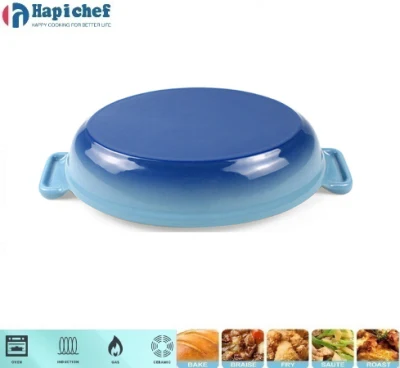
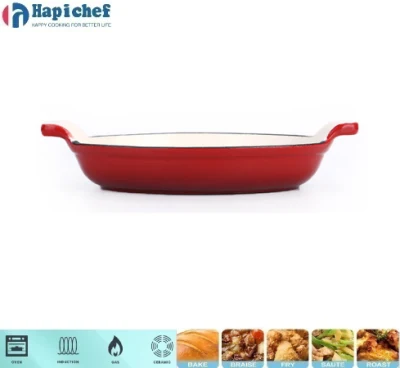
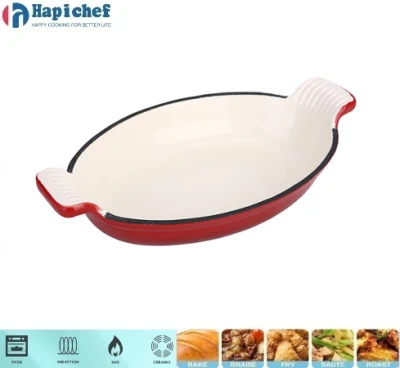
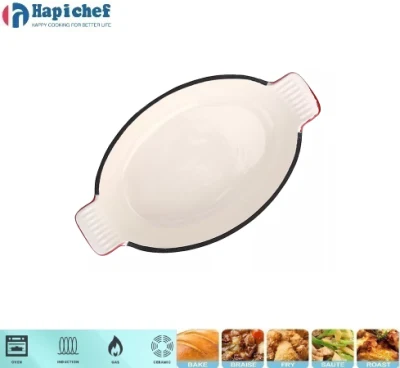
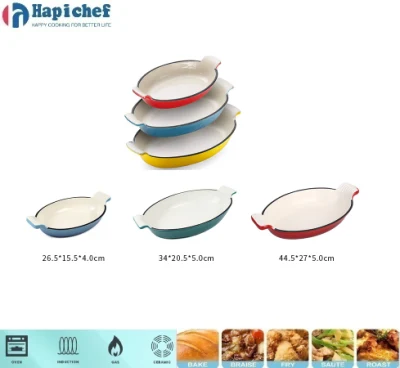
I’ve been poking around factories in Hebei and test kitchens in London lately, and—honestly—the most enduring workhorse I keep seeing on racks is the enamel-coated cast iron roaster. The “Tail Shape” Roasting Dish Pan from HapiChef (origin: Dongzhangfeng Village, Xushui District, Baoding City, Hebei Province, China) is a tidy example: affordable, sturdy, surprisingly pretty. In the trade, these are the pieces that survive Saturday night service and still look good for Sunday brunch plating.
What’s trending
Two currents are shaping demand: first, multi-heat-source versatility (induction + oven + grill), and second, enamel finishes that pass LFGB/FDA/Prop 65 without fuss. Operators want colorways that match their brand, while home cooks want something that browns like a champ and cleans easily. This large cast iron roaster does both, and at a price point that, frankly, undercuts a lot of legacy European names (listings indicate ≈$9.20–15.50 ex-works, size/color dependent).
Key specifications (real-world oriented)
| Material | Cast iron (EN-GJL-200/250 or ASTM A48 Class ≈30–40), enamel coated |
| Capacity | ≈3.5–6.5 L (options vary) |
| Dimensions | Common footprints ≈30–40 cm length; wall thickness ≈3.5–4.2 mm |
| Coating | Vitreous enamel, 2–3 layers; thickness ≈250–400 µm |
| Heat Sources | Gas, electric, ceramic, induction, oven, grill |
| Temp tolerance | Up to ≈260–300°C in oven (real-world use may vary) |
| Certifications (typ.) | LFGB, FDA 21 CFR 175.300, CA Prop 65; factory ISO 9001 |
How it’s made (quick process flow)
Raw materials: pig iron + recycled steel are melted and poured into green-sand molds. After shakeout, pieces are shot-blasted, edges machined, and surfaces prepared. Enameling uses a ground coat followed by color coats; firing typically at ≈760–840°C. QC isn’t just visual: enamel thickness is gauged; adhesion checked to ISO 4532 impact; thermal shock cycling assessed; flatness and wobble measured for induction efficiency. Migration tests to ISO 4531/LFGB confirm food-contact safety. Expected service life? With normal use, 10–20 years isn’t unusual, which matches what many customers say anecdotally.
Where it shines
- Roasts, gratins, lasagna; high-Maillard searing then oven finish.
- Front-of-house service: enamel holds color; cleans easily.
- Hospitality/HoReCa, meal-kit brands (oven-ready SKUs), outdoor pop-ups (grill + oven).
Advantages: heat retention, even browning, enamel cleanup, induction-ready base, and—surprisingly—solid ergonomics; it seems that the handles on this large cast iron roaster give good leverage even with oven mitts. One chef told me, “It behaves like the pricey French pans, minus the gulp-inducing price.”
Vendor snapshot (comparative, indicative)
| Vendor | MOQ | Lead Time | Certs | Price (≈) | Customization |
|---|---|---|---|---|---|
| HapiChef (Hebei) | 500–1,000 pcs | 30–45 days | LFGB, FDA, ISO 9001 | $9.2–15.5 | Pantone enamel, laser logo, packaging |
| Generic Importer | 1,000+ | 45–60 days | Varies | $10–18 | Basic color/logo |
| Premium French Brand | Low | Stock or 30 days | EU/US full suite | $120–220 | Limited (brand-led) |
Testing, data, and standards
Typical test snapshots I’ve seen: enamel thickness 320±60 µm; ISO 4532 impact pass at ≈5 J; thermal shock ΔT ≈180°C without crazing; overall migration per ISO 4531/LFGB within limits; FDA 21 CFR 175.300 compliant glazes; handle pull tests ≈10–15 kgf. In practice, that means the large cast iron roaster can go from sear to oven with fewer heart palpitations.
Customization and real cases
Colorways (Pantone-ish), embossed base marks, laser logos, gift boxes. One hotel group spec’d a matte black outside, cream interior, and reported a 12% reduction in plate-up times (heat retention held sauces at temp). A bakery chain used a shallow 35 cm version for family-size cobblers; feedback was that browning was “ridiculously even,” which tracks with cast iron’s thermal mass.
Bottom line
If you need a handsome, durable large cast iron roaster that ticks safety boxes and doesn’t wreck budgets, this Hebei-made enamel roaster is, to be honest, an easy recommendation. Do confirm current certificates and request batch test data—good vendors won’t blink.
Authoritative citations
- ISO 4531:2022 Vitreous and porcelain enamels — Release of metals from enamelled articles — https://www.iso.org/standard/78362.html
- EN 12983-1:2023 Cookware for domestic use — https://www.bsigroup.com/en-GB/productdetail/?pid=000000000030455756
- FDA 21 CFR 175.300 Resinous and polymeric coatings — https://www.ecfr.gov/current/title-21/section-175.300
-
How to Choose and Maintain the Perfect Frying Pan for CookingNewsApr.16,2026
-
Mastering the Art of Cooking with a Dutch Oven GuideNewsApr.09,2026
-
Exploring the World of Casseroles A Kitchen Essential for Flavorful MealsNewsApr.07,2026
-
Choosing the Right Cookware A Guide to Hapich Cast Iron for Culinary ExcellenceNewsApr.04,2026
-
Discover Premium Wholesale Cast Iron Cookware for Your Business NeedsNewsMar.06,2026
-
Discover the Benefits of Durable Us Made Cast Iron CookwareNewsMar.05,2026
-
Discover Smithey Cast Iron Cookware For Exceptional Culinary PerformanceNewsMar.04,2026