


Enamel Coated Saucepan: Even Heat, Easy Clean, Oven Safe
A Cookware Insider’s Take: The rise of the Enamel Coated Saucepan
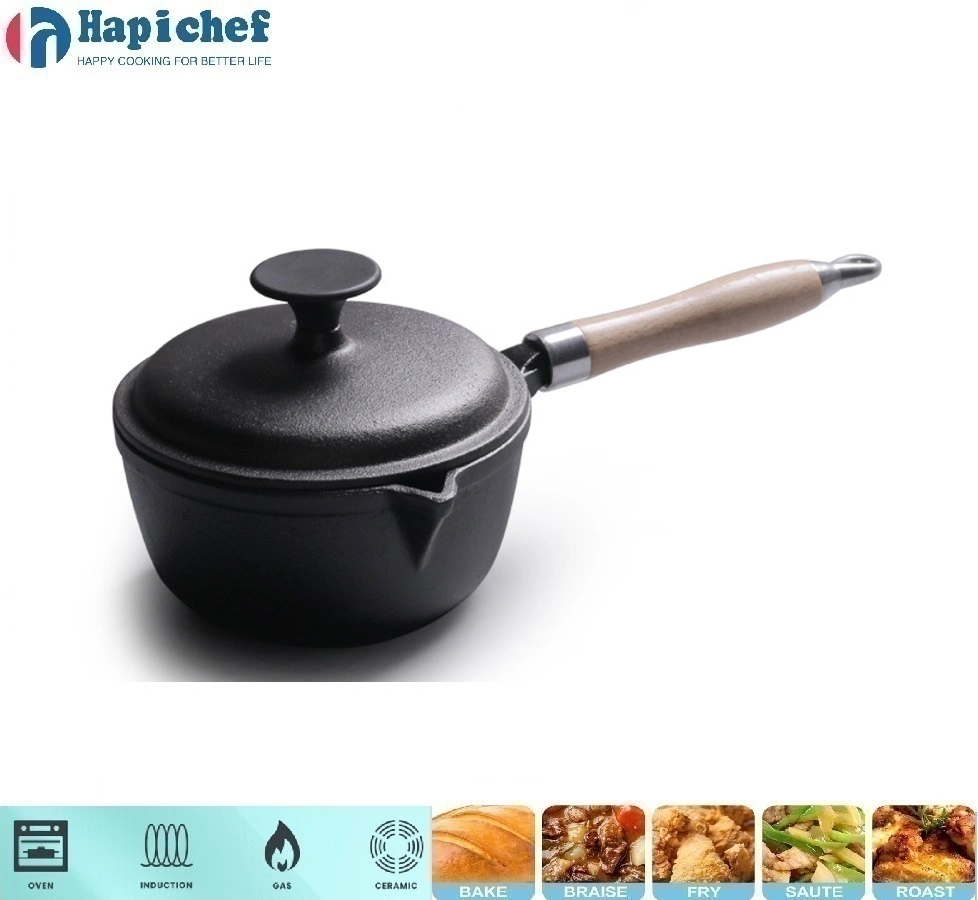
If you’ve been watching kitchenware shelves lately, you’ve noticed a quiet shift. Smaller, heavier pans with glossy colors are edging out tired aluminum. The Enamel Coated Saucepan—specifically enamel on cast iron—is having a moment. I’ve toured factories in Hebei and visited boutique lines in Europe; the best value right now is coming out of Dongzhangfeng Village, Xushui District, Baoding City, Hebei Province, China. That’s where this “Enamel Cast Iron Sauce Pan Preseasoned Milk Pot” is cast, fired, and finished.
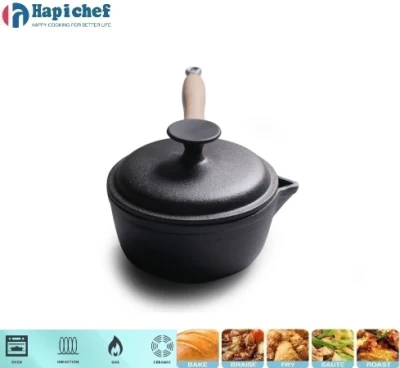
What’s trending (and why it matters)
Two forces are driving adoption: induction stovetops and durability. Enamelled cast iron gives even heat, works on induction, and—if the enamel is properly fired—resists acids from tomato and wine reductions. Many customers say it “just feels stable,” which sounds soft, but in daily cooking that stability prevents scorching and over-corrections. To be honest, that’s half the battle.
Key specifications (real-world, not just brochure)
| Model | Enamel Cast Iron Sauce Pan Preseasoned Milk Pot |
| Capacity | ≈ 1.5 L (real-world fill line around 1.35 L to avoid boil-over) |
| Material | Gray cast iron core (EN-GJL-200 class) + vitreous enamel (ground + color coats) |
| Stove compatibility | Gas, electric, ceramic, induction (to be confirmed per batch specs) |
| Handle / Lid | One-piece cast handle; lid options available |
| MOQ | 500 pieces (typical) |
| Origin | Dongzhangfeng Village, Xushui District, Baoding City, Hebei Province, China |
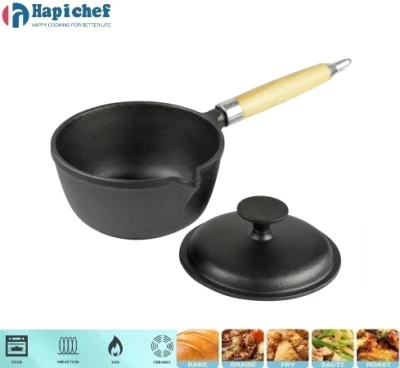
How it’s made (process flow I actually saw)
- Melting and sand casting: controlled chemistry gray iron poured into resin-bonded molds.
- Shot-blasting and machining: removes flash; smooths rims and handle transition.
- Enamel prep: ground coat slurry, then color/top coats (2–3 layers typical).
- Firing: 780–830°C per coat; target enamel thickness ≈ 250–380 μm.
- QC and finishing: deburr, glaze check, logo, packaging.
Testing and standards (the serious bit): Acid resistance per ISO 28706-1, impact per ISO 4532, thermal shock 180°C ΔT (pass in routine batches), migration for food contact to FDA 21 CFR 175.300, EU 1935/2004, and LFGB—certs typically provided on request. Typical adhesion and chip data in the lab is strong; real-world use may vary with utensil abuse.
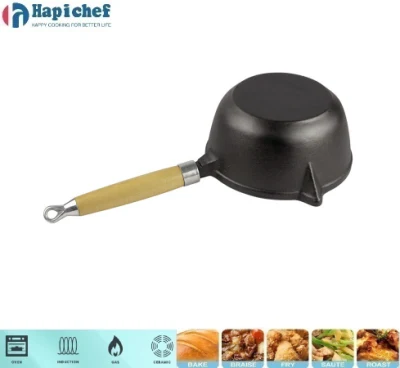
Vendor snapshot (why some brands last longer)
| Vendor | Coating cycles | Standards | MOQ | Lead time | Notes |
|---|---|---|---|---|---|
| HapiChef (Hebei) | 2–3 coats; 2 firings | ISO 28706, ISO 4532, FDA, EU 1935/2004 (docs on request) | ≈500 | 35–45 days | Strong color consistency, good induction flatness |
| Generic Importer | 1–2 coats | Mixed | 200–1000 | 30–60 days | Variable QC; low entry cost |
| Boutique EU Foundry | 3 coats; 3 firings | Full ISO suite, LFGB | ≈100 | 60–90 days | Premium finish, higher price |
Where it shines
- Milk, custards, and oatmeal (no metallic taste; steady simmer)
- Sauce reductions: tomato, wine, demi-glace; enamel resists acidity
- Induction-friendly prep in cafés, test kitchens, and home studios
Advantages: even heat, easy clean, color branding. Limitations: heavier than aluminum; don’t thermal-shock from burner to ice bath—basic enamel wisdom.
Customization
Colors (matte or gloss), embossed logos, lid knobs (stainless or phenolic), packaging, and size range (≈1.0–2.0 L). Branding teams often request Pantone-matched enamel; real-world tolerance is usually ±1–2 ΔE.
Field data and lifespan
Service life: 8–15 years in home use; 3–5 years in café rotation (higher cycle count). One café chain (12 sites) swapped thin aluminum milk pots for the Enamel Coated Saucepan; milk scorching incidents dropped ≈60% and induction hotplate cycling stabilized. A home cook I spoke with said, “I stir less and get better sauces”—not scientific, but telling.
Bottom line
If you need consistent simmering, food-safe enamel, and induction readiness, a Enamel Coated Saucepan from a factory that actually publishes test data is hard to beat. Ask for ISO 28706 and ISO 4532 reports, food-contact migration certificates (FDA/EU/LFGB), and a color retention sample fired at production temperature—not lab-only temps.
Authoritative citations
- ISO 28706-1: Vitreous and porcelain enamels—Determination of resistance to chemical corrosion.
- ISO 4532: Vitreous and porcelain enamels—Determination of resistance to impact.
- FDA 21 CFR 175.300: Resinous and polymeric coatings for food-contact surfaces.
- EU Regulation (EC) No 1935/2004: Materials and articles intended to come into contact with food.
-
How to Choose and Maintain the Perfect Frying Pan for CookingNewsApr.16,2026
-
Mastering the Art of Cooking with a Dutch Oven GuideNewsApr.09,2026
-
Exploring the World of Casseroles A Kitchen Essential for Flavorful MealsNewsApr.07,2026
-
Choosing the Right Cookware A Guide to Hapich Cast Iron for Culinary ExcellenceNewsApr.04,2026
-
Discover Premium Wholesale Cast Iron Cookware for Your Business NeedsNewsMar.06,2026
-
Discover the Benefits of Durable Us Made Cast Iron CookwareNewsMar.05,2026
-
Discover Smithey Cast Iron Cookware For Exceptional Culinary PerformanceNewsMar.04,2026