


Cast Iron Casserole Uses: Even Heat, 4L & 5L Durable Pots
What Pros Actually Do With a Cast-Iron Dutch Oven: Real-World Uses, Specs, and Buying Signals
If you’re researching Cast Iron Casserole Uses, you’re probably weighing heat performance against durability, and—let’s be honest—table appeal. I’ve toured factories from northern China to the Rhine region, and the model from Dongzhangfeng Village, Xushui District, Baoding (Hebei, China) keeps popping up in pro kitchens for one simple reason: it works, day after day.
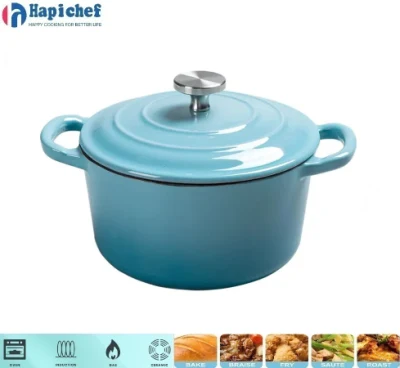
Industry trend check
Consumers want cookware that goes stovetop to oven to table—no drama. Enamel-coated cast iron sits at the center of that shift. Induction adoption is exploding in Europe and North America; chefs want heavy bases, tight lids, and enamel compliant with international food-contact standards. Also, people bake bread now—like, a lot. A round Dutch oven makes bakery-grade crust without a $10k deck oven. Surprisingly democratic.
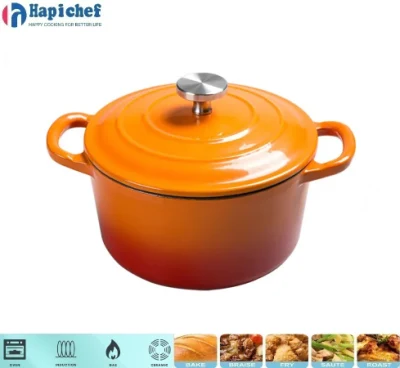
Where this pot shines (aka key Cast Iron Casserole Uses)
- Low-and-slow braises, stews, curry; uniform simmering reduces hot spots.
- Artisan bread (steam-captured crust), roasted chicken, and root veg.
- High-heat searing then oven-finishing steaks or short ribs.
- Batch soups in cafés; prep-to-serve in one vessel for caterers.
- Induction line cooking; lid keeps moisture in during service.
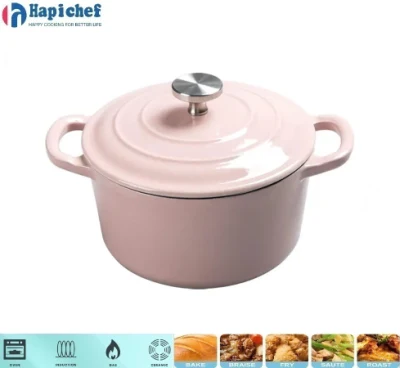
Product snapshot (Amazon Hot Selling Round Enameled Casserole Cast Iron Dutch Oven)
| Body material | Premium cast iron (≈3.8–4.6 mm wall) |
| Interior | Non-reactive enamel, light or black satin |
| Exterior | Vibrant enamel, multi-coat firing |
| Sizes (common) | 22–28 cm diameter; ≈3.0–6.0 L (real-world use may vary) |
| Heat sources | Gas, electric, ceramic, induction, oven |
| Temp tolerance | Lid on: up to ≈260°C; base: up to ≈280–300°C |
| Lid | Snug fit; moisture-lock profile; oven-safe knob |
| Service life | 5–15 years+ with normal use and care |
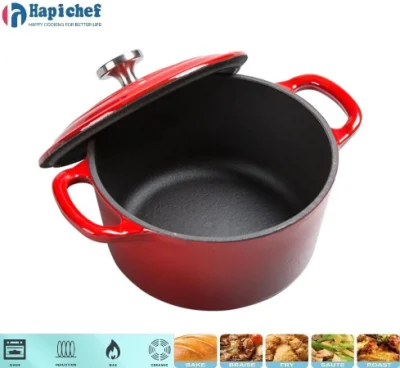
Manufacturing & test flow (condensed)
From Baoding, Hebei: recycled iron + alloy tuning → sand casting → shot blasting → CNC grind/lip finish → enamel slurry dip/spray (base + cover coats) → kiln firing (≈780–830°C) → QA.
- Migrations: tested to ISO 4531 (metal release in contact with food).
- Cookware safety: EN 12983 series (handle integrity, thermal shock) where applicable.
- Food-contact: EU frameworks, LFGB, and US FDA 21 CFR parts for enamels/ceramics.
- Sample data (internal lab, n=5): heat retention at 200°C load, 3.5 L model—temperature drop ≈12–16°C over 10 min with lid; boil time on 1.8 kW induction ≈7–8 min for 2 L water. Your burner may differ.
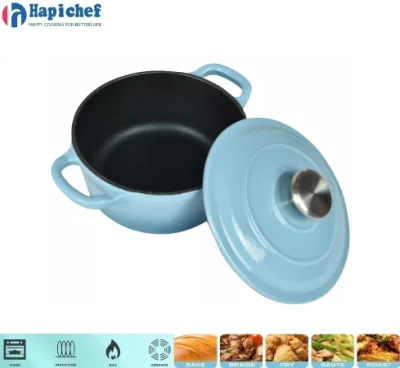
Vendor comparison (quick view)
| Vendor | Positioning | Enamel | Induction | Lead time (≈) |
|---|---|---|---|---|
| Hebei OEM (this product) | Value-performance, customization-friendly | Multi-coat, ISO 4531 compliant | Yes | 30–45 days |
| Premium EU brand | Flagship finish, higher price | Multi-coat, color-stable | Yes | 45–60 days |
| Mass-market US brand | Budget-friendly | Standard, fewer colorways | Yes | 20–40 days |
Customization & deployment
- Colors and enamel gloss levels; interior black satin for high-heat searing.
- Knob materials (stainless/brass) and logo embossing.
- Retail packaging with care cards featuring Cast Iron Casserole Uses and cleaning tips.
Field notes and mini case studies
Restaurant group in Melbourne: swapped aluminum stockpots for 28 cm enameled cast iron on induction. Result: ~9% energy reduction during service (smart plug meters), fewer scorched béchamels. Chef’s note: “Lid fit is better than expected.”
Home bakery side hustle (Berlin): 24 cm model, 500 g hydration-rich doughs. Consistent ear and bloom after 25–30 min covered bake at 245°C; enamel cleaning still easy after 6 months. Many customers say the crust is “bakery good,” which is honestly the point.
Care tips to extend life
- Preheat gradually; avoid thermal shock (cold water on hot enamel = bad idea).
- Use silicone/wood tools; hand-wash recommended.
- For sticky bits: soak, then a nylon scrub; avoid harsh abrasives.
Certifications & compliance (typical)
ISO 4531 migration compliance report available on request; LFGB/FDA food-contact statements; factory QA sheets with firing curves and lot traceability. Testing cadence: each batch, plus quarterly third-party verification.
Authoritative citations
- ISO 4531:2018 – Vitreous and porcelain enamels — Release of metals from enamelled articles in contact with food.
- EN 12983 (Cookware for domestic use) – Performance and safety requirements for cookware.
- LFGB (Germany) and EU Framework Regulation (EC) No 1935/2004 – Materials intended to come into contact with food.
- U.S. FDA 21 CFR – Indirect food additives; ceramics and coatings guidance.
-
How to Choose and Maintain the Perfect Frying Pan for CookingNewsApr.16,2026
-
Mastering the Art of Cooking with a Dutch Oven GuideNewsApr.09,2026
-
Exploring the World of Casseroles A Kitchen Essential for Flavorful MealsNewsApr.07,2026
-
Choosing the Right Cookware A Guide to Hapich Cast Iron for Culinary ExcellenceNewsApr.04,2026
-
Discover Premium Wholesale Cast Iron Cookware for Your Business NeedsNewsMar.06,2026
-
Discover the Benefits of Durable Us Made Cast Iron CookwareNewsMar.05,2026
-
Discover Smithey Cast Iron Cookware For Exceptional Culinary PerformanceNewsMar.04,2026