The global demand for high-performance cookware has led to a technical shift in how cast iron enamel casserole manufacturers approach the fusion of traditional metallurgy and modern surface chemistry. While raw cast iron is prized for its thermal mass, the integration of vitreous enamel coatings solves the age-old challenges of reactivity and maintenance, creating a versatile tool for professional and home kitchens.
This evolution is critical because the enamel layer does not merely provide color; it creates a non-reactive barrier that allows for the cooking of acidic foods without metallic leaching. For procurement managers and technical buyers, understanding the variance in coating thickness, thermal expansion coefficients, and the structural integrity of the iron base is essential to ensuring product longevity and food safety.
This analysis examines the engineering specifications, manufacturing constraints, and selection frameworks used to evaluate professional-grade enamelware. By analyzing the relationship between material density and coating adhesion, we provide a technical roadmap for those sourcing from experienced cast iron enamel casserole manufacturers to ensure optimal heat distribution and durability.


The foundation of a high-quality casserole is the cast iron substrate. Unlike pressed steel, cast iron provides a dense, heavy-duty base that ensures superior heat retention. The metallurgical challenge lies in controlling the carbon content to prevent brittleness while maintaining the structural strength required for oven use up to 450°F.
The interaction between the iron and the enamel is a chemical bond. When the enamel is fired at high temperatures, it fuses with the surface of the iron, creating a glass-like layer. This requires precise temperature control during the firing process to avoid thermal shock, which could lead to micro-cracks in the coating.
Surface finishing is where the expertise of cast iron enamel casserole manufacturers becomes evident. The process often involves multiple layers: a ground coat for adhesion and a cover coat for aesthetics and durability. These coatings must be non-toxic and approved by standards such as FDA, LFGB, and SGS to ensure food safety.
Customization extends beyond color. The interior coating is often designed as a matte black or white enamel to optimize food release and visibility. The thickness of these layers must be uniform; any variation can lead to "hot spots" or uneven searing, which diminishes the restaurant-quality results expected from professional cookware.
Beyond enamel, some manufacturers offer pre-seasoned options using non-toxic black lacquer or natural oils. The choice between an enamelled interior and a pre-seasoned surface depends on the intended culinary application—enamel for slow-braising acidic sauces and seasoning for high-heat searing.
Heat retention is the primary engineering advantage of cast iron. The high thermal mass allows the vessel to maintain a constant temperature even when cold ingredients are added. This stability is crucial for techniques like braising and stewing, where a steady, low-temperature simmer is required over several hours.
From an energy efficiency perspective, the ability of a heavy-duty casserole to retain heat means less energy is consumed during the cooking process. Once the vessel reaches the target temperature, the thermal inertia allows it to stay hot with minimal heat input from the stove, whether using gas, electric, or induction sources.
Evaluating the output of different manufacturing processes requires a normalized scoring system. We assess various configuration types based on their ability to distribute heat, the durability of the enamel bond, and the ease of maintenance.
The following data represents a relative engineering assessment of different cast iron cookware profiles, contrasting enamel-coated vessels with standard pre-seasoned options.
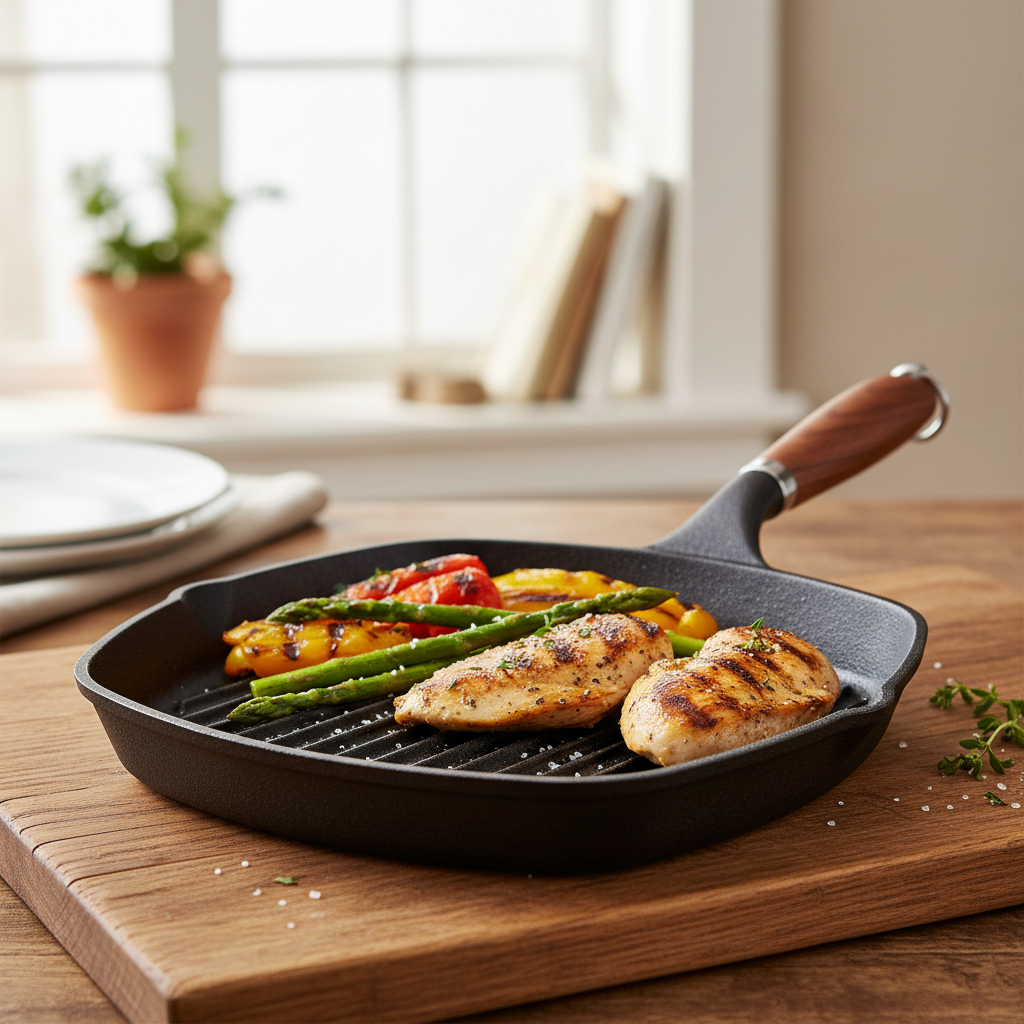
In professional culinary environments, a representative engineering scenario involves the transition from stovetop searing to oven braising. A cast iron enamel casserole allows a chef to sear proteins at high heat and then transfer the vessel directly into the oven without changing pans. This reduces cleaning time and maintains the temperature gradient within the food.
For B2B buyers, the focus is often on durability and OEM flexibility. The ability to customize logos, colors, and knob materials allows brands to align the product with their specific market positioning. Whether it is for high-end retail or commercial catering, the cookware must withstand rigorous use across gas, electric, and induction cooktops while remaining dishwasher safe for operational efficiency.
The industry is currently moving toward thinner but more resilient enamel layers. Historically, thick coatings were used for durability, but they could act as thermal insulators, slightly delaying the heat transfer from the iron to the food. Modern R&D is focused on optimizing the glass-to-metal bond to increase impact resistance.
Future engineering requirements are likely to emphasize eco-friendly firing processes and the reduction of heavy metals in pigments. This transition is driven by stricter regulatory pressures in the European and American markets, where BSCI and Prop65 certifications are becoming baseline requirements for exporters.
Furthermore, the integration of precision casting techniques is reducing the weight of the vessels without sacrificing heat retention. By optimizing the wall thickness of the casserole, manufacturers can make the products more manageable for the end-user while maintaining the professional-grade performance of heavy-duty cast iron.
When selecting a partner among various cast iron enamel casserole manufacturers, procurement teams should utilize a technical matrix. This ensures that the launderette of "high quality" claims is replaced by quantifiable specifications.
Key evaluation dimensions include the certification status (FDA, LFGB, SGS), the flexibility of the OEM service (logo and color customization), and the production lead times. A balanced approach considers both the material quality and the logistics capability.
The following table provides a framework for comparing different configuration profiles, allowing buyers to match the product specification to the intended end-user application.
| Configuration Profile | Surface Finish | Thermal Property | Primary Use Case |
|---|---|---|---|
| Standard Enamel | Dual-layer Vitreous | Consistent Moderate | Home Braising/Stewing |
| Professional Duty | High-Impact Enamel | High Thermal Mass | Commercial Kitchens |
| Pre-Seasoned Base | Natural Oil/Lacquer | Rapid Heat Response | Searing & Frying |
| Hybrid Configuration | Interior Enamel/Ext. Seasoned | Balanced Distribution | Versatile Slow Cooking |
| Lightweight Series | Precision Thin-Wall | Faster Pre-heating | Daily Home Cooking |
| Custom OEM Spec | Custom Color Enamel | Specified Wall Thickness | Brand-Specific Retail |
Most professional-grade enamelled cast iron is safe for use in ovens up to 450°F (232°C). Beyond this temperature, there is a risk of the enamel coating cracking due to extreme thermal expansion or the knobs (if not made of high-heat resistant material) melting. It is recommended to check the specific manufacturer's documentation for the exact thermal limit of the handle and lid components.
Yes, cast iron is naturally ferromagnetic, making it highly compatible with induction hobs. The enamel coating does not interfere with the magnetic field induction. To ensure optimal performance, the base of the casserole should be flat to maximize the contact area with the induction surface, which ensures more efficient energy transfer.
Enamelled cast iron does not require seasoning. The vitreous enamel layer acts as a permanent, non-reactive barrier that replaces the need for a polymerized oil layer. This eliminates the maintenance associated with traditional raw cast iron, such as the need to re-oil the pan after every use or avoiding acidic foods like tomatoes.
Technically, enamel is dishwasher safe. However, most industry experts and manufacturers strongly suggest hand washing with mild soap. Harsh dishwasher detergents can erode the gloss of the enamel over time, and the mechanical shock of other items hitting the vessel in the dishwasher can cause chipping.
Buyers should evaluate three core pillars: certification (BSCI, FDA, LFGB for safety), customization capability (OEM services for logo and color), and quality consistency (strict QC processes to prevent enamel peeling). Additionally, the ability to provide samples and a reasonable MOQ (e.g., 500PCS) indicates a manufacturer's flexibility and production maturity.
To prevent chipping, avoid using metal utensils on the enamel surface; instead, use silicone or wooden tools. Additionally, avoid "thermal shock"—placing a scorching hot pot directly into cold water. Using protective mats during storage and transport also reduces the risk of impact-related damage to the vitreous layer.
The transition from traditional cast iron to sophisticated enamelled systems reflects a broader industry trend toward combining heritage materials with high-performance chemistry. The key finding is that the value of a casserole is determined not just by the iron's mass, but by the precision of the enamel bond and the uniformity of the thermal distribution.
For those sourcing from cast iron enamel casserole manufacturers, the practical implication is clear: prioritize manufacturers who can provide certified material data and flexible OEM options. By aligning technical specifications with end-user needs, businesses can ensure a product that offers both professional-grade performance and long-term commercial viability.