Finding reliable cast iron cookware manufacturers in usa often involves navigating a complex landscape of heritage brands and modern industrial suppliers. For procurement managers and kitchenware distributors, the challenge lies in balancing traditional casting quality with the scalability required for modern retail cycles.
While the American market has a deep affection for domestic ironware, the global supply chain has evolved to provide specialized manufacturing capabilities that meet rigorous FDA and LFGB standards. The decision to source domestically or internationally now depends less on geography and more on specific technical requirements such as pre-seasoning methods and enamel precision.
This analysis explores the critical evaluation metrics for selecting a manufacturing partner, the technical differences between surface treatments, and how to optimize the procurement process for high-performance cast iron bakeware and cookware.

The Current Landscape of Cast Iron Manufacturing Standards

The search for cast iron cookware manufacturers in usa typically reflects a demand for durability and heat stability. However, the industry has shifted toward a hybrid model where design and branding are handled domestically, while the heavy lifting of casting and seasoning is often outsourced to specialized professional exporters who can maintain strict consistency across thousands of units.
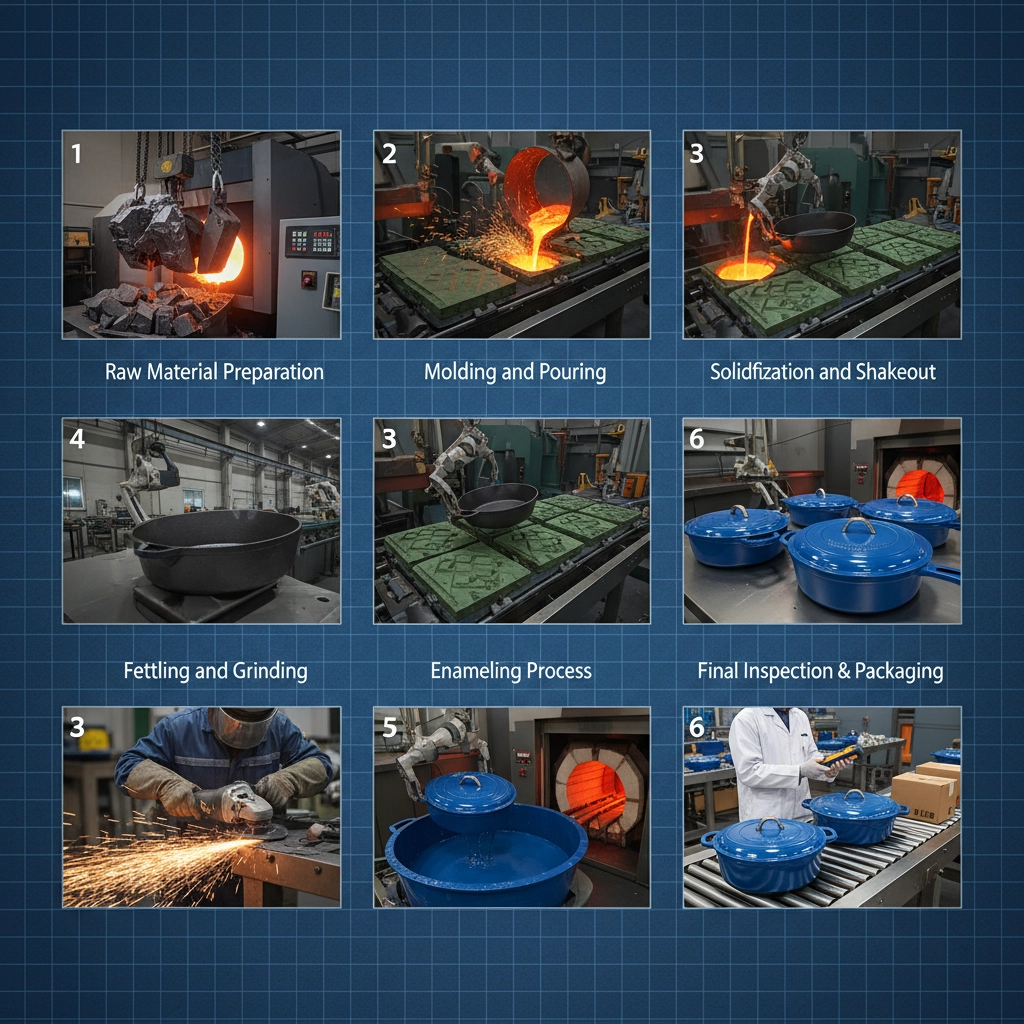
Modern manufacturing requires more than just melting iron; it demands precision in the mold-making process to ensure that items like Dutch ovens and grill pans have uniform wall thickness. Inconsistencies in casting lead to "hot spots," which diminish the professional searing quality that chefs expect from high-end ironware.
Furthermore, the integration of certifications such as BSCI, FDA, and Prop65 has become a non-negotiable baseline. These standards ensure that the materials used—especially in the coating and seasoning phases—are safe for food contact and produced under ethical labor conditions.
Technical Determinants of Premium Cast Iron Quality
The primary value of cast iron lies in its thermal mass. A high-quality casting process minimizes porosity, which prevents the cookware from cracking under extreme temperature shifts and ensures a more stable seasoning layer.
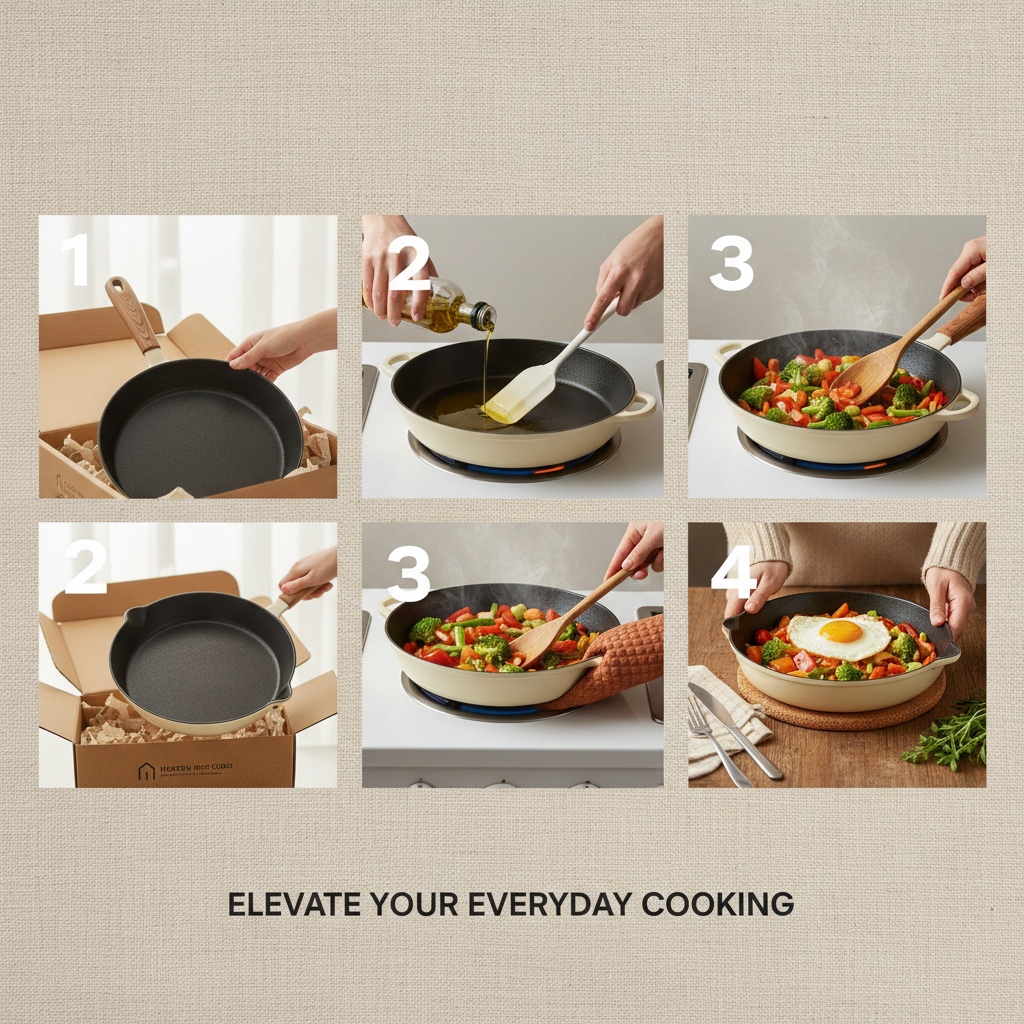
Surface finishing is the second critical determinant. While raw cast iron is traditional, "pre-seasoned" options using vegetable oil provide immediate usability. The quality of this seasoning determines how effectively the pan resists sticking and corrosion during the first few uses before the user develops their own patina.
Beyond the material, the ergonomics of the design—such as loop handles on grill pans or the precision fit of a Dutch oven lid—separate entry-level products from commercial-grade equipment. Precision machining of the rim and base ensures stability on induction, electric, and gas ranges.
Application Profiles for Specialized Cast Iron Tooling
Different culinary applications require distinct casting geometries. For instance, a Cast Iron Grill Pan needs deep, precisely angled ribs to facilitate grease drainage while maximizing the contact area for authentic sear marks on meats.
In contrast, Cast Iron Bakeware and Pizza Pans require a flatter, more consistent heat distribution to prevent uneven browning of crusts. The thermal inertia of these tools allows for a "stone-like" effect in home ovens, mimicking professional bakery environments.
Specialized items like meat presses and woks introduce different challenges; a wok requires a specific curvature to allow for efficient heat concentration at the base and rapid dissipation at the walls, while a meat press must provide enough weight to ensure contact without warping the pan below.
Comparing Casting Efficiency and Heat Retention Metrics
When evaluating manufacturers, procurement teams often look at performance benchmarks related to heat distribution and energy consumption. Efficiently cast ironware reduces the energy required to reach searing temperatures and maintains that heat longer than aluminum or stainless steel.
The following data represents relative performance benchmarks comparing standard mass-produced ironware against precision-engineered cast iron produced by experienced exporters.
cast iron cookware manufacturers in usa Performance Metrics
As indicated, precision casting leads to a significant increase in heat uniformity across the cooking surface, which directly translates to "restaurant-quality" results. Lower porosity and better seasoning also reduce the amount of oil required, promoting a healthier cooking experience.
Strategic Procurement and Supplier Evaluation Framework
Selecting a partner for cast iron production requires a deep dive into their OEM capabilities. The ability to customize logos, colors, and knobs is a basic requirement, but the real value lies in their quality control process during the cooling phase of the iron.
A robust evaluation framework should prioritize suppliers who provide comprehensive certifications (LFGB, SGS, FDA) and a transparent delivery timeline. For example, a 25-35 day delivery window from payment is typical for high-volume OEM orders, provided the MOQ is met.
Buyers should also assess the supplier's experience with different coatings. Whether it is pre-seasoned vegetable oil, enamel coating, or non-toxic black lacquer, the manufacturer must demonstrate a repeatable process that prevents peeling or uneven application.
Innovations in Surface Finishing and Non-Toxic Coatings
The industry is moving away from chemical-heavy non-stick coatings toward natural, high-performance alternatives. The trend focuses on "enhanced seasoning," where advanced oven-curing processes create a more durable polymer layer from natural oils.
Enamel coating is also seeing a resurgence, particularly in Casseroles and Dutch Ovens, where aesthetic variety (custom colors) is combined with the heat retention of iron. This removes the need for seasoning while maintaining the professional cooking characteristics of the metal.
Looking forward, the adoption of smarter casting molds may allow for thinner, lighter cast iron that retains the heat properties of traditional heavy pans, potentially expanding the market to users who find traditional ironware too cumbersome.
Decision Matrix for Selecting Cookware Manufacturing Partners
To differentiate between potential partners, procurement officers should utilize a weighted matrix that compares technical capabilities against commercial terms. Not all "manufacturers" offer the same level of OEM flexibility.
The table below outlines the key dimensions for comparing different types of casting and finishing solutions available in the current market.
| Solution Type | Primary Use Case | Technical Advantage | Maintenance Need |
|---|---|---|---|
| Pre-Seasoned Raw | Daily Skillets/Griddles | Natural non-stick surface | Regular oiling required |
| Vitreous Enamel | Dutch Ovens/Casseroles | Acid-resistant & Colorful | Mild detergent only |
| Black Lacquer | Decorative/Entry-level | Fast production speed | Seasoning needed after |
| Precision Ribbed | Indoor BBQ Grill Pans | Efficient fat drainage | Deep scrub cleaning |
| High-Density Cast | Bakeware/Pizza Pans | Extreme thermal mass | Minimal maintenance |
| Custom OEM Mold | Branded Product Lines | Unique brand identity | Varies by coating |
Ultimately, the best partner is one who combines metallurgical expertise with a rigorous adherence to international food safety standards, ensuring that the final product is as safe as it is durable.
Frequently Asked Questions
Conclusion
The landscape of cast iron production has shifted from simple foundries to sophisticated engineering hubs. For those seeking cast iron cookware manufacturers in usa or global partners, the priority must be a balance of metallurgical precision, safety certification, and OEM flexibility.
Whether you are sourcing a high-performance grill pan or a specialized line of bakeware, focusing on thermal uniformity and coating stability will ensure long-term product success. Readers evaluating these manufacturing options can review the relevant product and company information available through www.hapichefcastiron.com.