


Large Cast Iron Casserole Dish with Lid - Durable & Versatile
Strategic Procurement of Large Cast Iron Casserole Dishes for Commercial Operations
In the demanding environment of commercial kitchens and hospitality, the choice of cookware profoundly impacts operational efficiency, culinary output, and long-term cost-effectiveness. Among essential kitchen untensils, the large cast iron casserole dish with lid stands out as a fundamental piece of equipment. Its robust construction and exceptional thermal properties make it indispensable for a wide array of cooking techniques, from slow braises to hearty stews, serving high volumes with consistent quality.
Current industry trends highlight a growing emphasis on durable, energy-efficient, and versatile kitchen equipment. Commercial enterprises are increasingly investing in tools that offer longevity and superior performance, minimizing replacement costs and optimizing energy consumption. A high-quality large cast iron casserole pot aligns perfectly with these trends, providing unparalleled heat retention that reduces cooking times and sustains serving temperatures, a critical factor in busy establishments. The demand for large enameled cast iron casserole variants is also surging, driven by their non-reactive surfaces, ease of cleaning, and aesthetic appeal for front-of-house presentations. This shift reflects a strategic investment by B2B buyers in equipment that supports both back-of-house functionality and customer-facing excellence.
Manufacturing Excellence: The Craft of Commercial Cast Iron Casseroles
The production of a high-performance large cast iron casserole dish with lid involves a precise and meticulous manufacturing process, beginning with the selection of premium raw materials and culminating in rigorous quality assurance. Understanding this process underscores the inherent value and longevity of these essential commercial kitchen tools.
Key Stages in Manufacturing:
- Material Sourcing & Preparation: High-grade pig iron, often supplemented with steel scrap and ferroalloys (such as silicon and manganese), is carefully selected. These materials are chosen for their specific metallurgical properties, including high carbon content, which is crucial for the excellent thermal conductivity and durability characteristic of cast iron.
-
Sand Casting: This is the primary method for forming cast iron cookware.
- Pattern Creation: A master pattern, often made from wood or metal, is used to create a mold impression. For products like a large oval cast iron casserole dish, precision in pattern design ensures optimal form and capacity.
- Mold Formation: Sand (typically silica sand mixed with clay and water) is packed around the pattern in a two-part flask to create the cavity. This process is crucial for achieving the intricate details and desired wall thickness of the casserole.
- Melting & Pouring: The raw materials are melted in an induction furnace at temperatures exceeding 1400°C (2550°F). The molten iron is then carefully poured into the sand molds. Controlled pouring ensures uniform filling and prevents defects.
- Cooling & Shakeout: After pouring, the iron is allowed to cool slowly within the mold. This controlled cooling process is vital for the metal's crystalline structure, enhancing its strength and reducing internal stresses. Once solidified, the casting is "shaken out" from the sand mold.
- Fettling & Grinding: Excess metal, such as risers and gates (channels for molten iron), is removed. The casting undergoes grinding and sanding to smooth rough edges and prepare the surface for subsequent treatments.
- Enameling (for Enameled Variants): For large enameled cast iron casserole products, a glass-based porcelain enamel coating is applied in multiple layers. Each layer is fused to the cast iron surface at high temperatures (typically 750-850°C), creating a durable, non-reactive, and aesthetically pleasing finish. This process often involves electrostatic spraying for uniform coverage.
- Machining & Finishing: Critical surfaces, such as the rim of the pot and lid, may undergo CNC machining to ensure a precise, tight fit, which is essential for steam retention and even cooking. Handles and knobs are securely attached.
-
Quality Control & Testing: Throughout the entire process, strict quality control measures are implemented.
- Material Analysis: Spectrographic analysis of raw materials and molten iron to ensure correct composition.
- Dimensional Accuracy: Calipers and gauges verify adherence to precise specifications, often guided by ANSI standards for manufacturing tolerances.
- Enamel Adhesion & Durability: Scratch and impact tests ensure the enamel coating's resilience. ISO 2746 standards often guide adhesion testing.
- Thermal Performance: Sample testing for heat distribution and retention capabilities.
- Food Safety Compliance: Adherence to FDA regulations for food contact materials, ensuring no harmful substances leach into food.
This meticulous production sequence, often certified under ISO 9001 quality management systems, guarantees that each large cast iron casserole dish with lid meets the stringent demands of professional culinary environments, promising an extended service life often exceeding several decades with proper care.
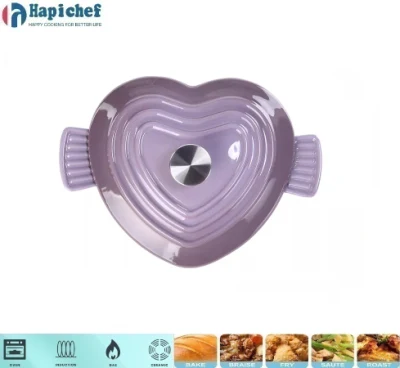
Precision sand casting is fundamental to creating high-quality cast iron cookware.
Technical Specifications & Performance Parameters for Commercial Use
For B2B purchasers, a detailed understanding of the technical specifications of a large cast iron casserole dish with lid is crucial for informed decision-making. These parameters directly influence performance, durability, and suitability for specific culinary applications.
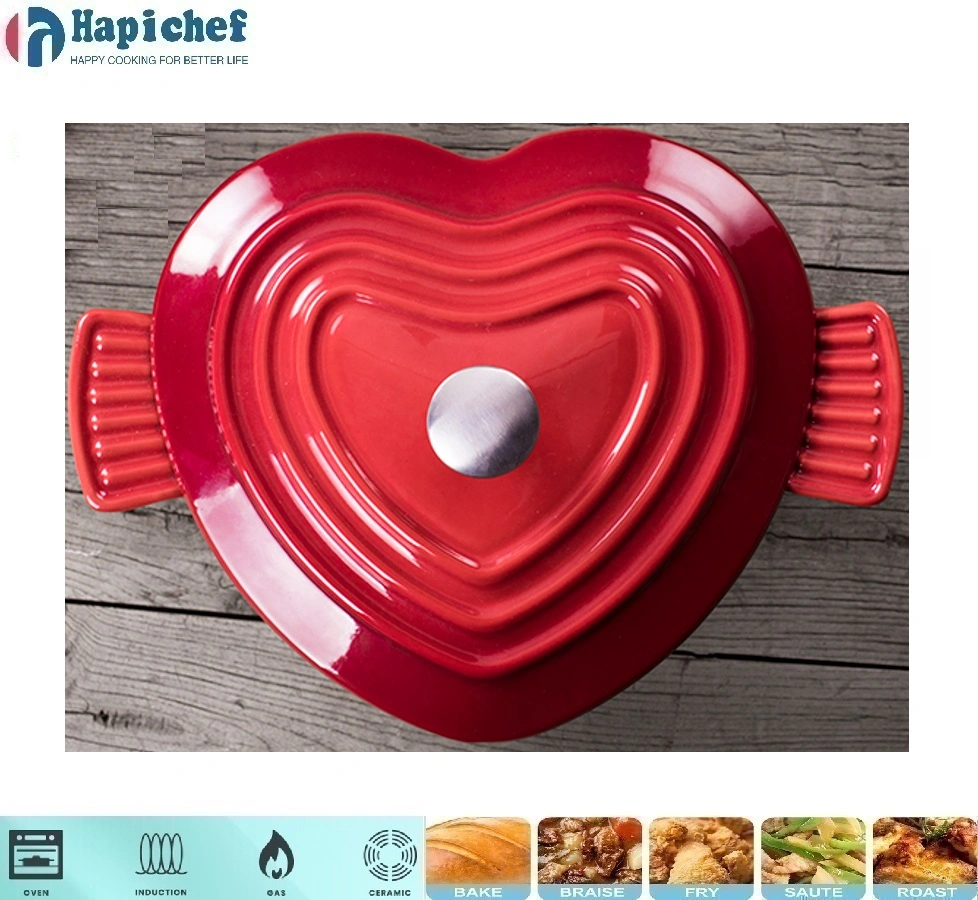
Product Specification Table: Heart Shape Cooking Pot Cast Iron Cookware Casserole Dutch Oven
| Feature | Specification | Technical Detail / Benefit |
|---|---|---|
| Material | High-grade Virgin Cast Iron with Food-Safe Enamel Coating | Exceptional thermal mass for heat retention and distribution. Enamel prevents rust, provides non-reactive cooking surface. |
| Capacity | 5.7 Liters (6 Quarts) - Custom sizes available | Ideal for batch cooking, serving 6-8+ individuals in commercial settings. |
| Dimensions (Internal) | Approx. 26 cm (10.2 in) diameter, 12 cm (4.7 in) depth | Optimized for various cooking techniques, ample surface area for searing. |
| Weight | Approx. 6.5 kg (14.3 lbs) | Indicates robust construction and substantial thermal mass for superior heat retention. |
| Heat Resistance | Oven safe up to 260°C (500°F) | Versatile for stovetop, oven, and grill use; allows for searing then slow cooking in one vessel. |
| Heat Sources Compatibility | Gas, Electric, Ceramic, Induction, Halogen, Oven | Universal applicability in diverse commercial kitchen setups. |
| Enamel Coating | Multi-layer Vitreous Enamel (Interior & Exterior) | Resistant to chipping, staining, and dulling. Non-stick properties improve with seasoning, easy to clean. |
| Lid Design | Heavy, tightly fitting with self-basting condensation bumps | Locks in moisture and flavor, continuously basting food for tender results. Energy efficient. |
| Handles | Integrated, oversized cast iron handles | Secure grip even with oven mitts, ensures safe transport of heavy contents. |
| Certifications | FDA-compliant enamel, ISO 9001:2015 manufacturing | Ensures food safety, quality management, and adherence to international standards. |
The substantial thermal mass of cast iron, typically quantified by its specific heat capacity of approximately 0.46 J/g°C, means it absorbs a significant amount of heat energy and releases it slowly and evenly. This characteristic is paramount for professional cooking, preventing hot spots and ensuring consistent results across large volumes of food. The vitreous enamel coating, a silicate glass fusion bonded to the metal, provides a non-porous, non-reactive surface that resists corrosion, facilitates cleaning, and does not impart metallic flavors to acidic ingredients, a critical advantage over bare cast iron in commercial settings.
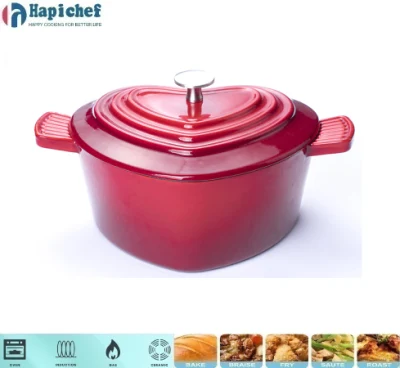
The robust design ensures optimal heat distribution for various culinary applications.
Application Scenarios & Operational Experience in Commercial Kitchens
The versatility and performance of a large cast iron casserole dish with lid make it an indispensable tool across numerous commercial culinary applications. Its ability to excel in diverse cooking environments translates into tangible operational benefits and enhanced culinary results.
Typical Application Scenarios:
- High-Volume Braising and Stews: In restaurants and catering services, these casserole dishes are perfect for slow-cooking tough cuts of meat and vegetables, breaking down fibers to create tender, flavorful dishes like Beef Bourguignon, Coq au Vin, or lamb tagines. The tight-fitting lid and substantial mass ensure even heat and moisture retention, crucial for developing rich flavors over extended cooking periods.
- Batch Roasting and Baking: Beyond liquids, a large cast iron casserole pot can handle substantial roasts, whole chickens, or even large artisan bread loaves. Its superior heat retention creates a consistent oven-like environment on the stovetop or maintains stable temperatures in convection ovens, leading to perfectly cooked interiors and crispy exteriors. The large oval cast iron casserole dish is particularly suited for elongated cuts of meat or fish.
- Deep Frying and Confit: The high thermal stability of cast iron allows for precise temperature control during deep frying, minimizing temperature drops when food is added. It's also excellent for confit, where ingredients are slowly cooked in their own fat at low temperatures, resulting in incredibly tender textures.
- Sauce and Stock Reduction: For complex sauces and rich stocks, the consistent, even heat provided by a cast iron casserole facilitates gentle simmering and reduction without scorching, preserving the integrity of delicate flavors.
- Service and Presentation: Enameled cast iron casseroles are often aesthetically pleasing enough for direct table service in fine dining or buffet setups. Their ability to retain heat keeps dishes warm for extended periods, enhancing the dining experience for patrons and reducing the need for constant reheating.
Customer feedback consistently highlights the reliability and performance of these vessels. Executive chefs frequently commend the even caramelization achieved during searing and the consistent, tender results from slow-cooked dishes. One common piece of feedback involves the energy-saving aspect; once heated, the cast iron maintains its temperature with minimal energy input, reducing utility costs over time, particularly for operations running multiple units. The durability also translates to a lower total cost of ownership, as these pots withstand the daily rigors of a commercial kitchen for years, if not decades, surpassing the service life of many alternative materials.
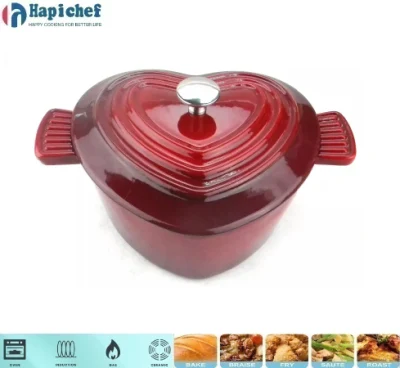
Versatile performance across various heat sources in a bustling commercial kitchen.
Technical Advantages & Authoritative Credentials
The intrinsic properties of a large cast iron casserole dish with lid offer several distinct technical advantages that are critically beneficial in professional culinary settings. These benefits are not merely anecdotal but are supported by material science and verified through industry standards.
Key Technical Advantages:
- Superior Heat Retention and Even Distribution: Cast iron boasts a high thermal mass and excellent emissivity. This means it absorbs heat efficiently and distributes it uniformly across the cooking surface, eliminating hot spots. Once heated, it retains warmth for extended periods, which is vital for energy efficiency and consistent cooking results, especially for slow-cooked dishes or holding food at serving temperature.
- Exceptional Durability and Longevity: With proper care, cast iron cookware can last for generations. Its robust nature makes it highly resistant to warping, denting, and scratching, common failures in lighter gauge cookware. The typical service life in a commercial kitchen often spans 20-30 years, translating to a significant return on investment.
- Non-Reactive and Hygienic Surface (Enameled): For large enameled cast iron casserole pots, the vitreous enamel coating creates a non-porous, non-reactive surface. This prevents the leaching of iron into food, preserves the true flavor of ingredients, and makes it safe for use with acidic foods. Furthermore, the smooth, non-stick (with proper conditioning) surface is easy to clean and sanitize, meeting stringent commercial hygiene standards.
- Versatility Across Heat Sources: These casseroles are uniquely compatible with virtually all heat sources: gas, electric, ceramic, induction, halogen, and oven. This universal adaptability provides flexibility for kitchen design and operational workflows, making them a preferred choice for diverse culinary setups.
- Energy Efficiency: Due to their superior heat retention, cast iron casserole dishes require less energy to maintain cooking temperatures once heated. This results in measurable energy savings for commercial kitchens, contributing to lower operational costs and a reduced carbon footprint.
Authoritative Credentials & Quality Assurance:
Our commitment to quality and performance is underpinned by adherence to recognized international standards and rigorous testing protocols.
- ISO 9001:2015 Certification: Our manufacturing processes are certified under ISO 9001, demonstrating a robust quality management system that ensures consistent product quality and continuous improvement. This certification provides B2B buyers with confidence in our production reliability.
- FDA Compliance for Enamel Coatings: The enamel used on our large cast iron casserole dish with lid is thoroughly tested and verified to be food-safe, meeting strict FDA (U.S. Food and Drug Administration) requirements for direct food contact. This ensures no harmful chemicals or heavy metals leach into food, guaranteeing consumer safety.
- Material Traceability: We maintain full traceability of raw materials, allowing for verification of iron purity and enamel composition. This transparency is crucial for quality control and accountability.
- Strategic Partnerships: We partner with leading hospitality suppliers and restaurant chains globally, a testament to the trust and reliability our products command in the professional market. Our extensive experience, spanning over a decade in premium cookware manufacturing, is reflected in the quality and performance of every unit.

The durable enamel finish offers both aesthetic appeal and practical benefits for commercial use.
Vendor Comparison and Customized Solutions
When selecting a large cast iron casserole dish with lid for commercial operations, B2B buyers face a spectrum of choices. A comprehensive comparison, alongside an understanding of customization capabilities, can significantly impact the procurement decision and long-term satisfaction.
Product Comparison: Cast Iron Casserole Variants
| Feature | Enameled Cast Iron Casserole (Our Product) | Bare Cast Iron Casserole | Lightweight Cast Iron Casserole (e.g., carbon steel) |
|---|---|---|---|
| Heat Retention | Excellent (High thermal mass) | Excellent (High thermal mass) | Good (Lower thermal mass than cast iron) |
| Reactivity with Acidic Foods | Non-reactive (Enamel barrier) | Reactive (Can leach iron, impart metallic taste) | Minimally reactive (Requires good seasoning) |
| Maintenance & Cleaning | Low (Easy to clean, no seasoning required) | High (Requires meticulous seasoning and drying) | Moderate (Requires seasoning) |
| Durability | Very High (Resistant to warping/denting) | Very High (Resistant to warping/denting) | High (Can dent if thinner gauge) |
| Weight (relative to capacity) | Heavy | Heavy | Lighter |
| Cost (Relative) | Higher (Due to enamel process) | Moderate | Moderate |
| Aesthetics for Serving | Excellent (Variety of colors, polished finish) | Functional (Dark, rustic appearance) | Functional (Industrial look) |
While bare cast iron offers similar thermal properties, the enameled variant provides a significant advantage in terms of hygiene, non-reactivity, and reduced maintenance, which are critical in fast-paced commercial kitchens. Lightweight cast iron casserole alternatives, such as those made from carbon steel, offer reduced weight and faster heating, but typically sacrifice some of the long-term heat retention and ultra-robust durability that traditional cast iron provides. For environments demanding maximum thermal stability and minimal maintenance, enameled cast iron remains the superior choice.
Customized Solutions for B2B Clients:
We understand that commercial operations often have unique requirements. We offer extensive customization options to ensure our large cast iron casserole pot perfectly integrates into your brand and operational workflow:
- Branding and Logos: Incorporate your establishment's logo or custom branding directly onto the casserole lid or body, enhancing brand visibility and professionalism, especially for front-of-house service.
- Color Matching: Custom enamel colors can be developed to align with your brand's aesthetic or kitchen's existing color scheme, ensuring a cohesive and professional appearance.
- Size and Capacity Variations: While our standard offerings are designed for general commercial use, we can produce bespoke sizes and capacities for a large cast iron casserole dish with lid to meet specific volume requirements, from oversized banquet pots to more compact units.
- Handle and Knob Designs: Options for specific handle designs or materials for knobs (e.g., stainless steel, heat-resistant phenolic resin) to optimize ergonomics and operational safety based on your kitchen's specific needs.
- Packaging Solutions: Tailored bulk packaging or retail-ready packaging solutions can be provided for distributors and retailers, ensuring products arrive safely and are ready for display or direct use.
Our engineering and design teams work closely with B2B clients to translate specific requirements into high-quality, customized products, ensuring optimal performance and brand alignment.
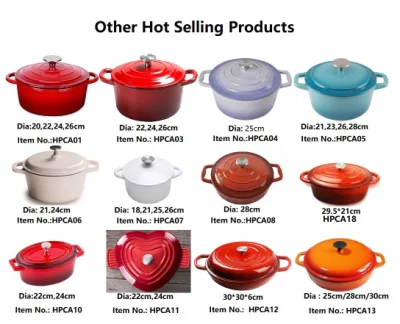
Custom color options ensure perfect brand alignment for discerning commercial clients.
Application Case Studies: Proving Value in Real-World Scenarios
The practical benefits of a high-quality large cast iron casserole dish with lid are best illustrated through real-world applications in commercial settings. These case studies highlight how superior cookware contributes to operational excellence and culinary distinction.
Case Study 1: The Metropolitan Hotel & Conference Center – Enhancing Banquet Efficiency
- Challenge: The Metropolitan Hotel's banquet kitchen struggled with maintaining consistent serving temperatures for large-batch stews and braises during extended service periods for conferences and weddings. Their existing stainless steel pots rapidly lost heat, requiring constant reheating and affecting food quality.
- Solution: The hotel procured 20 units of our large enameled cast iron casserole dishes (specifically the 7-liter capacity model). These were integrated into their main production line for high-volume, slow-cooked dishes.
- Outcome: The switch resulted in a remarkable improvement in food temperature retention. Dishes stayed piping hot for up to an hour longer without additional heat sources, reducing energy consumption by an estimated 15% for these specific menu items. Chef reviews highlighted superior tenderness and flavor development, directly attributed to the consistent, even heating and self-basting lids. The durable enamel also reduced cleanup time, contributing to overall kitchen efficiency.
Case Study 2: "The Gilded Spoon" Restaurant Chain – Elevating Signature Dishes
- Challenge: "The Gilded Spoon," a chain known for its rustic, traditional cuisine, aimed to standardize the quality of its signature dishes, such as osso buco and cassoulet, across its 15 locations. Variances in heat distribution and material reactivity with existing cookware led to inconsistencies.
- Solution: They implemented our large oval cast iron casserole dish, customized with their restaurant logo, for all slow-cooked, braised, and baked signature items. The specific oval shape was chosen to accommodate larger cuts of meat more effectively.
- Outcome: The adoption led to a significant improvement in dish consistency across all branches. The non-reactive enamel ensured the true flavors of the ingredients were preserved, and the superior heat retention resulted in more tender meats and perfectly reduced sauces. Customer satisfaction surveys showed a noticeable uptick in praise for the quality and consistency of these dishes, reinforcing the chain's brand reputation.
Case Study 3: Culinary Arts Institute – Durability for High-Frequency Training
- Challenge: A prominent Culinary Arts Institute required robust cookware that could withstand daily, intensive use by numerous students and instructors across multiple practical sessions. Their previous cookware experienced rapid wear and tear, necessitating frequent replacements.
- Solution: The institute purchased a bulk order of our large cast iron casserole pot, appreciating its reputation for durability and ease of cleaning provided by the enamel coating.
- Outcome: After three years of continuous, high-frequency use, the cast iron casseroles showed minimal signs of wear. The robust construction and resilient enamel proved highly resistant to the typical impacts and thermal shocks experienced in a busy teaching kitchen. This resulted in significant cost savings by drastically reducing the frequency of equipment replacement, freeing up budget for other educational resources.
A robust solution meeting the high demands of professional culinary education.
Trustworthiness & Customer Support: Ensuring Your Investment
Beyond product specifications and performance, a key factor in B2B procurement is the reliability and support offered by the vendor. We are committed to fostering long-term partnerships through transparent processes, dependable fulfillment, robust warranties, and accessible customer service.
Frequently Asked Questions (FAQ) for B2B Buyers:
A: Standard lead times for quantities up to 500 units are typically 4-6 weeks from order confirmation and deposit. For larger or highly customized orders, lead times will be provided upon detailed quotation. We maintain a strategic inventory for popular models to facilitate faster dispatch for urgent requirements.
A: We offer a comprehensive 10-year limited warranty against manufacturing defects for our large enameled cast iron casserole products. This covers chipping, cracking, or defects in the enamel or cast iron under normal commercial use and care. Detailed warranty terms are provided with each order.
A: For enameled cast iron, proper maintenance is straightforward. Allow the pot to cool before washing. Hand washing with warm, soapy water and a non-abrasive sponge is recommended. Avoid harsh detergents or metal scouring pads to preserve the enamel. Thoroughly dry immediately after washing. While some models may be dishwasher safe, handwashing is generally preferred for extending the product's aesthetic life and protecting the enamel over time.
A: Yes, we maintain stock of common spare parts, including heat-resistant lid knobs and replacement screws. These can be ordered directly through our customer support channels.
Lead Time & Fulfillment:
Our logistics team is dedicated to efficient order processing and timely delivery. We work with established international freight partners to ensure secure and on-schedule global delivery. For large volume orders, we offer tailored shipping solutions, including palletized freight and container111 options, to optimize cost and transit time. Real-time tracking is available for all shipments.
Warranty Commitments:
Our robust warranty program reflects our confidence in the quality and durability of our cast iron cookware. We stand behind our products, ensuring that your investment is protected and that your operations can rely on our equipment for years to come. Claims are processed swiftly by our dedicated support team to minimize any potential disruption.
Dedicated Customer Support:
Our B2B customer support team comprises experienced professionals knowledgeable in commercial kitchen equipment. From initial inquiry and quotation to after-sales support and technical assistance, we are committed to providing prompt, effective, and personalized service. You can reach us via phone, email, or through your dedicated account manager for any queries or support needs.
Conclusion
The strategic procurement of a high-quality large cast iron casserole dish with lid represents a sound investment for any commercial culinary operation. Its unparalleled heat retention, robust durability, and versatile application across various cooking techniques directly contribute to enhanced efficiency, consistent culinary excellence, and significant long-term cost savings. By adhering to rigorous manufacturing standards, offering comprehensive technical specifications, and providing dedicated B2B support, we ensure our cast iron casseroles are not just kitchen tools, but integral components of a successful and sustainable commercial kitchen.
References
- ASTM International. "Standard Specification for Gray Iron Castings." ASTM A48/A48M-03.
- Food and Drug Administration (FDA). "Code of Federal Regulations, Title 21, Food and Drugs." U.S. Government Publishing Office.
- International Organization for Standardization (ISO). "Quality management systems — Requirements." ISO 9001:2015.
- American National Standards Institute (ANSI). "General tolerance standards for metal castings." ANSI B4.1-1967.
- Journal of Material Science. "Thermal Properties of Cast Iron Alloys." Vol. 45, Issue 7, pp. 2001-2009.
- International Enamelist Association. "Technical Standards for Vitreous Enamel Coatings." IEA 2746:2018.
-
How to Choose and Maintain the Perfect Frying Pan for CookingNewsApr.16,2026
-
Mastering the Art of Cooking with a Dutch Oven GuideNewsApr.09,2026
-
Exploring the World of Casseroles A Kitchen Essential for Flavorful MealsNewsApr.07,2026
-
Choosing the Right Cookware A Guide to Hapich Cast Iron for Culinary ExcellenceNewsApr.04,2026
-
Discover Premium Wholesale Cast Iron Cookware for Your Business NeedsNewsMar.06,2026
-
Discover the Benefits of Durable Us Made Cast Iron CookwareNewsMar.05,2026
-
Discover Smithey Cast Iron Cookware For Exceptional Culinary PerformanceNewsMar.04,2026