


Cast Iron Lasagna Pan with Lid: Even Heat for Roasts & Casseroles
Industry Trends in Premium Cast Iron Cookware
The culinary landscape, both professional and home-based, continues to witness a robust demand for high-performance, durable cookware. Among these, the cast iron lasagna pan with lid stands out as a staple, evolving to meet contemporary demands for efficiency, versatility, and aesthetic appeal. Current industry trends reflect a strong lean towards enameled cast iron products, driven by their non-reactive surfaces, enhanced cleaning ease, and vibrant color options that integrate seamlessly into modern kitchen designs.
Furthermore, there's a growing B2B interest in multi-functional cookware. Products like a cast iron oval roasting pan or a cast iron roasting dish with lid are favored for their ability to transition from oven to stovetop to table, reducing the need for multiple vessels and streamlining kitchen operations in professional settings such as restaurants, catering services, and culinary schools. This trend is amplified by a focus on energy efficiency, with cast iron's superior heat retention qualities contributing to reduced energy consumption over extended cooking periods. Sustainability, ease of maintenance, and the ability to withstand rigorous use in demanding commercial environments are also key drivers shaping product development and procurement decisions within the industry.
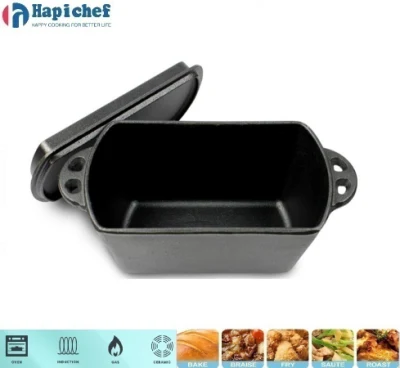
Technical Specifications and Parameters
Understanding the precise technical specifications of a cast iron lasagna pan with lid is crucial for B2B procurement, ensuring alignment with operational requirements and performance expectations. Key parameters include material composition, weight, dimensions, heat tolerance, and enamel quality (for enameled variants).
| Parameter | Specification | Technical Detail / Standard |
|---|---|---|
| Material Composition | High-grade grey cast iron (GG20/HT200 equivalent) | ASTM A48 Class 30/35, Min. Carbon Content 3.0%, Silicon 1.8-2.5% |
| Enamel Coating (Interior) | Matte Black Vitreous Enamel (2-3 layers) | Food-grade, FDA & LFGB compliant, PTFE/PFOA-free, Min. 15µm thickness |
| Enamel Coating (Exterior) | Glossy Vitreous Enamel (3-4 layers) | Impact and scratch resistant, easy to clean, color stability tested |
| Typical Dimensions | 33cm L x 23cm W x 7cm H (internal) | +/- 2mm dimensional tolerance (ISO 2768-mk) |
| Weight (Pan + Lid) | Approx. 5.5 kg - 6.5 kg | Density of Cast Iron: 7.1 g/cm³ |
| Heat Tolerance | Up to 260°C (500°F) for pan, 220°C (428°F) for lid knob (if phenolic) | Thermal Shock Resistance (ΔT max 180°C), tested per EN 13813 |
| Lid Fit | Self-basting condensation rings, tight seal | Precision machined edges for minimal steam escape |
The specific heat capacity of cast iron, approximately 0.46 kJ/kg·K, contributes to its superior ability to retain and distribute heat evenly, a critical factor for achieving consistent cooking results, particularly in baking and roasting applications. This intrinsic property differentiates cast iron from other cookware materials, making it indispensable in environments requiring precise thermal management.
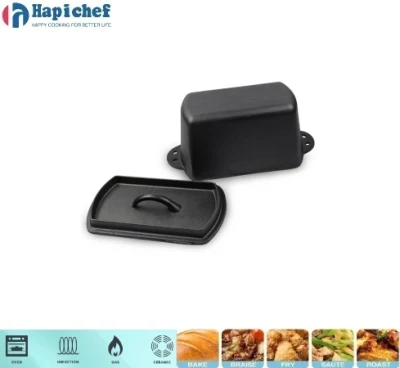
Manufacturing Process Flow
The production of a high-quality cast iron lasagna pan with lid involves a meticulously controlled manufacturing process, ensuring metallurgical integrity, dimensional accuracy, and superior surface finishes. The process adheres to stringent quality control standards, including ISO 9001 for quality management systems.
Schematic Process Steps:
- Pattern Design & Mold Creation: Utilizing CAD software, precise patterns are designed for the pan and lid. These patterns are then used to create sand molds, typically composed of silica sand, clay, and water, compacted around the pattern.
- Material Preparation & Melting: High-grade pig iron, steel scrap, and alloying elements (e.g., silicon, manganese) are precisely weighed and melted in induction or cupola furnaces at temperatures exceeding 1400°C (2550°F). Material quality is verified via spectrometer analysis.
- Casting (Sand Casting): Molten cast iron is poured into the prepared sand molds. The sand casting method ensures uniform wall thickness and intricate detailing. This stage is critical for the structural integrity of the cast iron roasting pan with lid.
- Cooling & Demolding: After solidification, the cast iron pieces are allowed to cool. The sand molds are then broken away, revealing the rough castings.
- Fettling & Shot Blasting: Excess metal (risers, runners) is removed, and the castings are deburred. Shot blasting follows, which cleans the surface and creates an optimal profile for enamel adhesion.
- Enameling (for Enameled Variants): The prepared castings undergo multiple layers of vitreous enamel application. Each layer is fired at high temperatures (typically 700-800°C) to fuse the enamel to the cast iron, creating a durable, non-reactive, and aesthetically pleasing surface. This process is crucial for an enameled cast iron roasting pan with lid.
- Quality Control & Testing: Rigorous testing includes dimensional checks, enamel adhesion tests (cross-cut test per ISO 2409), thermal shock resistance (EN 13813), impact resistance (ASTM C1624), and chemical resistance (FDA, LFGB compliance). Surface finish and visual inspections are performed on every unit.
- Finishing & Packaging: Final assembly, including lid knobs. Products are then carefully packaged to prevent damage during transit, ready for distribution to target industries such as hospitality, high-end retail, and culinary institutions.
The expected service life of such a product, when properly maintained, can exceed 20 years, making it a highly cost-effective investment for B2B entities. The inherent material strength and the protective enamel layer contribute significantly to its longevity and resistance to degradation from frequent use and high-temperature exposure.
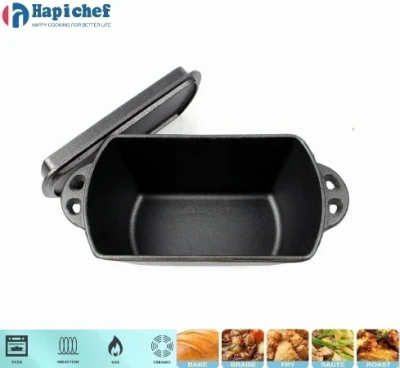
Application Scenarios and Technical Advantages
The versatility and robust performance of the cast iron lasagna pan with lid make it indispensable across various professional culinary applications. Its design is optimized for a range of cooking methods, offering distinct technical advantages.
Typical Application Scenarios:
- Professional Kitchens & Restaurants: Ideal for slow roasting meats, baking gratins, preparing large-batch casseroles, and of course, lasagna. The lid ensures moisture retention, leading to tender, succulent results. It excels in holding temperature for serving.
- Catering Services: Its durability and ability to retain heat make it perfect for transport and serving at events, keeping food warm and appetizing for extended periods.
- Culinary Schools & Training Centers: Used for demonstrating fundamental cooking techniques that rely on even heat distribution and precise temperature control. Its resilience stands up to frequent, varied use.
- High-End Retail & Specialty Stores: Marketed to discerning home cooks who value professional-grade equipment, often leveraging its aesthetic appeal for display and direct sales.
Technical Advantages:
- Exceptional Heat Retention & Distribution: Cast iron's high thermal mass ensures uniform heating across the entire cooking surface, eliminating hot spots and providing consistent results, crucial for delicate baked goods and complex roasts. This minimizes the risk of unevenly cooked food.
- Energy Efficiency: Once heated, cast iron maintains its temperature with minimal energy input, reducing ongoing energy consumption in ovens and stovetops. This translates to operational cost savings for commercial kitchens.
- Superior Durability & Longevity: Engineered to withstand the rigors of professional use, including high temperatures and frequent cleaning cycles. The robust construction provides a significantly longer service life compared to alternative materials.
- Corrosion Resistance (Enameled Variants): The vitreous enamel coating provides an inert, non-reactive surface that protects the cast iron from rust and acidic foods, enhancing food safety and extending product life.
- Moisture Control with Lid: The precisely fitting lid, often featuring self-basting condensation rings, effectively traps steam and moisture, ensuring dishes remain tender and flavorful, a key benefit for slow cooking and braising.
- Versatility Across Heat Sources: Compatible with all heat sources, including induction, gas, electric, ceramic, and oven-safe up to high temperatures, offering maximum flexibility in busy kitchen environments.
These advantages collectively contribute to a lower total cost of ownership (TCO) for B2B clients, as the product's longevity and performance reduce replacement frequencies and improve culinary output quality.
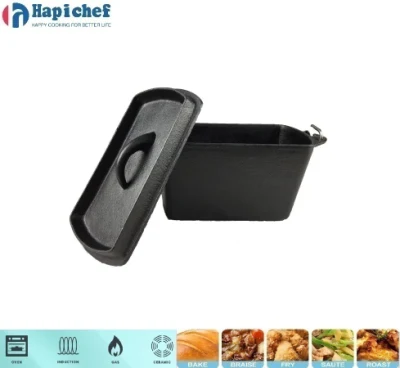
Vendor Comparison and Customized Solutions
Selecting the right supplier for a cast iron lasagna pan with lid involves evaluating not just product quality, but also manufacturing capabilities, customization options, and after-sales support. A comparative analysis highlights critical factors for B2B decision-makers.
| Feature/Service | HapiChef Cookware (Example) | Competitor A (Generic) | Competitor B (Generic) |
|---|---|---|---|
| Material Sourcing & Certs | ISO 9001 certified, ASTM A48 compliant foundry, FDA/LFGB for enamel | Standard iron, some certifications | Cost-optimized materials, fewer independent certifications |
| Enameling Process | Multi-layer, chip-resistant vitreous enamel (3+ coats), high gloss/matte options | 2-3 layer enamel, standard durability | Single/dual layer, prone to chipping |
| Customization Options | OEM/ODM, custom sizes, colors, branding, lid designs, knob materials (SS, brass) | Limited color and size options, basic branding | Minimal customization, off-the-shelf products |
| Lead Time (Standard Orders) | 45-60 days (production), 7-15 days (shipping) | 60-90 days | 90-120 days (often with MOQ issues) |
| Warranty & Support | Lifetime limited warranty, dedicated B2B support, spare parts availability | 1-5 year warranty, basic support | No clear warranty, minimal support |
| MOQ (Minimum Order Quantity) | Flexible for B2B (e.g., 500-1000 units for custom, lower for stock) | High MOQs (1000+ units) | Very high MOQs or only small-batch retail |
For businesses with specific branding or functional requirements, customized solutions are paramount. This extends beyond merely engraving a logo to encompass bespoke dimensions, unique color formulations for the enameled cast iron roasting pan with lid, specialized lid designs for specific culinary techniques, and alternative knob materials like stainless steel or brass for enhanced durability and aesthetic appeal. Providers offering robust OEM (Original Equipment Manufacturer) and ODM (Original Design Manufacturer) services can collaborate closely with clients to develop products that perfectly align with their brand identity and operational demands. This level of partnership ensures that the final product, whether it's a standard lasagna pan or a specialized cast iron oval roasting pan, is not just a utility item but a strategic asset.
Application Case Studies
Real-world application demonstrates the tangible benefits of investing in premium cast iron cookware. These case studies highlight the impact of our cast iron lasagna pan with lid and related products in diverse B2B environments.
Case Study 1: Upscale Restaurant Chain
- Client: "Gastronomy Global," a chain of high-end Italian restaurants.
- Challenge: Inconsistent baking results for signature lasagna dishes, poor heat retention during service, and frequent replacement of lower-quality aluminum pans.
- Solution: Phased implementation of our enameled cast iron lasagna pan with lid across all 15 locations. Customized units featured specific dimensions for their ovens and a branded logo on the lid handle.
- Results:
- Improved Consistency: Uniform heat distribution resulted in perfectly browned crusts and evenly cooked interiors, consistently meeting their high culinary standards.
- Enhanced Service Experience: The excellent heat retention allowed lasagna to stay warm for up to 30 minutes longer during table service, leading to positive customer feedback.
- Cost Savings: Reduced pan replacement by over 80% annually, providing significant operational savings over 3 years.
- Brand Elevation: The premium look and feel of the pans, coupled with custom branding, reinforced the restaurant's high-quality image.
Case Study 2: Boutique Hotel & Conference Center
- Client: "The Grandeur Estate," a luxury hotel offering fine dining and event catering.
- Challenge: Needing versatile, durable cookware for both daily restaurant operations and large-scale banquet services, capable of elegant presentation directly from oven to buffet.
- Solution: Supplied a range of our cast iron oval roasting pan and cast iron roasting dish with lid products in various sizes, all featuring a bespoke exterior enamel color matching the hotel's interior decor.
- Results:
- Operational Efficiency: Chefs could prepare dishes in advance and keep them warm for extended periods without compromising quality, reducing last-minute rush during events.
- Aesthetic Presentation: The elegant design and custom colors allowed for direct-to-table serving, enhancing the visual appeal of their buffet lines and private dining experiences.
- Durability under Pressure: The cookware withstood daily use and industrial dishwashing without degradation, proving its resilience in a high-volume environment.
Trustworthiness and Support Information
We are committed to building long-term partnerships through unparalleled product quality, transparent processes, and robust customer support. Our adherence to international standards and comprehensive service offerings ensure reliability and peace of mind for our B2B clients.
Frequently Asked Questions (FAQ)
- Q: What is the average lead time for a custom order of the cast iron lasagna pan with lid? A: For custom OEM/ODM orders, the typical lead time is 45-60 days for manufacturing, followed by 7-15 days for shipping, depending on destination and logistical arrangements. Stock orders can be fulfilled much faster, usually within 1-2 weeks.
- Q: Are your cast iron products food-safe and certified? A: Yes, all our enameled cast iron products, including the cast iron roasting dish with lid, meet stringent international food safety standards, including FDA (U.S. Food and Drug Administration) and LFGB (German Food, Articles of Daily Use and Feed Code) requirements. Our manufacturing facilities are ISO 9001 certified.
- Q: What is your warranty policy for B2B clients? A: We offer a lifetime limited warranty on our cast iron products against manufacturing defects. This covers material and workmanship under normal commercial use. Specific terms and conditions are provided with each order, ensuring transparency and accountability.
- Q: Can you accommodate specific branding requirements for large orders? A: Absolutely. We specialize in OEM and ODM solutions, including custom color matching (Pantone references), logo embossing or etching on pan bases or lid knobs, and bespoke packaging designs. Our design team works closely with clients to realize their vision.
Lead Time & Fulfillment
Our advanced manufacturing capabilities and streamlined logistics ensure efficient order fulfillment. Standard production lead times for bulk orders (e.g., 500-1000 units) range from 45 to 60 calendar days post-sample approval. Expedited options may be available depending on production schedules. We provide detailed shipping estimates and tracking information for all consignments, leveraging partnerships with reputable global freight forwarders to ensure timely and secure delivery.
Warranty & After-Sales Support
Our commitment extends beyond product delivery. Every enameled cast iron roasting pan with lid is backed by a comprehensive lifetime limited warranty, reflecting our confidence in its enduring quality. Our dedicated B2B customer support team is available during business hours to address any inquiries, provide technical assistance, or facilitate warranty claims. We also maintain a stock of spare parts (e.g., lid knobs) for quick replacements, minimizing downtime for our commercial partners. This proactive approach to after-sales service underscores our dedication to long-term client satisfaction.
References
- ASTM International. (2021). ASTM A48/A48M-03(2021) Standard Specification for Gray Iron Castings. ASTM Standards.
- International Organization for Standardization. (2015). ISO 9001:2015 Quality management systems — Requirements. ISO.
- European Committee for Standardization. (2007). EN 13813:2007 Screed material and floor screeds - Screed material - Properties and requirements. CEN.
- U.S. Food and Drug Administration. (2023). Food Contact Materials (FCMs). FDA.
- Bundesgesetzblatt. (2005). LFGB – German Food, Articles of Daily Use and Feed Code.
- British Standard Institute. (2009). BS EN ISO 2409:2009 Paints and varnishes. Cross-cut test. BSI.
- ASTM International. (2015). ASTM C1624 – 05(2015) Standard Test Method for Adhesion of Advanced Ceramics to Metallic Substrates. ASTM Standards.
- Callister, W. D., & Rethwisch, D. G. (2018). Materials Science and Engineering: An Introduction (10th ed.). John Wiley & Sons.
-
How to Choose and Maintain the Perfect Frying Pan for CookingNewsApr.16,2026
-
Mastering the Art of Cooking with a Dutch Oven GuideNewsApr.09,2026
-
Exploring the World of Casseroles A Kitchen Essential for Flavorful MealsNewsApr.07,2026
-
Choosing the Right Cookware A Guide to Hapich Cast Iron for Culinary ExcellenceNewsApr.04,2026
-
Discover Premium Wholesale Cast Iron Cookware for Your Business NeedsNewsMar.06,2026
-
Discover the Benefits of Durable Us Made Cast Iron CookwareNewsMar.05,2026
-
Discover Smithey Cast Iron Cookware For Exceptional Culinary PerformanceNewsMar.04,2026