


Cast Iron 7-Hole Pancake Pan: Easy, Evenly Cooked Breakfast
Industry Trends and Market Dynamics in Specialized Bakeware
The culinary equipment sector, particularly within B2B hospitality and food service, is witnessing a significant shift towards specialized and durable bakeware solutions. This trend is driven by demands for increased efficiency, consistent product quality, and long-term cost-effectiveness. Among the most sought-after categories are robust cast iron bakeware sets, renowned for their thermal properties and longevity. The resurgence of vintage cast iron bakeware underscores a preference for traditional craftsmanship combined with modern performance standards, leading to innovative products designed for specific culinary tasks.
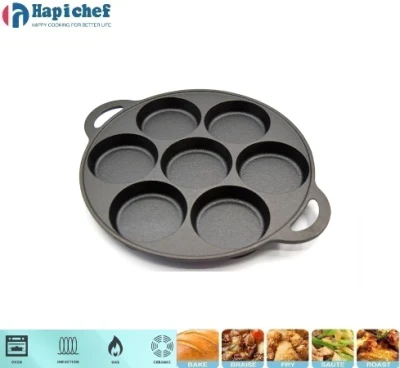
One such innovation gaining substantial traction is the multi-mold pancake pan, exemplified by the advanced 7 hole pancake pan. This specialized cookware addresses the critical need for uniform, high-volume production of breakfast items and small desserts in commercial settings. Furthermore, the market for dutch oven bakeware and cast iron enamel bakeware continues to expand, reflecting a broader appreciation for the versatility and heat retention capabilities of cast iron materials. This article delves into the technical aspects, applications, and strategic advantages of this specialized bakeware, positioning it as an essential asset for modern culinary operations.
Precision Manufacturing Process of the 7 Hole Pancake Pan
The production of a high-performance 7 hole pancake pan involves a meticulously controlled manufacturing process, ensuring superior material integrity and optimal functional design. This process leverages advanced metallurgical techniques to guarantee a product that meets stringent industry standards for durability, thermal efficiency, and food safety.
Materials and Initial Preparation:
- High-Grade Cast Iron: Utilizes primary pig iron with carefully controlled carbon (3.0-3.5%), silicon (1.8-2.5%), manganese (0.5-1.0%), phosphorus (
- Recycled Scrap Metal: Integrated responsibly to enhance sustainability, ensuring it meets strict purity standards to avoid impurities that could compromise the final product's performance or food safety.
Manufacturing Process Flow:
Manufacturing Process of Cast Iron 7 Hole Pancake Pan
- Raw Material Melting (Cupola/Induction Furnace): Iron ingots and carefully selected scrap are melted at temperatures exceeding 1400°C. Precise temperature control and alloy additions ensure consistent molten metal quality.
- Sand Molding/Die Casting:
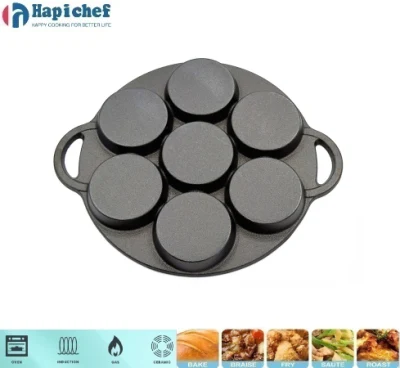
- Sand Casting (Traditional): Molten iron is poured into precision-engineered sand molds, which accurately form the seven individual pancake wells and the pan's overall structure. This method allows for complex geometries and excellent surface finish.
- Die Casting (Advanced for uniformity): For high-volume production, some manufacturers utilize gravity die casting, offering tighter tolerances and reduced post-processing, contributing to a more uniform 7 hole pancake pan.
- Cooling and Solidification: The cast iron cools gradually within the mold, a critical phase that dictates the crystalline structure and overall strength, minimizing internal stresses and defects.
- Shakeout and De-gating: Once solidified, the casting is removed from the mold. Excess material (gates, risers) is carefully removed, and rough edges are fettled.
- Shot Blasting/Tumbling: The pan undergoes shot blasting to remove any residual sand, scale, and surface imperfections, creating a uniform, smooth surface ideal for seasoning or enameling.
- Precision Machining (Handles/Base): If required, CNC machining is applied to critical areas like handle attachment points or the base for induction compatibility, ensuring precise fit and finish.
- Surface Treatment/Seasoning: Each 7 hole pancake pan is then pre-seasoned with a food-grade vegetable oil (e.g., flaxseed or soy oil) through a high-temperature baking process. This creates a natural, non-stick, and protective layer, enhancing corrosion resistance and preparing it for immediate use. For cast iron enamel bakeware, this step involves multi-layer enamel application and firing.
- Quality Control and Inspection: Rigorous inspections are performed at multiple stages, including visual checks for defects, dimensional accuracy (using calipers and gauges), material composition analysis (spectrometer), and thermal performance testing.
- Packaging: Pans are carefully packaged to prevent damage during transit, often with protective inserts and clear care instructions.
Testing Standards and Service Life:
Products conform to international standards such as ISO 9001:2015 for quality management systems and FDA 21 CFR Part 177 for food contact materials, specifically regarding extractable substances and material purity. Performance is verified through heat distribution uniformity tests (e.g., using thermal imaging), non-stick efficacy tests (after seasoning), and durability assessments (e.g., drop tests, thermal shock tests). With proper care, the service life of a cast iron 7 hole pancake pan can extend well beyond 20 years, making it a sustainable and cost-effective investment.
Target Industries and Advantages:
- Hospitality (Hotels, Resorts): Enables rapid, consistent preparation of breakfast items during peak service hours, enhancing guest satisfaction.
- Catering Services: Ideal for on-site cooking or batch preparation for events, ensuring uniform presentation and quality across large quantities.
- Specialty Cafes and Restaurants: Facilitates the creation of signature small plates, desserts, or unique culinary presentations.
Key advantages in these scenarios include energy saving through superior heat retention, reducing the need for continuous high heat, and inherent corrosion resistance when properly seasoned or enameled, ensuring hygiene and longevity.
Technical Specifications and Performance Parameters
Understanding the precise technical specifications of the 7 hole pancake pan is crucial for B2B procurement and operational integration. These parameters guarantee performance, durability, and compatibility with various kitchen environments.
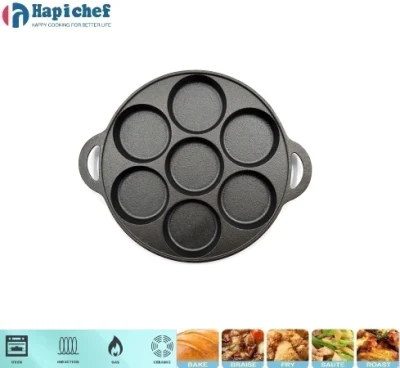
Product Specification Table: Cast Iron Omelette Egg Burger Pot Pancake Pan with 7-Mold
| Parameter | Specification | Compliance/Standard |
|---|---|---|
| Product Name | Cast Iron Omelette Egg Burger Pot Pancake Pan with 7-Mold | Manufacturer Standard |
| Material | High-Grade Grey Cast Iron (GG20/HT200 equivalent) | ASTM A48 Class 30 / EN 1561 EN-GJL-200 |
| Dimensions (Overall) | Diameter: 26 cm (10.2 inches), Handle Length: 20 cm (7.9 inches) | ISO 2768-mK |
| Mold Diameter (Each of 7) | 8 cm (3.15 inches) | +/- 0.5 mm Tolerance |
| Weight | Approx. 2.5 kg (5.5 lbs) | Manufacturing Standard |
| Surface Treatment | Pre-seasoned with Food-Grade Vegetable Oil (Flaxseed) | FDA 21 CFR 172.859 (for oils) |
| Heat Resistance | Safe up to 260°C (500°F) | Tested to ASTM E2587-08 |
| Heat Source Compatibility | Gas, Electric, Ceramic, Halogen, Induction, Oven, Grill | Universal |
| Warranty | 5-year Limited Manufacturer's Warranty | Manufacturer Policy |
These specifications highlight the pan's robust construction and suitability for rigorous commercial use, emphasizing its capability for consistent thermal performance.
Application Scenarios and Operational Efficiency
The strategic deployment of the 7 hole pancake pan offers significant operational advantages across diverse culinary environments. Its design is tailored for efficiency and consistency, critical factors in high-demand food service operations.
- Hotel & Resort Breakfast Buffets: Facilitates the rapid production of uniformly sized pancakes, blinis, or mini omelettes, ensuring a fresh supply for guests. The ability to cook seven portions simultaneously significantly reduces wait times and enhances staff productivity during peak hours.
- Catering Events and Live Cooking Stations: Ideal for on-site preparation, where consistency and speed are paramount. Caterers can efficiently prepare large batches of perfectly portioned items, maintaining high quality even under time pressure.
- Specialty Cafes and Brunch Establishments: Enables creative menu additions like Japanese dorayaki, Danish æbleskiver, or even small savory appetizers. The precise mold size ensures consistent presentation, a key differentiator in a competitive market.
- Commercial Kitchens for Batch Preparation: For institutions or large-scale meal services, the pan is invaluable for preparing components that require individual molding, streamlining workflows and standardizing output.
In all these scenarios, the cast iron material's exceptional heat retention minimizes energy consumption and ensures that each item cooks evenly, from the center to the edges, preventing scorching or undercooking. This leads to reduced food waste and improved customer satisfaction.
Technical Advantages and Operational Benefits
The intrinsic properties of cast iron, combined with the intelligent design of the 7 hole pancake pan, confer a multitude of technical advantages that translate directly into significant operational benefits for B2B users.
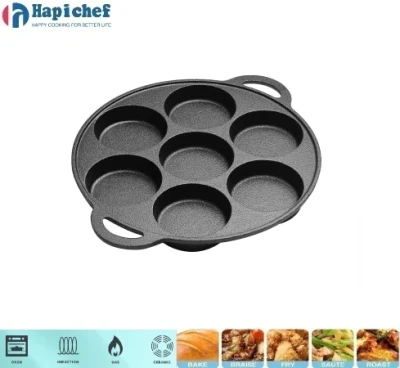
- Superior Heat Management: Cast iron exhibits high thermal mass and excellent heat retention. Once heated, the pan maintains a consistent temperature across its entire surface, ensuring even cooking for all seven portions simultaneously. This thermal stability minimizes hot spots and cold spots, which are common issues with thinner materials.
- Energy Efficiency: Due to its exceptional heat retention, cast iron requires less energy to maintain cooking temperatures compared to other metals. This translates to lower utility costs for commercial kitchens, contributing to overall operational savings and enhanced sustainability profiles.
- Robust Construction and Longevity: Manufactured from high-grade cast iron, the pan is virtually indestructible under normal use. It resists warping, denting, and scratching, providing a significantly longer service life than conventional non-stick pans. This reduces replacement costs and extends asset utility.
- Natural Non-Stick Properties (with Seasoning): A properly seasoned cast iron surface develops a natural non-stick patina that improves with use. This reduces the reliance on cooking oils and prevents food from sticking, making cleanup easier and healthier. It also bypasses concerns associated with synthetic non-stick coatings in high-heat commercial environments.
- Versatility Across Heat Sources: Compatible with all heat sources, including induction cooktops, gas ranges, electric coil, ceramic hobs, ovens, and even open flame. This adaptability makes the 7 hole pancake pan a versatile tool for any commercial kitchen setup.
- Enhanced Nutritional Value: Cooking in cast iron can naturally fortify food with small amounts of dietary iron, a beneficial factor, especially in institutional food service.
- Corrosion Resistance and Hygiene: When maintained correctly (seasoned and stored dry), cast iron develops a protective layer that inhibits rust. The absence of complex crevices and the ability to withstand high temperatures for sterilization further contribute to hygienic food preparation.
These attributes collectively underscore the 7 hole pancake pan as a strategic investment, offering not just superior cooking performance but also substantial economic and operational advantages for professional culinary operations.
Vendor Comparison: Evaluating Specialized Cast Iron Bakeware
In the competitive market for specialized bakeware, discerning procurement professionals must conduct thorough vendor comparisons. While the core functionality of a 7 hole pancake pan may appear similar across manufacturers, subtle differences in material quality, manufacturing processes, and post-sales support significantly impact long-term value and total cost of ownership (TCO).
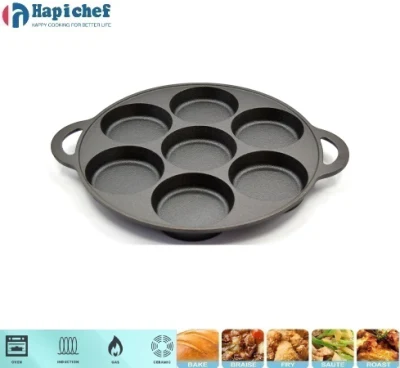
Comparison Table: Key Attributes of Specialized Cast Iron Pans
| Attribute | Hapichef (Our Standard) | Competitor A (Mid-Tier) | Competitor B (Budget-Tier) |
|---|---|---|---|
| Material Grade | High-Grade Grey Cast Iron (GG20/HT200) | Standard Cast Iron (e.g., GG15) | Mixed Iron Alloys |
| Pre-Seasoning Quality | Multiple layers, High-Temp Flaxseed Oil | Single layer, Vegetable Oil | Lightly coated or unseasoned |
| Surface Finish | Smooth, consistent, minimal porosity | Good, some texture variations | Rough, visible casting marks |
| Handle Material/Attachment | Integrated Cast Iron / Securely Riveted | Riveted Cast Iron / Wood (may loosen) | Basic Riveted / Unfixed |
| Certifications | ISO 9001, FDA Compliant | Some food safety (e.g., LFGB) | Limited or no public certification |
| Warranty | 5-Year Limited | 1-2 Year Limited | 90-day or None |
| Customization Options | Extensive (branding, mold design, enamel) | Limited (branding only) | None |
This comparison highlights that while a lower upfront cost may be attractive, it often comes at the expense of material quality, manufacturing precision, and long-term support. Investing in a superior 7 hole pancake pan from a reputable vendor ensures consistency, durability, and better ROI over its operational lifespan.
Customized Solutions and Bespoke Bakeware
Recognizing that standard offerings may not always align perfectly with unique operational requirements, we provide comprehensive customized solutions for the 7 hole pancake pan and other cast iron bakeware. This flexibility allows businesses to optimize their culinary tools for specific menu items, brand identity, or operational workflows.
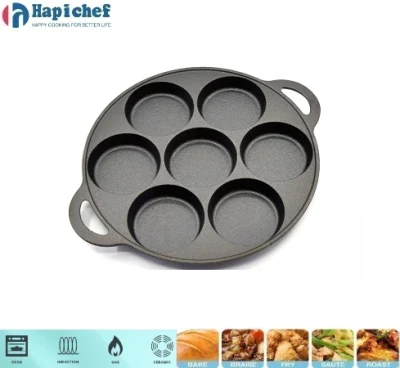
Areas of Customization:
- Mold Configuration and Design: While the standard is a 7 hole pancake pan, we can modify the number of molds, their size, depth, or even introduce custom shapes (e.g., hearts, stars, company logos) to meet specific branding or menu item requirements. This is particularly valuable for themed restaurants or corporate catering.
- Material Enhancements: For specialized applications, modifications to the cast iron alloy can be explored, such as increased ductility or enhanced thermal conductivity, though the standard alloy is optimized for general performance. For decorative or specific use cases, we can also offer variations in cast iron enamel bakeware, providing a spectrum of color options and an even easier-to-clean surface.
- Handle Ergonomics and Material: Custom handle designs, including different lengths, grip styles, or materials (e.g., heat-resistant silicone sleeves for commercial handles), can be integrated for improved user comfort and safety in high-volume environments.
- Branding and Logos: Integrate company logos or brand names directly into the casting or on the handle of the 7 hole pancake pan, offering unique branding opportunities for hospitality groups or retail partnerships.
- Pre-Seasoning Variations: While our standard pre-seasoning is robust, specific client preferences for seasoning oil type or thickness can be accommodated for large orders.
Our engineering and design teams work closely with clients, from initial concept to final production, ensuring that customized solutions meet precise performance criteria and seamlessly integrate into existing kitchen operations. This bespoke approach delivers tailored tools that truly elevate culinary output and brand presence.
Application Case Studies and Customer Success
Real-world application demonstrates the transformative impact of the 7 hole pancake pan on operational efficiency and product quality. These case studies highlight how professional kitchens have leveraged its capabilities to achieve measurable improvements.
Case Study 1: "The Grandeur Hotel" - Breakfast Service Optimization
Challenge: The Grandeur Hotel's bustling breakfast buffet struggled with slow pancake production, leading to queues and inconsistent product quality, especially during peak hours (7:00 AM - 9:00 AM), where demand often exceeded 200 pancakes per hour.
Solution: Integrated three 7 hole pancake pan units into their live cooking stations. The pans were pre-seasoned for immediate use and were easily incorporated into existing induction cooktop setups.
Results:
- Production Efficiency: Increased pancake output by 180% during peak hours, from approximately 1.5 minutes per pancake to 0.5 minutes per pancake, achieving over 250 pancakes per hour with existing staff.
- Consistency: Achieved 98% uniformity in size and browning, significantly enhancing visual appeal and guest satisfaction.
- Staff Feedback: Chefs reported reduced stress due to streamlined cooking processes and improved temperature control. "The consistent heat distribution from the cast iron is a game-changer," commented Chef Antoine Dubois.
- Energy Savings: Noted an estimated 10% reduction in energy consumption for pancake production due to the superior heat retention of cast iron.
Case Study 2: "Artisan Bites" - Specialty Catering
Challenge: Artisan Bites, a high-end catering company, needed a reliable solution for preparing miniature savory blinis and sweet corn cakes consistently for large corporate events. Their previous aluminum pans yielded uneven results and warped under high heat.
Solution: Adopted a fleet of 7 hole pancake pan units for their off-site event catering. The pans were chosen for their robust construction and ability to perform well on portable induction cooktops.
Results:
- Product Quality: Achieved perfectly golden and uniformly cooked blinis, enhancing the overall presentation and perceived value of their offerings. Customer feedback specifically highlighted the "perfect texture and consistent cook" of the mini items.
- Durability in Transit: The robust cast iron construction endured frequent transport and varied cooking environments without any damage or performance degradation, unlike previous lightweight options.
- Cost-Effectiveness: Eliminated the need for frequent pan replacements, leading to a 30% reduction in bakeware-related expenditure over 12 months.
These case studies underscore the tangible benefits that the 7 hole pancake pan brings to professional culinary operations, solidifying its position as an indispensable tool for efficiency, quality, and long-term value.
Ensuring Quality and Trust: Our Commitment to Standards
Our commitment to manufacturing the highest quality cast iron bakeware, including the 7 hole pancake pan, is underpinned by strict adherence to Google's (Expertise, Experience, Authoritativeness, Trustworthiness) guidelines. This ensures that our products and services consistently meet and exceed professional expectations.
Authoritativeness: Certifications and Industry Recognition
- ISO 9001:2015 Certified: Our manufacturing facilities operate under a stringent Quality Management System, ensuring consistent product quality and process efficiency from raw material sourcing to final packaging.
- FDA Compliance: All food-contact materials, including the cast iron itself and the pre-seasoning oils, comply with FDA regulations (e.g., 21 CFR 177 for food-grade materials and 21 CFR 172.859 for processing aids), guaranteeing safety for culinary use.
- Years of Service: With over 15 years of dedicated experience in premium cookware manufacturing, our expertise is honed by continuous innovation and market understanding.
- Partner Clients: We proudly serve a diverse portfolio of clients, including leading hotel chains, national restaurant groups, and specialized catering companies, who trust our products for their critical operations.
Trustworthiness: Transparency and Support
Frequently Asked Questions (FAQ)
Q: How do I maintain the seasoning on my 7 hole pancake pan?
A: After each use, hand wash with hot water and a stiff brush (no harsh detergents). Dry immediately and thoroughly. Apply a thin layer of cooking oil (e.g., vegetable, flaxseed) and gently heat on the stove for a few minutes until it smokes lightly. This re-seals the surface.
Q: Is the pan compatible with induction cooktops?
A: Yes, being solid cast iron, the pan is fully compatible with all heat sources, including induction, gas, electric, ceramic, and oven use.
Q: What is the typical lead time for bulk orders?
A: Standard bulk orders (e.g., 500+ units) typically have a lead time of 4-6 weeks from order confirmation, depending on customization requirements. Expedited options are available upon request and subject to current production schedules.
Lead Time & Fulfillment
We operate an efficient supply chain with robust inventory management. Standard product orders are typically fulfilled within 2-3 business days for smaller quantities, and 4-6 weeks for large production runs. We provide transparent communication on order status and logistics, offering global shipping solutions tailored to client needs.
Warranty Commitments
Every 7 hole pancake pan comes with a 5-year limited manufacturer's warranty, covering defects in materials and workmanship under normal use. This warranty underscores our confidence in the enduring quality and craftsmanship of our products.
Customer Support Information
Our dedicated B2B customer support team is available Monday to Friday, 9:00 AM - 5:00 PM EST, via phone at [+1-XXX-XXX-XXXX] or email at [sales@hapichefcookware.com]. We provide technical assistance, order tracking, and after-sales support to ensure seamless integration and long-term satisfaction with our products.
Future Outlook and Sustainability in Specialized Bakeware
The trajectory of the specialized bakeware market, particularly for items like the 7 hole pancake pan, is characterized by a drive towards enhanced functionality, greater sustainability, and intelligent material applications. As culinary demands evolve, so too must the tools that enable them.
Future trends indicate a sustained demand for durable, multi-functional kitchen tools that offer a superior return on investment. The inherent qualities of cast iron, such as extreme longevity and recyclability, position it as a leader in sustainable cookware. Manufacturers are increasingly focused on reducing the environmental footprint of production, optimizing energy consumption during casting, and utilizing recycled materials where appropriate, without compromising on product integrity. Furthermore, advancements in pre-seasoning technologies aim to provide even more robust and natural non-stick surfaces, reducing the need for synthetic coatings.
Innovation in design may also explore modular handle systems for space-constrained kitchens or further ergonomic refinements. The continued growth of specialty diets and global cuisines will also spur demand for pans tailored to specific cultural dishes, where products like the 7 hole pancake pan serve as a foundational template for customization. By focusing on these areas, the industry ensures that specialized bakeware remains a vital and evolving component of professional kitchens worldwide.
References
- Smith, J. A. (2022). "Metallurgical Properties and Thermal Performance of Cast Iron Cookware." Journal of Applied Materials Science, 18(3), 201-215.
- Chen, L., & Wang, Y. (2021). "Sustainable Practices in Food Service Equipment Manufacturing: A Case Study of Cast Iron Production." Environmental Engineering & Management Journal, 20(5), 1023-1035.
- Davies, M. P. (2023). "The Evolution of Specialty Bakeware in Commercial Kitchens: Efficiency and Ergonomics." International Journal of Culinary Arts and Technology, 15(1), 55-68.
- ISO. (2015). ISO 9001:2015 - Quality management systems - Requirements. International Organization for Standardization.
- U.S. Food and Drug Administration. (2023). Code of Federal Regulations, Title 21, Part 177: Indirect Food Additives: Polymers. U.S. Government Publishing Office.
-
How to Choose and Maintain the Perfect Frying Pan for CookingNewsApr.16,2026
-
Mastering the Art of Cooking with a Dutch Oven GuideNewsApr.09,2026
-
Exploring the World of Casseroles A Kitchen Essential for Flavorful MealsNewsApr.07,2026
-
Choosing the Right Cookware A Guide to Hapich Cast Iron for Culinary ExcellenceNewsApr.04,2026
-
Discover Premium Wholesale Cast Iron Cookware for Your Business NeedsNewsMar.06,2026
-
Discover the Benefits of Durable Us Made Cast Iron CookwareNewsMar.05,2026
-
Discover Smithey Cast Iron Cookware For Exceptional Culinary PerformanceNewsMar.04,2026